Loading activity…

@latestinspace
Tracking breaking space news and views 🪐 Get continuous updates on stories and sub to our newsletter👇
 Science
A post says they grew crops and did simulated Marswalks, with an October 31, 2026, exit planned.

Science
NASA Administrator Jared Isaacman says machine shops run around the clock while teams work on landers, suits and rovers.

Science
Space.com reports that NASA’s Mars rover passed its smaller cousin Opportunity.

Science
The 800-gigabyte archive also includes crew audio, annotations and reports from April’s lunar flyby.
Science
NASASpaceflight called the North Stand test its second-longest firing, behind only a run-to-failure test.

Science
NASA says the release includes 814 GB of observations, nearly 1,000 new images, and 521 minutes of crew audio; a NASA Artemis post separately put the image total at 996.
Science
The space news account latestinspace says Meir was preparing to return to Earth that week after the October 4 handover.

Science
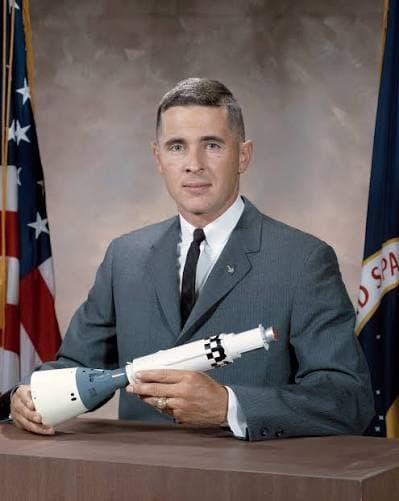
The account latestinspace credits Windler with leading the effort to rescue Apollo 13.
 Technology
Latest in Space suggests the streak was most likely sunlight hitting the Super Heavy booster's exhaust trail after separation.
Science
Spaceflight Now, citing SpaceX’s Dan Huot, reported that Ship 41 would deorbit before completing its planned orbital profile. SpaceX later confirmed splashdown.

Science
Universe Magazine says the signal from Beta Pictoris b, 64 light-years away, was likely produced by auroras.

Science
Latest in Space says PRIMA will observe far-infrared light, which it describes as a part of the spectrum no telescope can currently capture.

Science
Latest in Space says it will be the first spacecraft to reach that distance—about 16 billion miles from Earth.
Science
Posts connect claims of asteroid sugars and DNA and RNA bases in meteorites to the possibility that life on Earth came from space.
Science
Latest in Space says astronomers have found Elias 2-24 b, a planet less than a million years old.
Science
Latest in Space says the crater was left by an impact around 2024 that went undetected at the time.
Science
Latest in Space says a “near-perfect course correction” left the telescope with enough fuel to last more than twice as long as it was built for.


