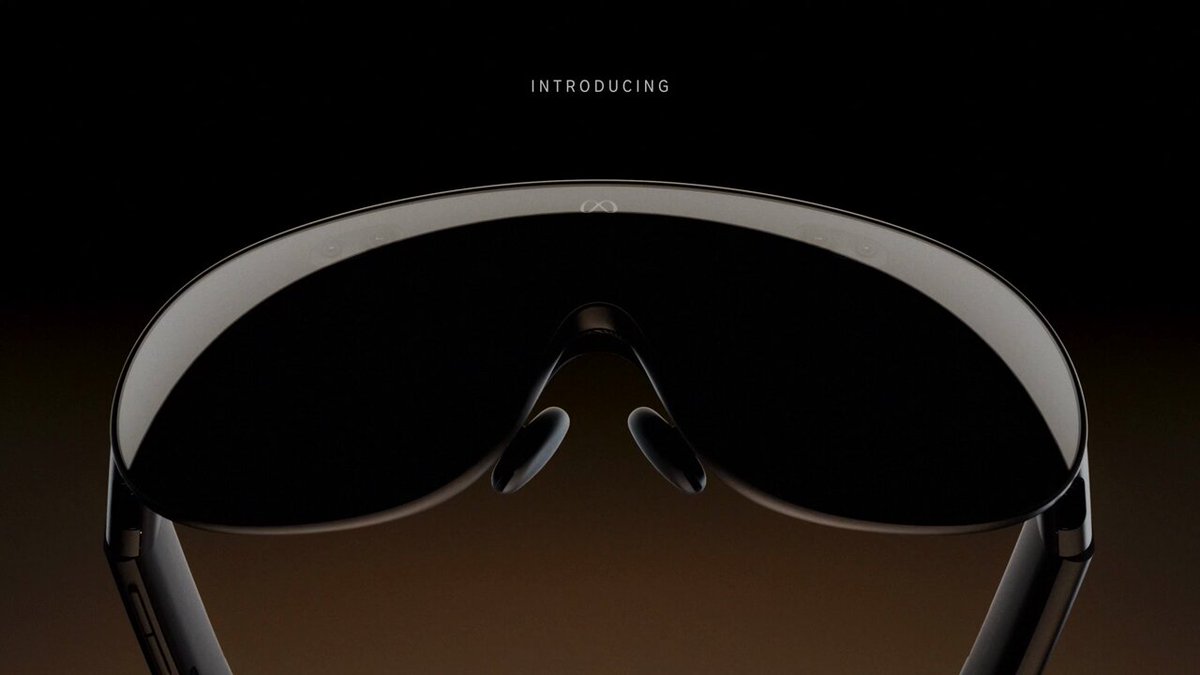
Meta has unveiled a $1,299.99 pair of VR glasses that moves the battery and computing hardware off the wearer's face and into a wired puck. The company says Meta VR Glasses weigh about 100 grams, roughly one-fifth as much as Quest 3, and will be available in spring 2027.
That split design is the product's central bet. The glasses are meant to deliver VR games, movies and virtual workspaces without the bulk of a conventional headset. The trade is a thin cable running to a phone-sized module that supplies power and all processing.
Lighter hardware, narrower view
UploadVR reports that each eye gets a 2412-by-2288, 120Hz HDR micro-OLED display. The puck contains Qualcomm's Snapdragon Reality Elite chip, 12GB of RAM, 128GB of storage and a microSD slot. Meta uses eye tracking and hand tracking for navigation, while Touch Plus controllers are optional rather than included.
Reducing the size creates an optical compromise. UploadVR lists a 70-by-66-degree field of view, compared with roughly 110 by 96 degrees on Quest 3. The glasses also use an open-periphery design, allowing the wearer to see the room at the sides and below. That can suit mixed reality, but it delivers less visual enclosure than a full headset.
A portable screen for work and games
Meta is positioning the device as a private cinema, virtual desktop and game console. A USB-C DisplayPort connection can turn a phone, laptop or gaming handheld into a large virtual screen. The glasses also run Quest software, though some games require separately purchased or existing Quest controllers.
In a Gizmodo hands-on, James Pero reported sharp visuals and less facial fatigue during a roughly 20-minute demo. Eye and hand tracking worked smoothly, but the feature that turns a flat surface into a virtual keyboard felt slightly laggy. That is an early demonstration result, not a full review of retail hardware.
Meta says the puck provides about three hours of battery life during high-resolution media playback. It can clip to clothing, a pocket or a bag, but the cable and external module remain part of the experience. The company's Connect recap also promises a photorealistic Hologram avatar for calls at launch.
The result is not simply a smaller Quest. It is a different balance of weight, immersion, battery life and portability. Whether that balance works outside controlled demonstrations will depend on final software, comfort over longer sessions and how buyers feel about paying more than twice the current Quest 3 price for a tethered design.
 Technology