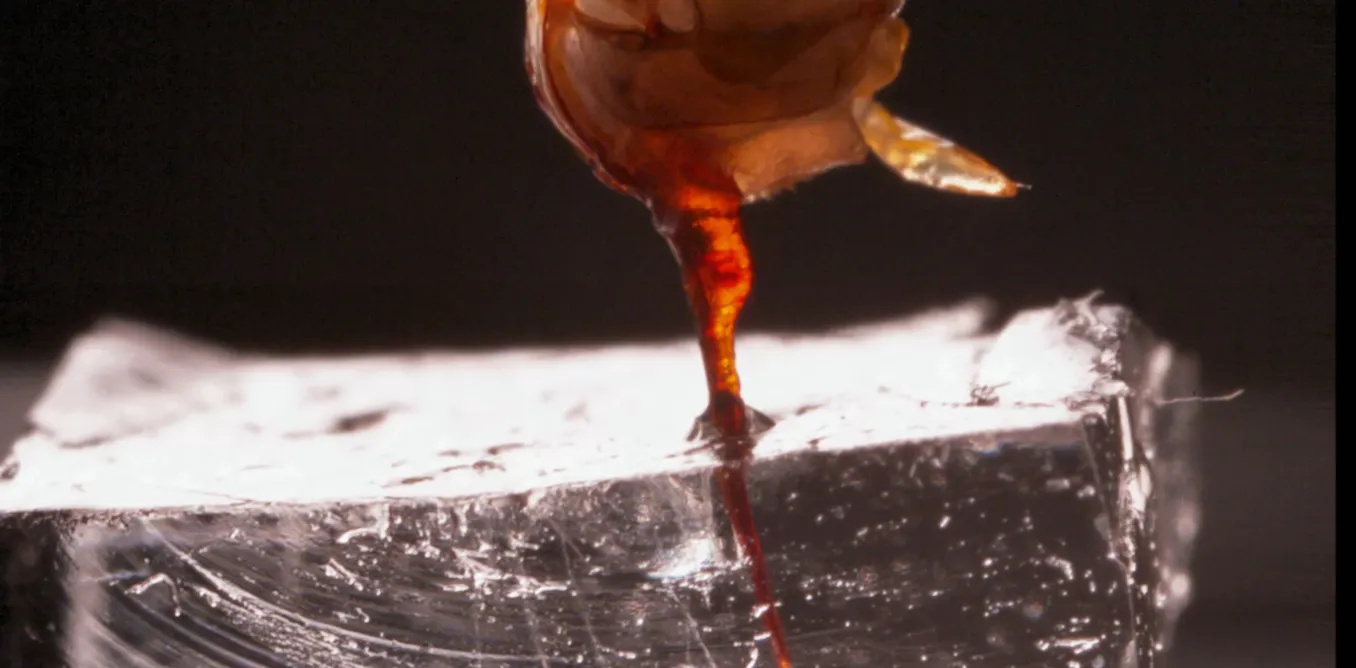
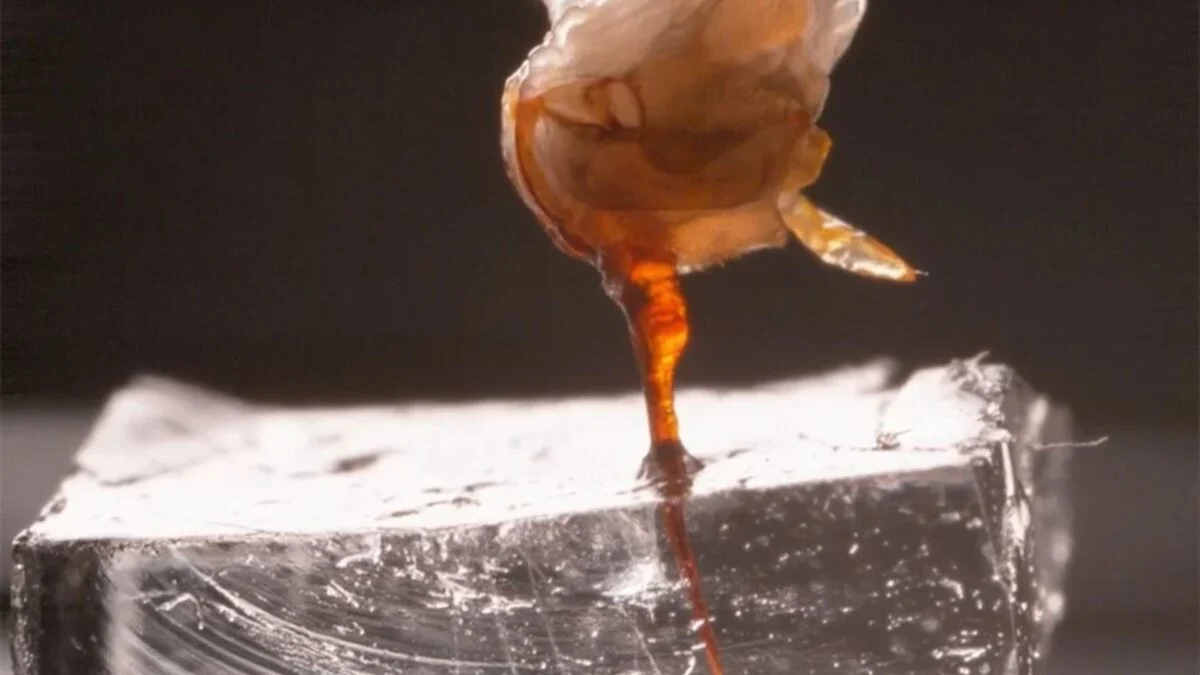
When a worker honey bee pulls away after stinging, the apparatus it leaves behind is not just a passive barb. The detached stinger can keep moving deeper and delivering venom on its own, a process called autotomy. A peer-reviewed study in PNAS has now shown how that tiny autonomous pump works.
Two pistons in one chamber
The roughly 2-millimeter stinger contains two sharp lancets that slide back and forth on interlocking rails. Each lancet carries a deformable valve inside a shared bulb chamber. The two sides move out of phase, so one advances while the other retracts.
On the downstroke, a valve expands and seals against the chamber, acting like a piston that pressurizes the venom. On the upstroke, it collapses so the chamber can refill. As the valves meet, their shape lets them squeeze past each other without interrupting the alternating cycle. The researchers found that this motion supports a continuous flow while potentially reducing backflow during refilling.
That same reciprocating movement also helps the barbed lancets work farther into tissue. The pumping machinery therefore combines penetration and fluid delivery in a compact unit that no longer depends on the bee's body.
Watching a sting in motion
Researchers from Macquarie University and the University of New South Wales recorded detached stingers working in a clear gel designed to mimic skin. High-speed footage at up to 300 frames per second made the valve deformation visible, while micro-CT scans provided a three-dimensional view of the structures.
The team then built a dynamically scaled physical model of the bulb chamber and lancets. The model reproduced key parts of the cycle, helping the researchers test how valve shape and motion generate pressure. As Phys.org's report notes, scientists had described small valves in the venom chamber more than a century ago, but their action had been difficult to observe directly.
The authors say the double-piston arrangement may offer design ideas for engineered micropumps, including devices for microfluidics or minimally invasive medicine. That remains a prospective application: the study explains the bee's biological mechanism and a scaled model, not a clinical device.