• Home
  • Technology
  • Gaming
  • Entertainment
  • World & Business
  • Science
  • Sports
  • AI
HomeTechnologyGamingEntertainmentWorld & BusinessScienceSportsAI
Science
Report

Larger dogs show signs of faster molecular aging than smaller dogs

Science reports researchers analyzed DNA methylation patterns from 894 dogs; older-than-expected epigenetic age correlated with higher mortality risk.

Science MagazineSM
1 Source, 46m ago, first seen 46m ago

TLDR

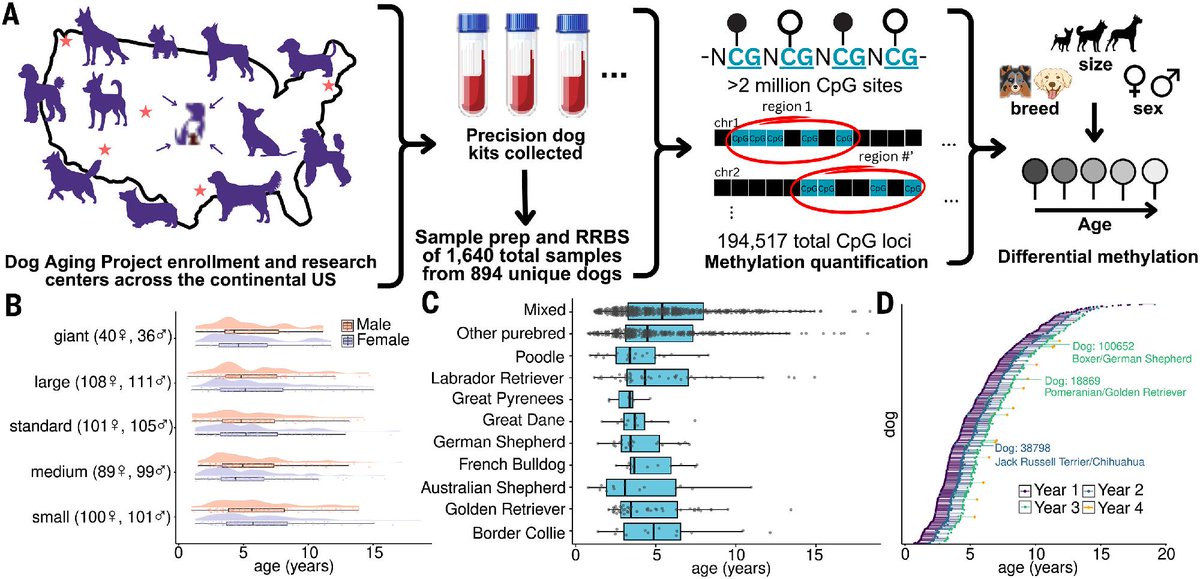
Science reports that researchers analyzed 1,640 DNA methylomes from 894 companion dogs. Larger and male dogs showed accelerated epigenetic aging patterns, while dogs whose methylation-based ages exceeded expectations had higher mortality risk. In larger dogs, age-related methylation loss at transposable elements—DNA sequences that can move within a genome—was 31% stronger than in smaller dogs. The researchers identify those elements as potential contributors to the size–lifespan link.

Combined views

3.7K

1 Source, first seen 46m ago

6 likes2 comments2 saves

Combined views

3.7K

1 Source, first seen 46m ago

6 likes2 comments2 saves
A flowchart of the Dog Aging Project. It includes graphics of dogs, DNA, and data charts. Part A shows dog graphics with stars indicating enrollment locations. Part B features a chart of dog ages by size. Part C has box plots for types of dogs. Part D displays a graph of methylation changes over years.
Image: @ScienceMagazine on X

Sentiment

Positive——Negative

Summary

Not enough discussion yet.

No sentiment analysis available yet.

Featured Source

Sentiment

Positive——Negative

Summary

Not enough discussion yet.

No sentiment analysis available yet.

1 Source

Science Magazine@ScienceMagazineWhy do large dogs tend to live shorter lives than their smaller counterparts? The answer may be written into their epigenome, according to a new study in Science. The findings reveal that larger and male dogs undergo accelerated molecular aging, with pronounced DNA methylation on the X chromosome and at transposable elements. Learn more: https://scim.ag/3VZtl3f46m
    • Home
    • Technology
    • Gaming
    • Entertainment
    • World & Business
    • Science
    • Sports
    • AI

    1 Source

    Science Magazine@ScienceMagazineWhy do large dogs tend to live shorter lives than their smaller counterparts? The answer may be written into their epigenome, according to a new study in Science. The findings reveal that larger and male dogs undergo accelerated molecular aging, with pronounced DNA methylation on the X chromosome and at transposable elements. Learn more: https://scim.ag/3VZtl3f46m
    Today's Rank

    —

    Not ranked yet

    Today's Rank

    —

    Not ranked yet