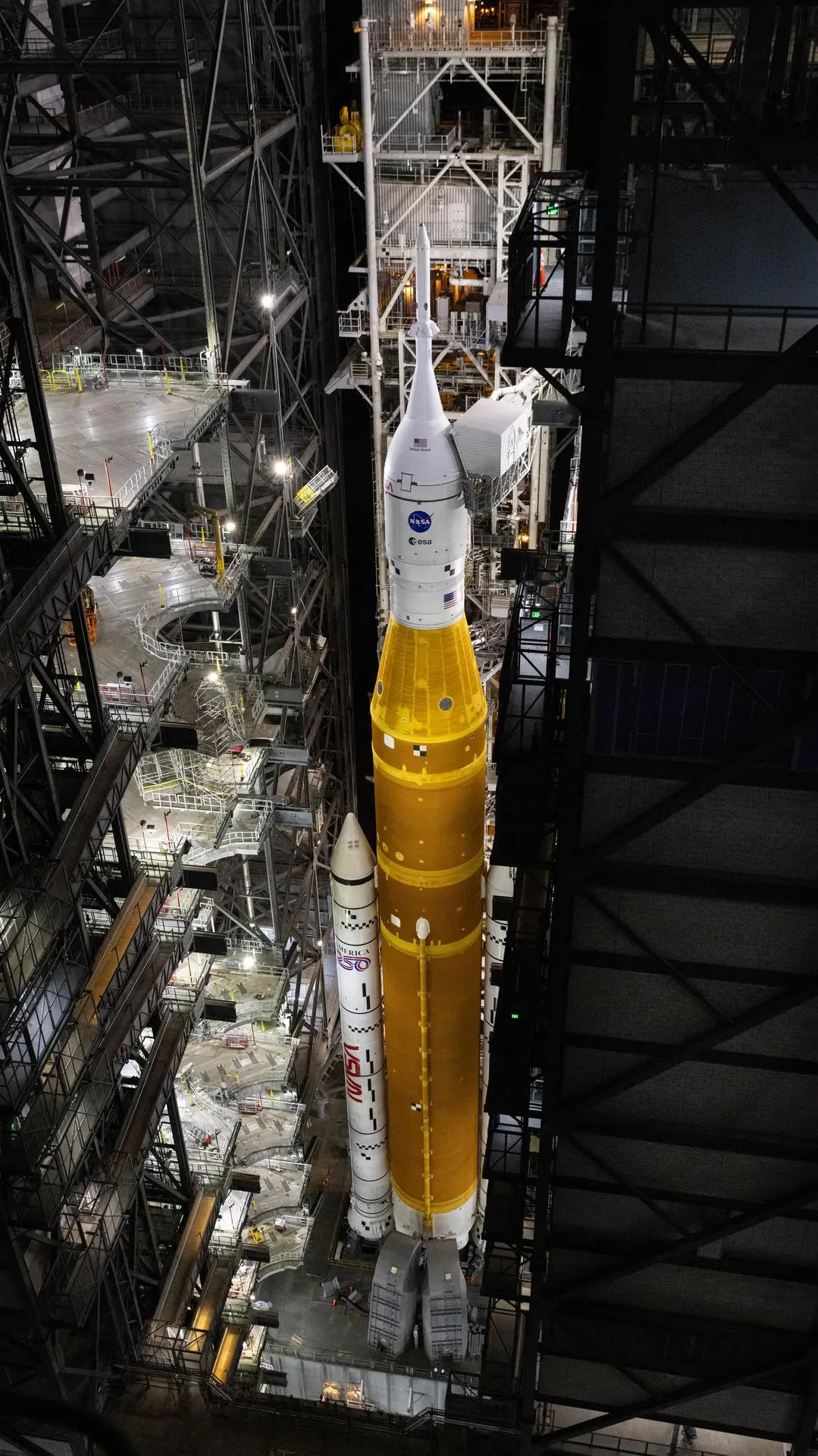
The mission is designed to test how Orion and the landers work together before NASA sends another crew to the lunar surface. A NASA Human Landing System presentation depicts Orion meeting test articles for SpaceX’s Starship and Blue Origin’s Blue Moon in Earth orbit, then returning the crew to Earth.
The first landing shifts to Artemis IV
The same presentation identifies Artemis IV, targeted for early 2028, as the first crewed lunar landing since Apollo 17 in 1972. NASA says it has not yet decided which company’s lander will be used. Artemis V is planned for later in 2028 as a second crewed landing.
NASA’s public Artemis page gives the same broader sequence: Artemis III tests lander rendezvous and docking in 2027, while Artemis IV carries the first crew back to the lunar surface in 2028. The dates remain targets rather than firm launch commitments.
Two landers, several tests
Before the crewed landings, NASA’s roadmap calls for uncrewed lunar landing demonstrations from both providers. It also lists major SpaceX milestones including Starship V3 flight testing, a long-duration orbital test and a large-scale cryogenic propellant-transfer test. Blue Origin’s path includes a Blue Moon Mk1 lunar landing and development of its Mk2 vehicle.
The roadmap reaches beyond the first crewed missions. NASA says cargo versions of the landers are intended to carry about 33,000 pounds, or 15 metric tons, to the lunar surface. The agency intends to assign SpaceX delivery of a JAXA pressurized rover no earlier than fiscal 2032 and Blue Origin delivery of a lunar habitat no earlier than fiscal 2033.