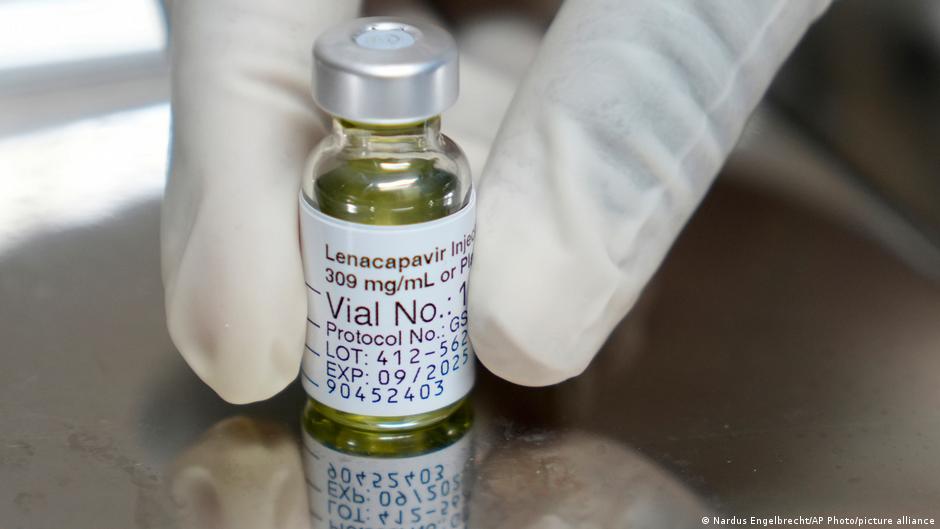
Lenacapavir has the kind of clinical profile HIV-prevention programs have been waiting for: protection that lasts about six months instead of a pill that must be taken every day. But the first African rollouts show that a breakthrough drug can still stall when supply and health systems fail to keep pace.
The long-acting drug is used as pre-exposure prophylaxis, or PrEP, for people who do not have HIV. A scheduled dose is administered as two injections under the skin. In the 2024 Purpose 1 trial, no infections occurred among girls and young women who received lenacapavir, while a second trial involving gay and bisexual men and transgender participants found near-perfect efficacy. Those results made the drug Science's 2024 Breakthrough of the Year.
The rollout is rationed
Zambia began its rollout in December 2025, and eight more countries in sub-Saharan Africa had introduced the drug by July 1, 2026. The quantity reaching clinics has been far smaller than the need.
As of July, the Global Fund had delivered 225,000 doses across the nine countries initially targeted for rollout, according to Science's reporting. By mid-June, South Africa had received 38,000 doses for 360 sites, while Zambia had received 13,000. One Cape Town clinic was given 33 doses and began turning people away after three days.
The gap is not simply a manufacturing problem. Gilead told Science it had not reached production capacity, while the Global Fund's procurement chief said demand exceeded the supply that donors had funded. The United States and the Global Fund announced in April that they aimed to provide lenacapavir PrEP to 3 million people over three years, but deliveries have been slow.
Aid cuts have also damaged the systems that get prevention drugs to people. South Africa purchases its own HIV medicines, but U.S. support had helped pay for health workers, pharmacists, counseling, outreach and monitoring. Clinics serving gay and transgender people have closed in some areas after that support ended. A shot on a shelf cannot prevent an infection if there is no staff member, clinic or outreach program to deliver it.
Cheaper supply is coming, but access is more than price
Gilead has licensed six manufacturers to make discounted generic versions for 120 low- and middle-income countries. Those products are not expected before 2027. One agreement with Dr. Reddy's Laboratories targets an annual price of $40 per person, a dramatic drop from current prices in wealthier markets.
More supply will expose the next set of challenges. People must know the option exists, be able to reach a clinic and return for later doses. Some dislike needles or experience painful lumps after the injections. Researchers are testing mobile clinics, peer outreach and pharmacy distribution to learn which approaches actually increase uptake.
The potential payoff is large, but it remains conditional. A University of the Witwatersrand model cited by Science found that an ambitious rollout could help South Africa reach virtual elimination of HIV incidence by 2039, more than a decade earlier than its baseline scenario. That is a modeled outcome, not a forecast.
Lenacapavir is not a vaccine or a cure, and no single prevention method will suit everyone. Still, its trial results suggest that a twice-yearly option could close one of oral PrEP's biggest gaps: the difficulty of taking a preventive pill every day. Whether it changes the course of the epidemic now depends less on another efficacy result than on money, supply and the public-health machinery needed to turn doses into protection.