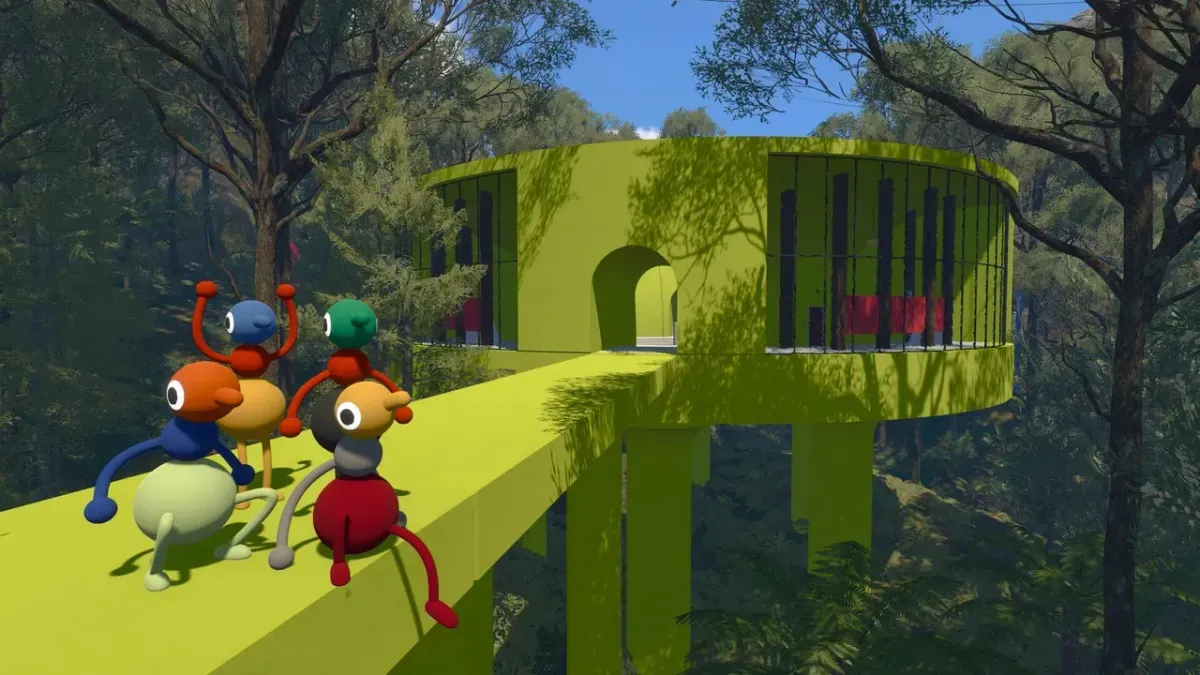
Big Walk developer House House says it used large language models (LLMs) “sparingly” to troubleshoot technical problems late in development, sometimes modifying chatbot-generated snippets into game code. The studio also acknowledges that it developed the game without an internal AI policy, calling that omission a “failure.” Source
The public disclosure follows a pledge by a group of 2027 Independent Games Festival jurors not to vote for games using generative AI “in any capacity.” GamesIndustry.biz reports that Big Walk was submitted to the festival. The group is also asking the IGF to adopt an anti-AI policy for future years; its pledge concerns the signatories’ votes, not a festival-wide ruling on Big Walk. Source
Rock Paper Shotgun quotes the group’s statement: “AI-generated code is not an exception to these harms.” For those jurors, even a tiny amount of AI-generated code doesn’t round down to zero. Source
What House House says the chatbots did
House House estimates that “well under 0.1% of Big Walk’s code had anything to do with this usage,” and says generative AI wasn’t used in any other context when making the game. Source
Its main use, the studio says, was researching problems with third-party code. One example involved Unity’s URP rendering system failing to exclude distant shadow-casting objects behind the player. According to House House, this made the game “run 50% slower for around 20 seconds at sunrise and sunset.” A sunset with a performance surcharge. Lovely. Source
The studio says its own research failed to find a solution, and a Unity engineer who investigated ultimately concluded that the requested change wasn’t possible. A chatbot then suggested a potential fix after several dead ends. House House says it modified that suggestion extensively and got it working; this particular fix involved about 10 lines of code inside URP. Not exactly a one-click rescue. Source



Comments