• Home
  • Technology
  • Gaming
  • Entertainment
  • World & Business
  • Science
  • Sports
  • AI
HomeTechnologyGamingEntertainmentWorld & BusinessScienceSportsAI
    • Home
    • Technology
    • Gaming
    • Entertainment
    • World & Business
    • Science
    • Sports
    • AI
    company
    NASA Webb Telescope

    NASA Webb Telescope

    4 stories tagged by Digg

    Recent stories

    Science

    Webb finds the host galaxy of the most distant fast radio burst yet seen

    NASA Science says Webb measured the burst’s distance; fast radio bursts are millisecond-long flashes with elusive origins.

    NASA Webb TelescopeNW
    SPACE.comSP
    3 Sources, 2h ago, first seen 2h ago
    A field full of small galaxies of all shapes against the blackness of space. A few bright white stars show 8 prominent diffraction spikes. A small galaxy at lower right is highlighted with a white box. A shaded triangle extends upward to the corners of a larger box showing a zoom in of the region. Two fuzzy, light blue blobs are at center, with a larger and brighter one at top. Just above the top blob is a white crosshair showing the location where a fast radio burst was detected.

    Science

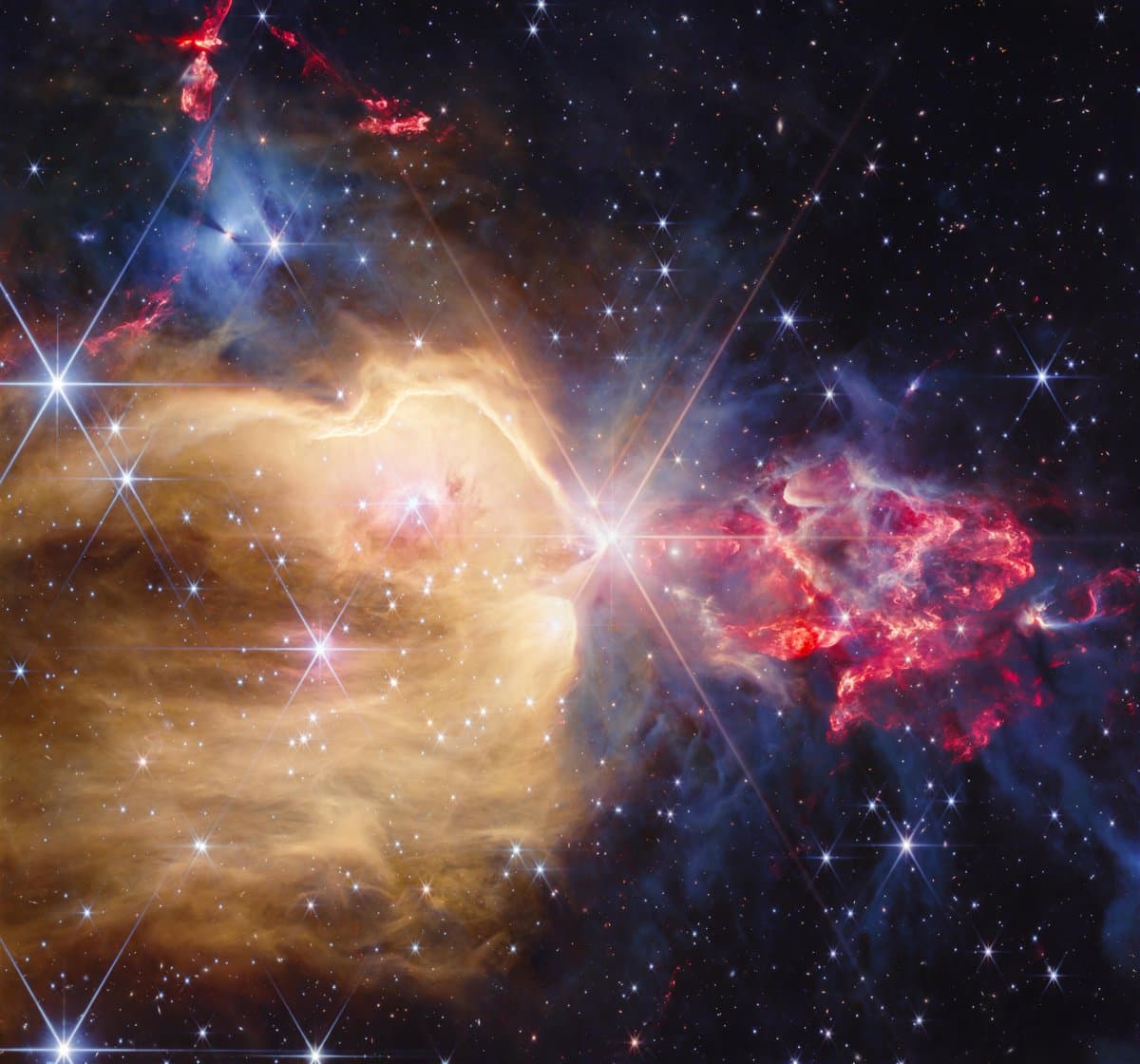
    NASA Webb teases a new image in World Space Week post

    NASA Webb said in an X post for World Space Week that people searching for space facts might come across the telescope’s newest image, but the post itself did not include details about the image.
    NASA Webb TelescopeNW
    1 Source, 2d ago, first seen 2d ago
    A young star cluster filled with many stars that display Webb’s unique eight-pronged diffraction pattern. At its center is a yellow star which sports the largest diffraction pattern. To the left of the star, there is a region filled with yellow dust and gas that extends from the star to the left border of the image. This yellow region extends from the bottom, covering about two-thirds of the image. The yellow region has several blue stars of different sizes embedded within. The top third, which lies outside of the yellow region, holds a few bright protostars, within dense gray gas. Those stars illuminate the gas, making it appear blue. A few red outflows from other protostars are visible above this grayish-blue region. To the right of the central star, there is a clumpy, flame-like plume of red dust and gas with protostars that emit a soft white light within. The plume is surrounded by more dense gray gas and dust. 

Image credit: NASA, ESA, CSA, STScI, Processing: Alyssa Pagan.

    Science

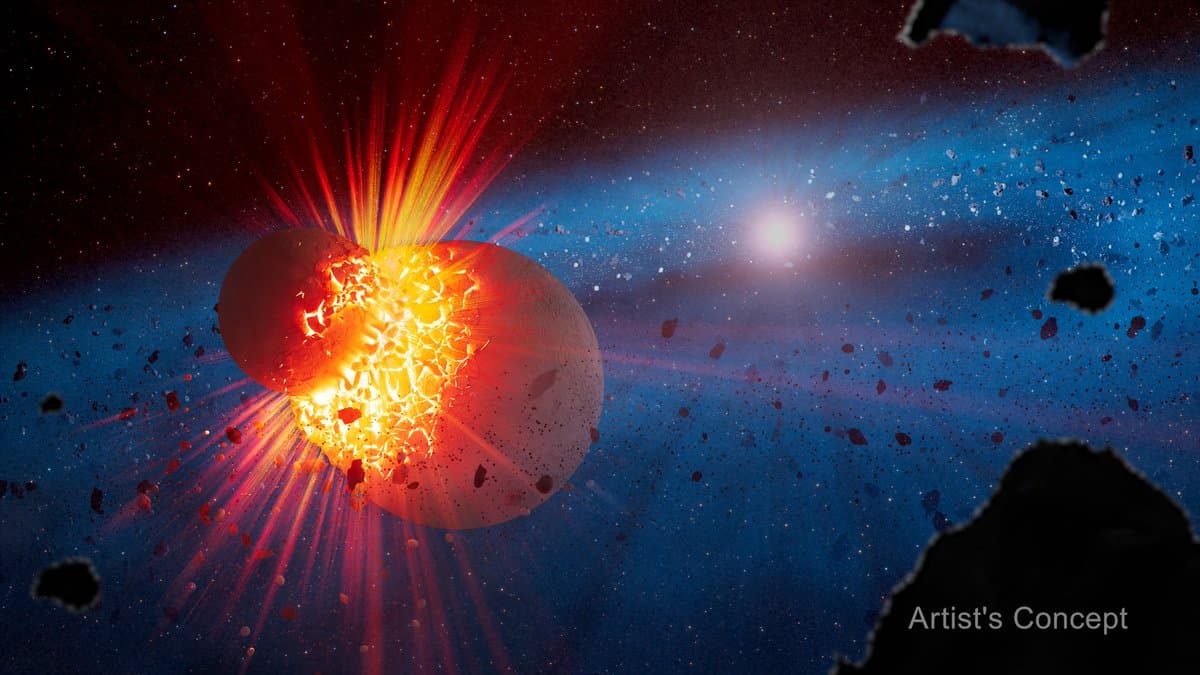
    Webb study of rare extreme debris disks points to two kinds of planet-shattering collisions

    Webb and Spitzer observations of 21 rare extreme debris disks found silica-rich and silica-poor groups that may reflect different collision energies in young stellar systems.
    NASA Webb TelescopeNW
    4 Sources, 7d ago, first seen 7d ago
    Artist’s concept of a star and its debris disk against the black background of space. The star is in the background, right of center, and depicted as a small, luminous sphere. The debris disk is a large blue ring that encircles the star. The debris disk is angled toward the viewer, so that the portion nearest to the viewer extends beyond the bottom frame of the illustration. Many dark, rocky fragments are scattered throughout the debris disk. In the foreground, toward the left, is a small planetary embryo colliding into the left side of a larger spherical object. The impact site glows bright yellow and orange and has a mottled appearance, as though chunks of both colliding bodies are breaking up and being destroyed. Orange-yellow streams of vapor extend outward from the collision area. Behind the debris disk and its star are many small stars in the background. A label in the bottom right corner reads “Artist’s Concept.”

    Science

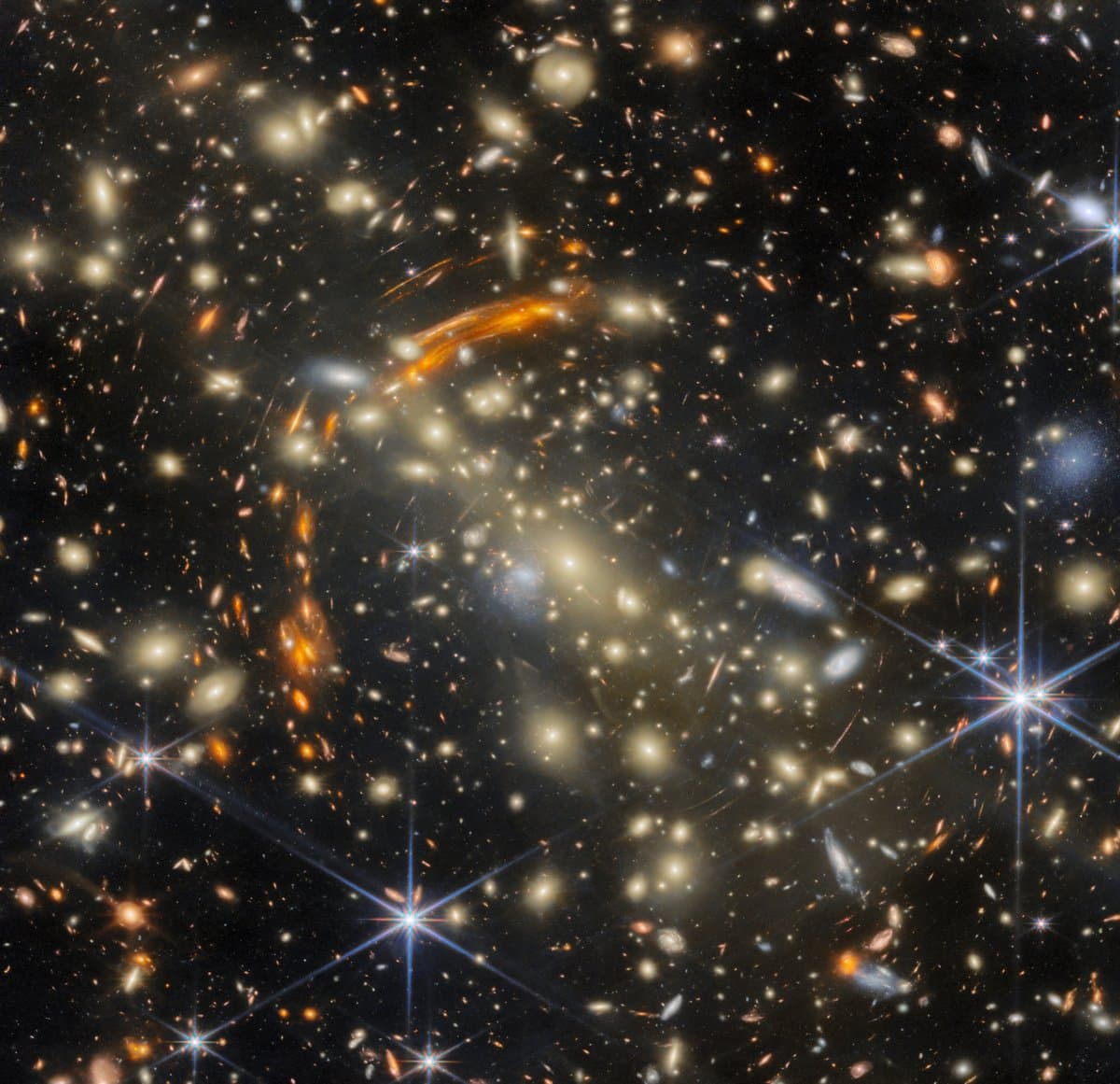
    Webb image shows multiple galaxies appearing four or more times in one cluster

    NASAWebb says gravitational lensing in galaxy cluster MACS J0454.1-0300 produces four or more images of the same distant galaxy—and that researchers have spotted this more than once in the cluster for the first time.
    NASA Webb TelescopeNW
    3 Sources, 9d ago, first seen 9d ago
    A massive galaxy cluster, made of many golden elliptical galaxies with the largest, brightest one in the center. Heavily distorted orange galaxies appear all around the cluster, the largest concentrated in a large arc around the cluster's center; these are images of very distant galaxies, created by gravitational lensing. A few galaxies are large and bluish-white in color; bright, nearby stars are the same color.

    Elsewhere on the web

    @NASAWebb