Announcement
Notion details Elo-based testing behind its upgraded Auto model router
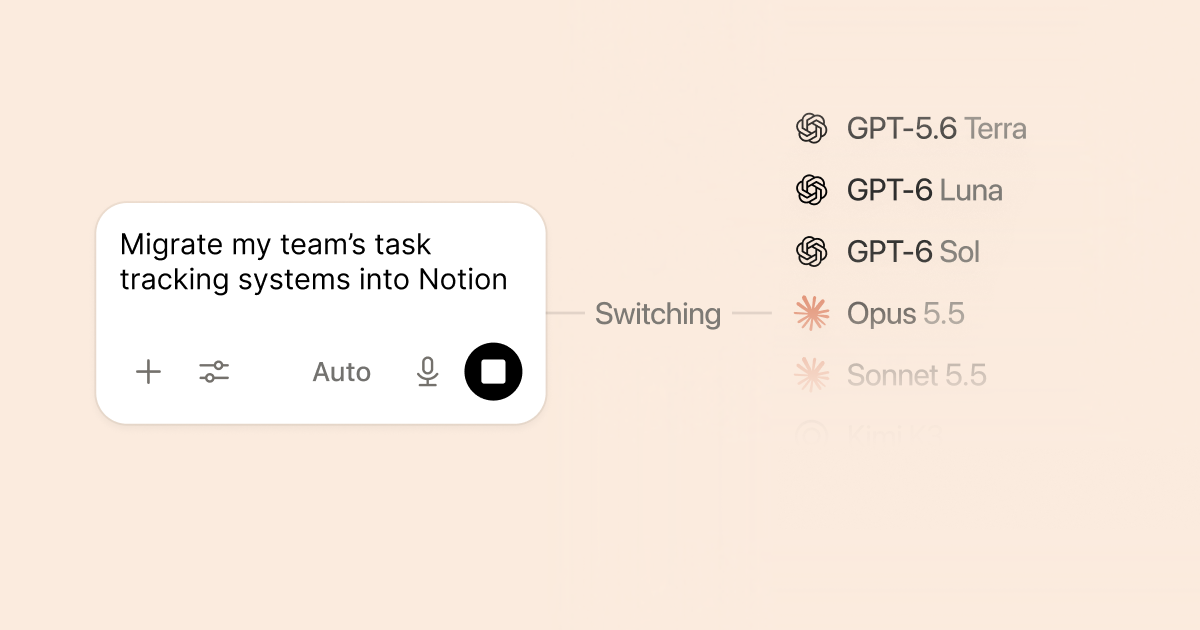
Notion reports that in simulated-task tests, Auto achieved roughly 90% of frontier-model performance at about 90% lower cost.

TLDR
To test its upgraded Auto router, Notion says it replayed sampled knowledge-work tasks in simulated workspaces. An ensemble’s head-to-head preferences generated Elo rankings, which Notion used to calibrate a single-model judge. The company reports that Auto averaged roughly 90% of frontier-model performance at about 90% lower cost in those tests; that is its simulated-task result, not a measured customer outcome.
Combined views
6.1K
4 Sources, first seen ago