Israel is set to hold a national election Oct. 27, and Reuters Breakingviews columnist Yawen Chen argues that the economy’s recent strength does not settle its longer-term challenges. In her Oct. 20 column, she writes that a different government might secure an economic dividend.
Chen says Israel’s economy grew in 2025 by more than a percentage point above the 1.8% average among OECD members. She also puts sovereign debt on a path toward 70% of GDP and the fiscal deficit at nearly 5% of GDP. Those pressures sit alongside a deeper concern in her column: growth and income-tax revenue depend heavily on a relatively small group of people.
A concentrated tax base
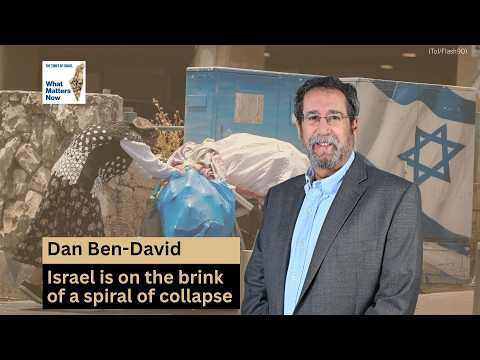
High tech accounted for 18% of Israel’s GDP and half its economic growth in 2025, Chen writes. Dan Ben-David of the Shoresh Institution for Socioeconomic Research estimates that the top 20% of workers provide 93% of government income-tax revenue, according to the column.
Departures could put more pressure on that group. Chen reports that 35,993 native-born Israelis emigrated in 2024, 62% above the annual average from 2009 to 2022, while 13,820 returned. She also cites the Israel Innovation Authority as saying that 35% of surveyed high-tech companies reported an increase in relocation requests during the second half of 2025. Chen points to domestic politics as a factor for some people, while also describing security and conflict as considerations for Israelis overseas.
Employment and the next government
Chen identifies employment among Haredi, or ultra-Orthodox, men as another economic challenge. She reports that 53% were employed in 2025, compared with about 87% of non-Haredi Jewish men. Citing Shoresh, she gives an estimate of 37.5 billion shekels in central and local government subsidies and benefits to the Haredi community in 2024. That exceeds the 26.7 billion shekels she lists for central-government spending on hospitals, universities and colleges combined, though the two figures cover different levels of government.
Chen argues that broader employment and productivity would ease pressure on the narrow tax base as defense spending rises. A different government could pursue changes to work, military service and education, she writes, but a change in government is hardly assured. Four recent polls cited in her column put Prime Minister Benjamin Netanyahu’s bloc at 49 to 53 seats and the main opposition bloc at 50 to 54. Both ranges fall short of the 61 seats needed for a majority, leaving another inconclusive result possible.