The European Commission raised its 2026 eurozone growth forecast to 1.2% from 0.9% on November 17, as stronger exports helped the economy withstand the Middle East energy shock better than expected. The less welcome revision: inflation is also forecast to run higher than Brussels expected in spring. Source Source
The Commission projects growth of 1.2% again in 2027, edging up to 1.3% in 2028. But it also expects eurozone public debt to reach 91.3% of gross domestic product in 2028, up from 88.6% in 2025. Source
The AI boost involves actual machinery
The Commission says the upward growth surprise in the first three quarters came largely from a rebound in exports. Consumption broadly met expectations, while investment was slightly weaker. Global spending on AI and electrification infrastructure is supporting demand for European power, cooling and chip-making equipment. Source
The forecast treats productivity gains from faster AI adoption as a possible future benefit, separate from today's equipment orders. Source
Nor is the stronger outlook shared evenly. Germany's 2026 growth forecast rose to 1.3% from 0.6% in spring, while France's was halved to 0.4% from 0.8%, according to AFP and the Financial Times. Source Source
A GDP upgrade is not a checkout discount
The Commission now forecasts annual eurozone inflation of 3.2% in 2026 and 3.1% in 2027, before easing to 2.1% in 2028. In spring, it expected 3.0% this year and 2.3% next year. Those are annual averages, distinct from October's inflation reading of 4.0%. Source Source
Energy inflation is expected to moderate in 2027, but food-price pressures are projected to intensify as higher energy and fertilizer costs feed through to prices. The summer's heatwaves and droughts also damaged crops. The Commission warns that lower-income households are more exposed because food and household energy take up a larger share of their spending. Source
Across the wider EU—not just the eurozone—the Commission expects private consumption growth to slow from 1.3% in 2026 to 1.1% in 2027 as the higher cost of living restrains purchasing power. Source
Governments face a bigger interest bill
The Commission links widening government deficits to higher defense spending, rising interest costs and measures shielding households and businesses from energy prices. It forecasts the eurozone's annual budget deficit—the gap between public spending and revenue—at 3.5% of GDP in 2026, widening to 3.8% in 2028. Source
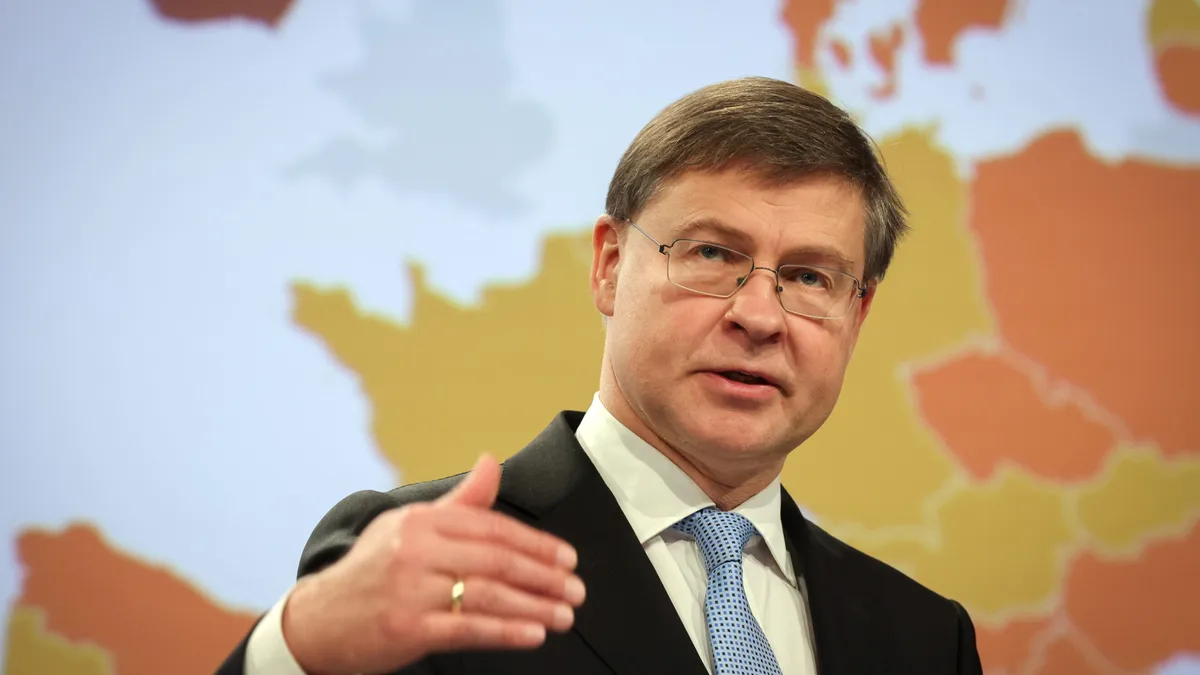
“Budget deficits are widening and rising interest rates are making this debt more expensive to service,” Economy Commissioner Valdis Dombrovskis told reporters, according to POLITICO. Source
The outlook remains vulnerable to conflict, trade-policy uncertainty and further increases in long-term borrowing costs. AI features on both sides of the ledger: equipment demand supports exports, while stretched equity valuations leave financial markets exposed to a correction. Source Source
The forecast's exchange-rate, interest-rate and commodity-price assumptions have an October 29 cutoff, with other information included through November 3. The Commission says subsequent falls in oil and gas prices could lower projected inflation in 2027 and 2028 and modestly lift growth in 2027—if those lower prices last. Source Source






Comments