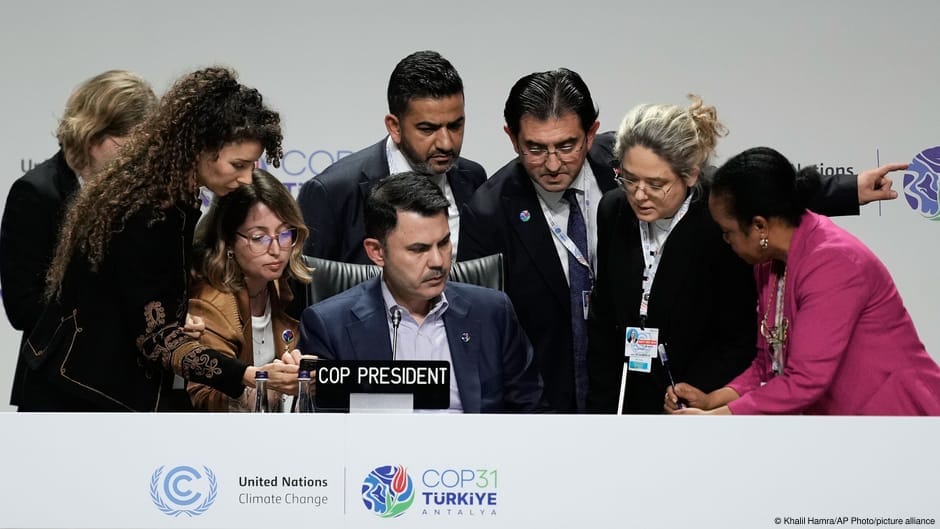
COP31 ended in Antalya, Turkey, on Sunday, November 22, without an overarching agreement after divisions over fossil fuel language and climate finance defeated the proposed deal, according to AP, Axios and Sky News. Nearly 48 hours of overtime couldn't bridge the gap. Source Source Source
The failure concerned the summit's “cover decision,” a broad agreement setting out goals and direction. Work on narrower issues made progress, even as the main deal fell apart. Source Source
Why the draft failed
The European Union and several other countries rejected the final proposal from the joint Turkish-Australian leadership because it didn't mention fossil fuels, AP reported. Russia and Saudi Arabia pushed to keep that language out. Axios, citing multiple reports, also identified vulnerable island nations among those objecting to the omission of an explicit transition away from fossil fuels. Source Source
“It's unconscionable that we would have a climate act that makes no reference to fossil fuels,” Irish climate minister Darragh O'Brien said on behalf of the EU, according to AP. Source
A considerably larger group of nations accepted the proposal, often reluctantly, AP reported. But adoption required near-unanimous consensus. A bigger head count wasn't enough. Source
Climate finance, including funding to help developing countries adapt to warming, was another dividing line. Negotiations president Chris Bowen said funding and fossil fuel wording were the main issues that sank the agreement, Sky reported. Source







Comments