• Home
  • Technology
  • Gaming
  • Entertainment
  • World & Business
  • Science
  • Sports
  • AI
HomeTechnologyGamingEntertainmentWorld & BusinessScienceSportsAI
World & Business
Reaction

EU-China Trade Tensions Escalate Over Hybrid Cars, Port Deals, and Reciprocity

A commentator blames Europe's energy costs and export restrictions for part of its roughly €1 billion daily China trade deficit.

Angelo Giuliano 🇨🇭🇮🇹AG
1 Source, 2h ago, first seen 2h ago

TLDR

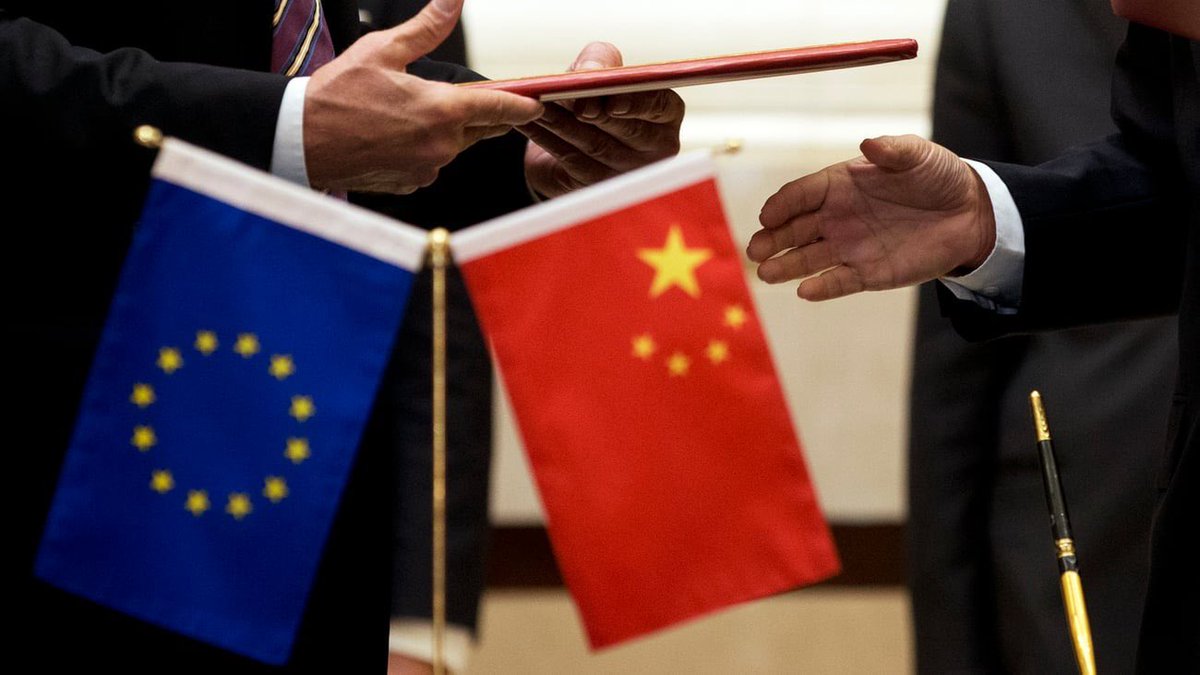
The European Parliament passed a resolution demanding trade reciprocity from China or countermeasures. Beijing rejected requests to curb hybrid and EV exports, while Germany blocked Cosco's acquisition of a Hamburg port logistics firm, citing security. A commentator says trade commissioner Maroš Šefčovič called the roughly €1 billion daily trade deficit unsustainable and argues that Europe's energy costs, regulations and export restrictions also matter.

Combined views

1.8K

1 Source, first seen 2h ago

44 likes3 comments2 saves11 reposts
Combined views

1.8K

1 Source, first seen 2h ago

44 likes3 comments2 saves11 reposts

Sentiment

Positive——Negative

Summary

Not enough discussion yet.

No sentiment analysis available yet.

Featured Source

Sentiment

Positive——Negative

Summary

Not enough discussion yet.

No sentiment analysis available yet.

1 Source

Angelo Giuliano 🇨🇭🇮🇹@angeloinchinaEurope’s trade deficit with China: Brussels is looking in the wrong direction Maroš Šefčovič has arrived in Beijing complaining about Europe’s trade deficit with China, which he calls unsustainable at around €1 billion a day. The number is real. But blaming China for the whole problem is an easy way to avoid talking about Europe’s own mistakes. Energy costs have risen sharply, regulations keep piling up, and European industry is losing ground. I wrote about this yesterday. You cannot make production more expensive at home and then act surprised when cheaper, competitive goods come from abroad. My friend Laurent Michelon made a similar point in his response to Šefčovič. The comments are revealing, too. Europe needs to sell more of what China actually wants, including advanced industrial equipment. Take ASML’s EUV lithography machines. These are high-value products that could make a difference to the trade balance. But exports to China have been restricted under pressure from Washington. Europe cannot complain about the deficit while accepting limits on what its own companies can sell. There is also a double standard over subsidies. Europe spent decades supporting Airbus and its own automotive, semiconductor and battery industries. Yet when China supports strategic industries, Brussels treats it as an unacceptable distortion of the market. The bigger story goes back decades. Western companies moved production to China because costs were lower and profits attractive. China gained investment, technology and industrial capacity, while Western businesses benefited from the arrangement. The political assumption that economic integration would eventually make China conform to the West did not work out as many expected. Now Europe is paying the price for its own industrial weaknesses, and Beijing is being asked to solve them. China has little reason to change its trade policy simply because European officials dislike the outcome. If Brussels wants a different result, it needs to address why European products have become less competitive. You cannot rebuild European industry by blaming China. You have to make Europe competitive again.2h
    • Home
    • Technology
    • Gaming
    • Entertainment
    • World & Business
    • Science
    • Sports
    • AI

    1 Source

    Angelo Giuliano 🇨🇭🇮🇹@angeloinchinaEurope’s trade deficit with China: Brussels is looking in the wrong direction Maroš Šefčovič has arrived in Beijing complaining about Europe’s trade deficit with China, which he calls unsustainable at around €1 billion a day. The number is real. But blaming China for the whole problem is an easy way to avoid talking about Europe’s own mistakes. Energy costs have risen sharply, regulations keep piling up, and European industry is losing ground. I wrote about this yesterday. You cannot make production more expensive at home and then act surprised when cheaper, competitive goods come from abroad. My friend Laurent Michelon made a similar point in his response to Šefčovič. The comments are revealing, too. Europe needs to sell more of what China actually wants, including advanced industrial equipment. Take ASML’s EUV lithography machines. These are high-value products that could make a difference to the trade balance. But exports to China have been restricted under pressure from Washington. Europe cannot complain about the deficit while accepting limits on what its own companies can sell. There is also a double standard over subsidies. Europe spent decades supporting Airbus and its own automotive, semiconductor and battery industries. Yet when China supports strategic industries, Brussels treats it as an unacceptable distortion of the market. The bigger story goes back decades. Western companies moved production to China because costs were lower and profits attractive. China gained investment, technology and industrial capacity, while Western businesses benefited from the arrangement. The political assumption that economic integration would eventually make China conform to the West did not work out as many expected. Now Europe is paying the price for its own industrial weaknesses, and Beijing is being asked to solve them. China has little reason to change its trade policy simply because European officials dislike the outcome. If Brussels wants a different result, it needs to address why European products have become less competitive. You cannot rebuild European industry by blaming China. You have to make Europe competitive again.2h
    Today's Rank

    —

    Not ranked yet

    Today's Rank

    —

    Not ranked yet