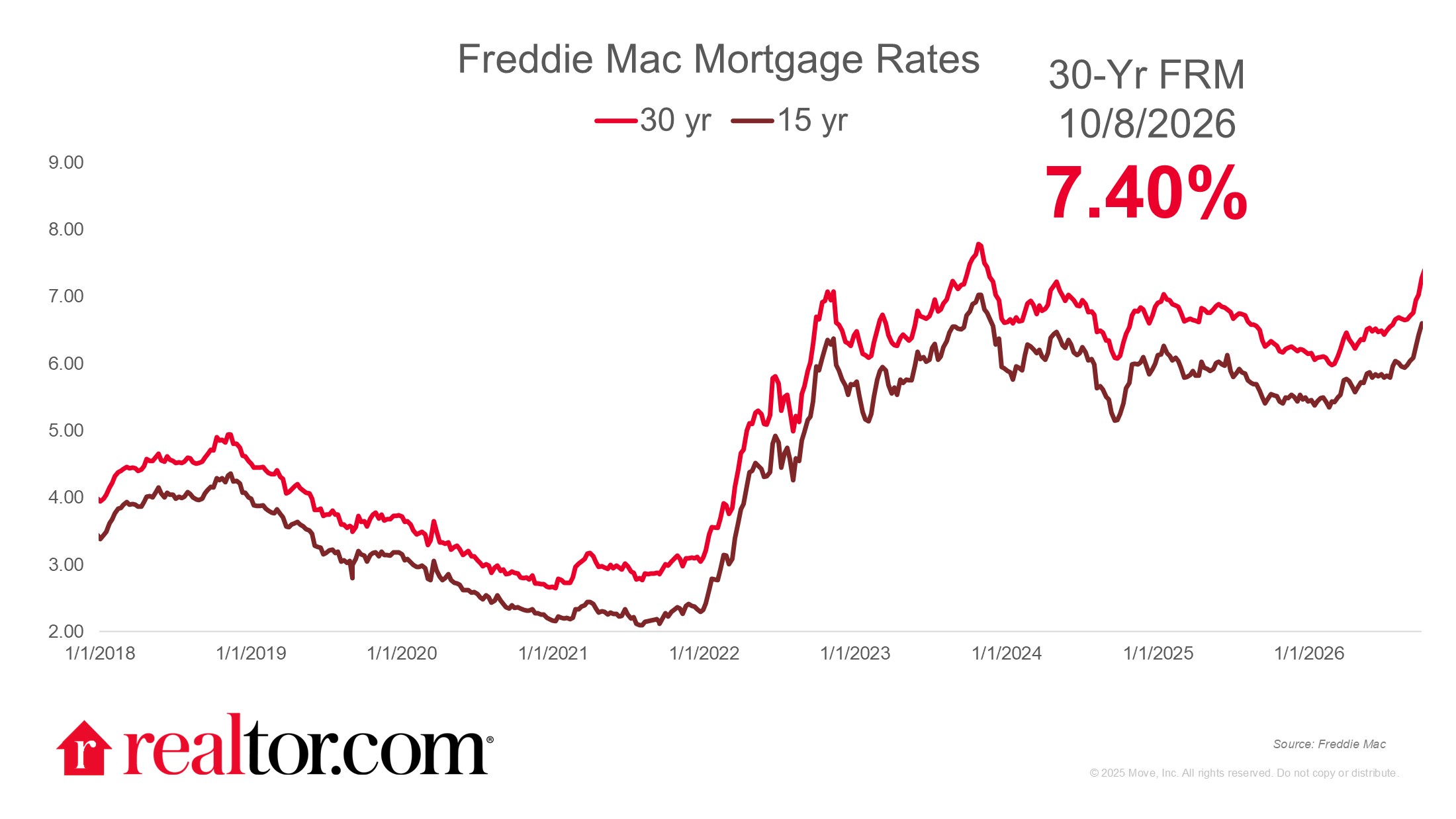
Freddie Mac’s average rate for a 30-year fixed mortgage reached 7.40% on Oct. 8, up from 7.28% a week earlier and 6.30% a year earlier. It was the highest reading in Freddie Mac’s 52-week range.
The Primary Mortgage Market Survey is based on rates collected from thousands of conventional home-loan applications submitted to Freddie Mac by lenders across the country. Its weekly figure averages offers made from Thursday through Wednesday, so it is a market benchmark rather than a quote every borrower will receive.
The latest reading moved beyond the 7.24% mid-September rate cited in an Oct. 10 social-media post about housing costs. That post also cited the Atlanta Fed in saying a household now needs more than $120,000 in annual income to afford a median-priced home. The exact income figure was not visible in the Atlanta Fed page’s current public display, but the bank’s methodology shows why mortgage rates are only one part of the affordability calculation.
What “affordable” includes
The Atlanta Fed’s Home Ownership Affordability Monitor measures whether a median-income household can absorb the estimated cost of owning a median-priced home. It treats ownership as affordable when annual costs take no more than 30% of median household income.
Those costs include principal and interest, property taxes, homeowners insurance and private mortgage insurance. The model assumes a 10% down payment, which means a buyer’s qualifying income can rise even if the home’s sticker price does not change. A higher mortgage rate increases principal-and-interest costs, while taxes, insurance and prices can add pressure separately.
The Atlanta Fed defines qualifying income as the amount needed to keep those estimated annual costs within the 30% threshold. That makes the measure broader than a basic online mortgage calculator, and it also means results depend on the model’s down-payment and insurance assumptions.
Sales remain slow as prices rise
The latest National Association of Realtors data showed existing-home sales fell 2.0% in August from the previous month, to a seasonally adjusted annual rate of 3.98 million. Sales were still up 1.6% through the first eight months of 2026 compared with the same period a year earlier.
Inventory rose to 1.62 million homes, equal to 4.9 months of supply at the current sales pace. NAR said that was the highest supply level in more than 10 years, giving buyers more room to negotiate. Yet the median existing-home price was still 1.6% higher than a year earlier.
That combination leaves buyers facing more listings but little relief from financing costs or prices. NAR’s September existing-home sales report is scheduled for Oct. 13, providing the next official look at whether the recent jump in mortgage rates further slowed completed purchases.