Developers define a question and its allowed answers, then provide context as text, images or native JSON. According to OpenAI, the API returns a probability, a choice from the supplied options or a score. The company says a request can contain up to 400 questions, twice the previous limit.
OpenAI also added native integration with GPT-Live, allowing applications to make decisions during live voice conversations. Its example is a customer-support agent deciding whether to ask a clarifying question, route a request or escalate an issue.
Speed claims and pricing
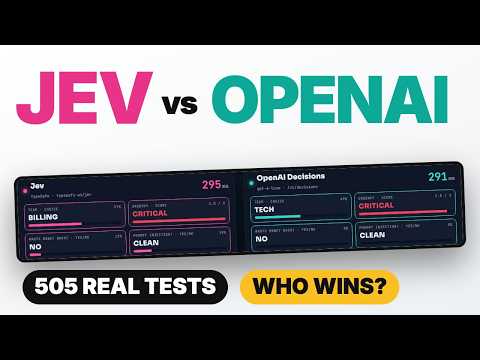
OpenAI says bounded decisions can be made up to 10 times faster than GPT-6 Luna through the Responses API. That comparison is between two OpenAI API offerings, not a speed guarantee for every application. In OpenAI's post, Andrew Hsu, chief technology officer at language-learning app Speak, said its Decisions API integration with GPT-Live reduced the time to next action by more than 90% in Speak's testing, from 1.4 seconds to 0.13 seconds.
TechCrunch's Tim Fernholz reported that OpenAI API product lead Nikunj Handa described reconfiguring ChatGPT Luna for faster, cheaper inference rather than building a specifically calibrated decision model. Handa said the team might pursue specific training later, but was using Luna for now.
In its Oct. 22 announcement, OpenAI listed a price of $0.10 per million input tokens, $0.01 per million cached input tokens and no output-token charges. The company also said it had added prompt caching and U.S. and EU inference residency since public beta.