China is pursuing universal AI literacy among schoolchildren by 2030, with nearly half its provinces and municipalities issuing binding plans, Reuters reported on November 16, 2026. But the country hasn't established a standard framework for measuring that literacy. Source
China's primary and secondary education system enrolls almost 200 million students. Broad guidelines call for pupils to progress from basic AI concepts to advanced tools and projects involving critical thinking. Learning about AI is part of the goal—not just getting lessons from it. Source
Shanghai mandates at least 30 hours of AI-skills teaching annually per grade. Ningxia and Gansu plan to include AI literacy in high-stakes school entrance exams by 2027, according to Reuters' review of regional blueprints. Source
One goal, very different classrooms
At the $39,000-a-year Beijing New Talent Academy, 13-year-old Peng Gaodi has used AI to build more than 200 apps, including a homework-submission platform and a secondhand marketplace, Reuters reported. The private academy has developed a curriculum covering AI, robotics and programming. Source
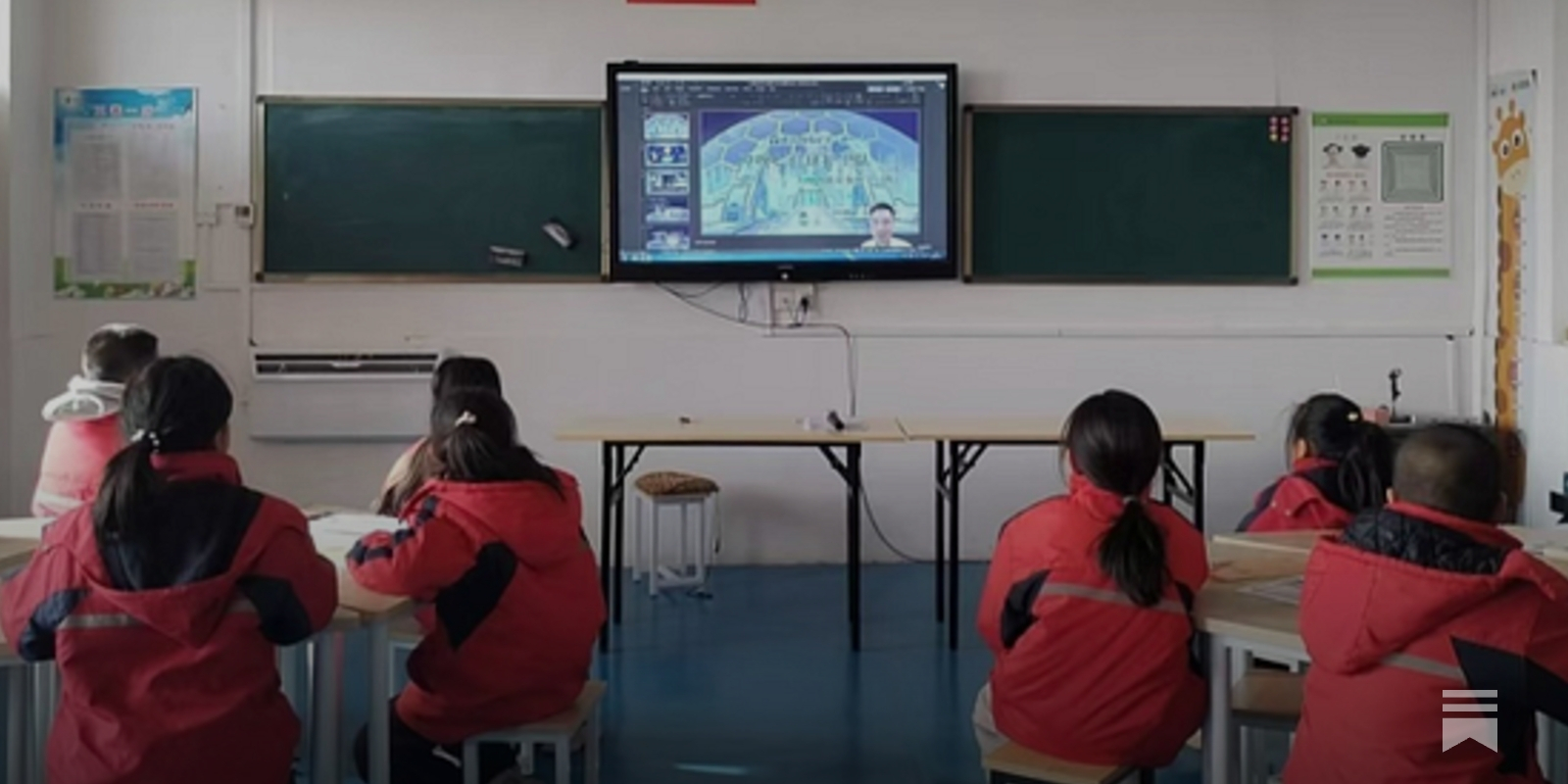
In rural Anhui, Funan County Qinqing High School is using AI to address a shortage of qualified teachers. Its 4,000 pupils learn core subjects through AI-generated lessons, according to headmaster Yang Tianliang. Reuters described personalized tablet classes in which AI agents ask struggling students questions rather than hand over answers. Source
“Implementation is all over the place,” Ted Mo Chen, chief of staff at education-technology company ClassIn, told Reuters. He said few schools he had visited had effectively integrated AI into their curricula. Source
Reuters reported that Guizhou is integrating facial recognition and behavioral analysis into classrooms, while Yunnan plans to have lessons recorded and analyzed by AI in 14,000 classrooms. Teaching children about AI is one thing; having AI watch the classroom is another. Source
Better homework isn't the whole test
Reuters reported that a study of nearly 27,000 Chinese teenagers associated AI adoption with an 18% increase in homework scores but a 20% decline in monthly examination scores within six months. Source
A separate nationwide survey involving more than 320,000 pupils reported educational benefits alongside concerns about dependence and weaker independent thinking. Students using AI at least three times a week showed lower memory, comprehension, analytical and creative skills than less frequent users, Reuters reported. The findings don't establish that AI caused poorer exam performance or weaker thinking skills. Source
Those findings concern learning with AI. Measuring what students understand about AI and how well they can use it is a separate challenge. Selena Guo, portfolio lead at research firm China Policy, told Reuters: “Mature, widely adopted assessment rubrics for compulsory school-level AI competency are still being built.” China's education ministry did not respond to Reuters' request for comment. Source
Beijing parent Rita Luan told Reuters that her daughter must spend 15 minutes trying a difficult math problem before asking AI for help. Days later, she asks her daughter to solve it again without assistance. Source
“The point is to make sure she actually digested the solution,” Luan said. The chatbot doesn't get to help with that round. Source





Comments