The Nasdaq 100 fell 4.7% in early trading on Wednesday, November 25, 2026, taking its decline from an early-October record to 20% and putting it on track for its first bear market since April 2025. Bloomberg reported the figures at 9:50 a.m. EST as investors sold AI-exposed stocks. Source
A 20% decline from a recent high marks the bear-market threshold, but this was an intraday reading, not a closing result. Bloomberg said the rout had erased more than $8.5 trillion from the market value of Nasdaq 100 companies. That’s the cumulative damage, not Wednesday morning’s bill. Source Source
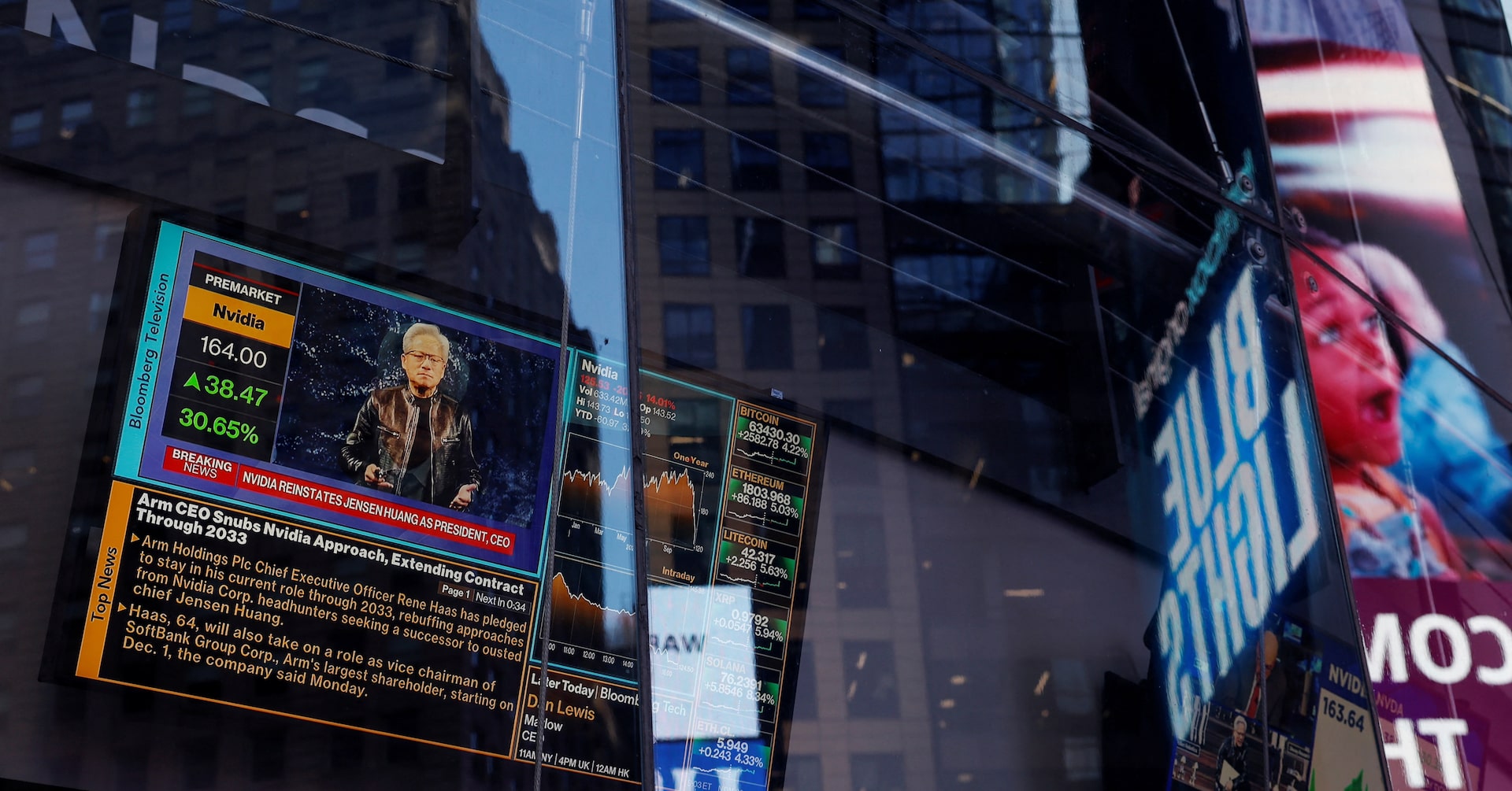
Nvidia fell more than 8% after the U.S. market opened, according to Forbes, following Monday’s surge on Jensen Huang’s reinstatement as chief executive. That comeback rally is having a rough second act. Claude maker Anthropic also dropped roughly 9% to just under $75 on Wednesday, the Financial Times reported, after slipping below its $83 listing price on Tuesday. Source Source
At the opening bell, the broader Nasdaq Composite—a different index from the Nasdaq 100—fell 3.31%, while the S&P 500 dropped 1.95%, according to Reuters. Source
The chip supply chain takes a hit
The selling had already swept through Asian companies tied to the AI boom. In Japan, technology-focused investor SoftBank Group fell 14.83%, while Nvidia chip-testing equipment supplier Advantest lost 12.94% and chipmaking-equipment supplier Tokyo Electron dropped 12.53%, CNBC reported. Source
In South Korea, Samsung Electronics fell 9.87% and SK Hynix lost 11.05%. Both supply the high-bandwidth memory used in AI accelerators, showing how far the pressure reached beyond the companies selling chatbots. Source
The comeback didn’t settle the spending question
Rolf Bulk, an analyst at The Futurum Group, told CNBC that the renewed selling largely reflected lingering questions about the sustainability of AI spending beyond 2027. Huang’s return, in his assessment, did little to change that outlook. Source
“There are still concerns on the sustainability of AI demand, ability of the sector to finance the build-out, and questions around power supply,” Bulk said. Source
Investors were also assessing new U.S. tariff proposals and a key inflation report, Reuters reported. The Financial Times described doubts about whether the AI spending boom would pay off and how it would be financed amid climbing interest rates. Source Source
Bulk also argued that supply shortages could leave South Korean memory chipmakers relatively insulated from a potential slowdown in AI infrastructure spending, even as their shares fell on Wednesday. Source





Comments