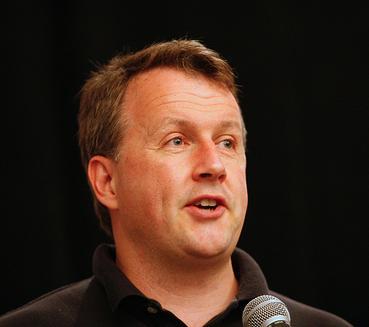
It seems a mistake to call oneself a "non-technical founder." You're treating not knowing how to do something as a part of your identity. Surely it's better just to fix that.
6:06 AM · Jun 14, 2026 · 110.1K Views
Y Combinator co-founder Paul Graham sees the phrase non-technical founder as more than neutral description; it risks turning a current skills gap into a permanent self-image, when the gap could simply be closed through learning. Ryan Hoover, Product Hunt founder, replied that he already avoids the term for exactly that reason.
It seems a mistake to call oneself a "non-technical founder." You're treating not knowing how to do something as a part of your identity. Surely it's better just to fix that.
Graham frames the label as converting temporary ignorance into identity, while Hoover signals agreement by dropping the descriptor entirely from his own vocabulary.
The short thread offers no examples of founders who changed behavior after reading the posts, nor any data on whether similar language shifts appear elsewhere in the startup community.
Many users agreed with Paul Graham that self-labeling as a non-technical founder is a limiting mindset and encouraged learning skills instead, while others called the advice unrealistic or dismissive of non-technical contributions.
@paulg I've avoided using "non-technical" for that reason
It seems a mistake to call oneself a "non-technical founder." You're treating not knowing how to do something as a part of your identity. Surely it's better just to fix that.

@paulg Well, getting sub tweeted by pg on a Sunday was definitely not on my 2026 bingo card! You're right, Paul labels are self-limiting. Dropping the 'non-technical' mindset right now. Time to go from 'idea person' to builder. Appreciate the feedback from the goat.

@paulg Every technical expert has a past.
Every technical learner has a future.

@paulg And these days it’s more achievable than ever to fix it

@paulg Surely you understand that engineers being the only ones to run companies isn't ideal and that it isn't the only skill in the world worth one's time learning.

@paulg I am not convinced Steve Jobs was actually a technical founder. I imagined that this term was well to those who have co-founders who are much better able to work on actual 'technical building' than marketing, reach and growth building.

@paulg Agree. Seems like a silly way to signal, “I’m an ideas guy.”

@paulg Yeah, non-technical founder sounds like you are mistakenly thinking that you are part of the elite gang who are superior to technical workers. When in reality, it just shows that you are lacking skills that actually matter. It shows that you are dumb basically.

@paulg With AI there's no excuse not to fix it. It took me around five 16 hour days with Claude Code (right after the Opus 4.6 launch), and I went from "non-technical" to system architect level (using Dutch/English as programming languages).

@paulg If you don't have a degree and ten years of experience, it could just be an honest statement.
There are non-technical founders who are much smarter than PHD's.

@butshaunn @paulg no
@scottastevenson @paulg I take it you’re the nontechnical cofounder?
@paulg We need to flip the stereotype that technical people do grunt work and non-technical people are somehow smarter or have higher leverage. Knowing the technical details should be interpreted as high status signals.

@paulg Learning is much easier nowadays. There're almost no knowledge barriers left
@paulg @DanielleFong Need an essay on this. Define what it means to be technical. Many founders incorrectly assume it means/requires having a degree in engineering.

@paulg Knowing why to do something > knowing how to do something

@paulg Here I thought that was just the polite way of saying: "I bring the vision, customers, and money.....please don't hand me the keyboard or we'll both regret it." 🙃

@paulg Indeed. I've never heard someone describe themselves as a "non-sales founder" etc.

@paulg Especially with AI now

@paulg I wouldn’t say it is better to fix that, I’d say it is daft to call yourself that.
99% of founders are non technical, those that are technically are rarely the ones best suited to start, build and grow a company
