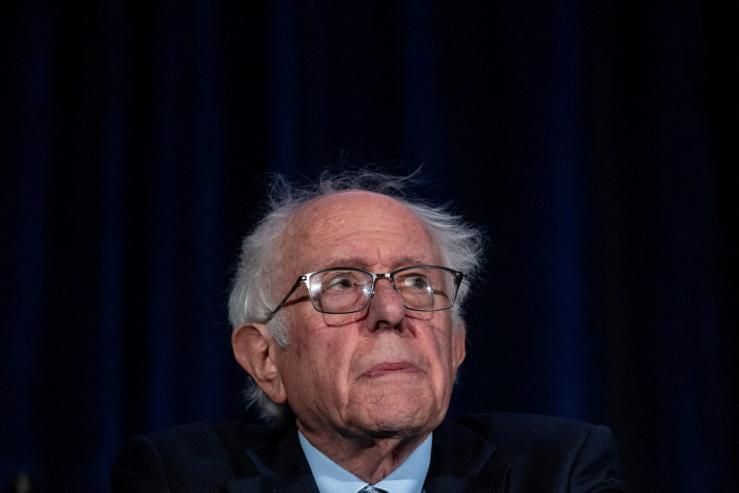
Sen. Bernie Sanders of Vermont and Rep. Greg Casar of Texas introduced legislation on Sept. 23 that would permanently prohibit the development and deployment of artificial superintelligence in the United States. The sponsors say their Ban Artificial Superintelligence Act would also temporarily pause some other advanced AI development while a new federal regulator creates safety rules and model-review procedures.
The proposal defines artificial superintelligence as AI that exceeds human cognitive performance across most domains or has enough capability to destroy or disempower humanity, including by overthrowing the federal government. Casar said the pause would not cover every AI system. Instead, it targets the most advanced models and systems with dangerous precursor capabilities, such as helping design chemical or biological weapons, deceiving people or modifying their own functions.
A new federal department for frontier AI
The bill would create a cabinet-level Department of Artificial Intelligence advised by scientific and technical experts. According to Roll Call, companies developing covered systems would have to submit plans before development and obtain approval before public deployment. The department would monitor frontier systems, oversee the removal of dangerous capabilities and supervise the destruction of systems that meet the bill’s definition of superintelligence.
The proposed enforcement is unusually severe. The sponsors say entities that violate or evade the pause and ban could face a “corporate death penalty,” while individuals could receive up to 20 years in prison. Those penalties would apply only if Congress passes the legislation and it becomes law.
A domestic ban with an international goal
Sanders and Casar also want the United States to pursue international agreements, allied coordination and export controls aimed at preventing superintelligence development elsewhere. Casar acknowledged that some critics, including people in the technology industry, oppose a domestic pause without an international agreement.
The bill enters Congress as a broad attempt to regulate technology that its own definitions describe in largely prospective terms. Roll Call described the proposal as as-yet unnumbered on Sept. 23. Its introduction starts a legislative debate; it does not itself pause AI development or create the new department.
 Technology