

MEMORY IS THE MOAT
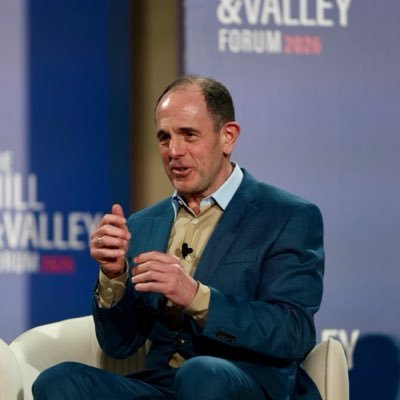
@nikesharora, Chairman & CEO of @PaloAltoNtwks , interviewed by @HarryStebbings (@20vcFund )
Summary: Nikesh Arora took Palo Alto Networks from an $18 billion company to one worth $225 billion, and his read on enterprise AI is blunt: most companies are doing it wrong, and most of the products are not ready. His core claim is that consumers forgive AI's mistakes while enterprises cannot, so the money will flow to whoever builds the depth (the context, the memory, and the edge-case training) that lets an agent act without a human catching its errors. The companies that win will redesign themselves around AI instead of adding it to yesterday's workflow, and the lasting advantage will be the memory a system builds up about you. He expects token prices to fall 90%, half of G&A roles to disappear in 3 years, and more engineers and salespeople, not fewer.
1. Context Stickiness. The lasting advantage in AI is the context a system holds about you, not the model itself. Arora says the frontier labs are racing to remember what you asked over the last 30, 60, 90 days so each new answer gets easier and you stop wanting to leave. The more a model knows about a user, the higher the cost of switching, and that stickiness is the moat. For enterprises the same logic holds: the company that owns its context wins, not the one renting the smartest model.
2. Breadth Versus Depth. The frontier model problem is a breadth versus depth problem. Consumers tolerate false positives and enterprises have none to spare. Arora had Gemini write a passable investment memo in 4 minutes, and a wrong line or two did not matter because a person was sitting in the middle to catch it. An agent acting on its own has no person in the middle, so a false positive becomes a live failure. Consumer AI wins on breadth and brand, while real enterprise revenue comes from depth.
3. The Waymo Standard. Waymo is the biggest agentic product in the world, and it shows what depth actually costs. Replacing one human, the driver, took tens of billions of dollars of edge-case training and data that exists nowhere on the internet. You cannot drop the next Anthropic model into your Mercedes and tell it to drive you home. Every enterprise agent that truly replaces a person needs that same depth, which is why most agentic enterprise products are not ready.
4. Rethink The Workflow. Most enterprises are losing because they add a little AI to an old workflow instead of redesigning the workflow around AI. Arora's example: scanning an invoice 20% faster is the trap, while the real win is letting AI do 80% of the thinking, like reading every CV and telling you which 20 people to interview and what to ask each one. That means giving up human control, which is exactly what companies resist. The winners over the next 3 years rethink the company with AI, not the task.
5. Software With Opinions. The next wave of enterprise software will have opinions, and that is the real change Arora is pointing at. Coded SaaS gives you the output you defined for the input you fed it. An AI marketing assistant reads your copy, tells you it is off-brand, and says how to fix it. That opinion makes an average employee smarter, which is why Arora expects half the people in G&A functions like marketing, finance, and HR to be gone within 3 years.
6. More Engineers, Not Fewer. The fear that AI shrinks headcount is half wrong. Process-heavy G&A roles compress, but Arora wants more technical and more sales people. His teams keep asking for resources to rework marketing and HR, and for people who can prompt frontier models, build harnesses, and bring in data nobody else has. A good product also needs more sellers: he met 20 customers in Europe last week and half did not know what his 20-year-old company already ships.
7. Tokens At One-Tenth. Long-term token pricing should be a tenth of what it is today. Compute costs 2 to 4 times what it did 2 years ago because more than half of it feeds loss-making consumer AI, which forces the pricing pressure onto enterprise and coding workloads that have to pay. As compute gets more efficient and consumer usage gets capped, prices fall hard over the next 3 to 5 years. The model from 2 years ago was already good enough for 90% of tasks; the problem was it cost too much to run.
8. The Token Allocation Trap. Capping token spend punishes your best people. Arora runs a "use judiciously" model, not a free-for-all, because the smartest AI-savvy employee can burn 20 times the tokens of an average one. Playing whack-a-mole with cost hurts the high performers most and slows the learning you need. The better move is to track usage, leave the power users alone, and cap only the genuine outliers.
9. The Attacker's New Edge. Powerful coding models cut both ways. Trained to write good code, they are just as good at finding bad code. Pointed at his own systems, a model found in 6 weeks what would have taken his team 5 to 6 years. It cannot safely auto-patch, because it would "fix" 30% of things that are not broken, so it arms attackers faster than defenders. The result is urgency: every enterprise has to fix its systems faster, which is good for security companies.
10. The FTE Tell. If a startup needs forward-deployed engineers to sell into the enterprise, the product is not finished. Arora's read: enterprise AI is barely 12 months old, agents keep changing what the product even is, so vendors send engineers to build the product inside the customer while the technology keeps moving. A real forward-deployed engineer brings code back and folds it into the product; many are just adoption consultants. Expect customers to churn from one tool to the next, the way coding went from Windsurf and Devin to Codex, Claude, and Factory.
11. Three Missed Tricks. Miss one trick and you survive, miss two and you are partly impaled, miss three and you could be obsolete. This is why Arora spends more time than ever learning, pinging founders building things he does not yet understand. He buys early and cheap on conviction, treating an acquisition as a 10x or 100x bet where paying 1 or 2 times more does not matter, rather than waiting to buy the proven winner for a billion. He runs a twice-weekly "AI EIO" meeting so his top 15 leaders compete to show what they shipped.
12. The Sunk Cost Walk. A board member taught Arora to separate effort from wanting the outcome. After months grinding through a near-billion-dollar acquisition, he was told to take a long walk and ask one question: if this deal walked in the door right now with zero effort, would I still write the check? You have not spent a dollar yet, so the only thing that counts is whether it stands on its own merits. The same trap catches investors who confuse beating 8 VCs to a term sheet with the deal being good.