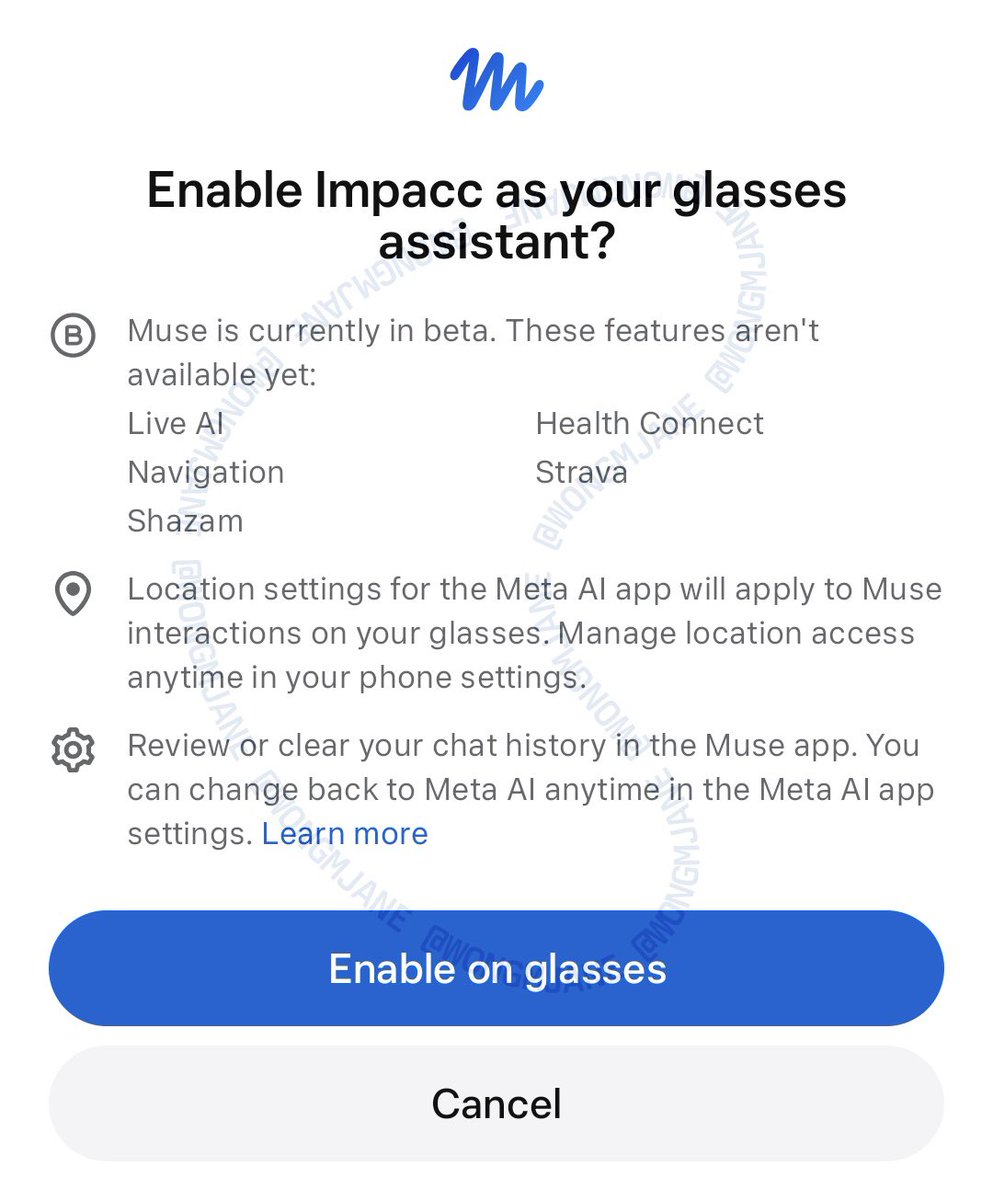
Meta is extending Muse from phones and computers to its AI glasses, turning the company's personal agent into a hands-free assistant that can accept a task while a wearer is moving. Meta confirmed the glasses plan at Connect 2026, though it did not give a firm release date.
Engadget reports that the rollout is planned for the coming months. Meta's examples include booking appointments, checking flight prices, finding products, guiding workouts, logging meals and offering nutritional insights. A wearer will be able to invoke Muse by voice, let it work in the background and receive an update when the task is done.
The glasses change access, not the underlying agent
Muse already works through its standalone apps and WhatsApp. On glasses, the main difference is a voice-first entry point that does not require pulling out a phone. Engadget describes asking the agent to book a flight while jogging as one example, while questioning whether that convenience is essential for software designed to work in the background anyway.
Meta says Muse asks for permission before sensitive actions such as making purchases. Users can choose which outside services it can access and revoke those connections. Those controls matter more as the agent moves onto a device intended for frequent, ambient use.
Meta is also giving Muse a face
The Verge reports that Muse will become an AI avatar people can talk with over video. The publication also says Muse is gaining computer use on Mac and that agents will receive their own email addresses, extending the product beyond a conventional chat window.
Axios separately reports that Mark Zuckerberg expects Muse to develop into a “personal superintelligence” used by billions. That remains Meta's ambition, not an adoption forecast that has been demonstrated. The near-term test is narrower: whether putting the same agent into glasses makes it useful enough to become part of daily routines.
 Technology