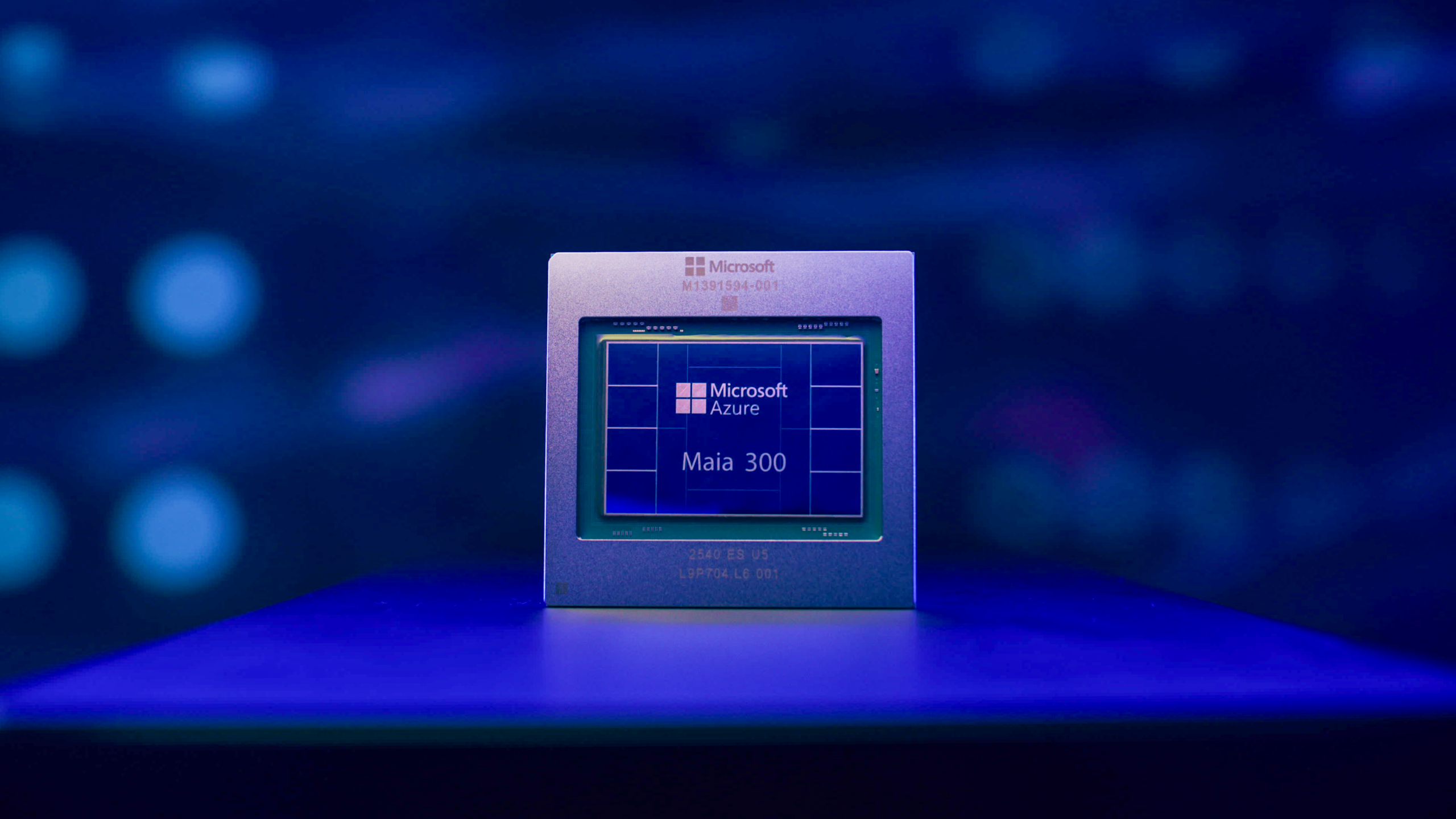
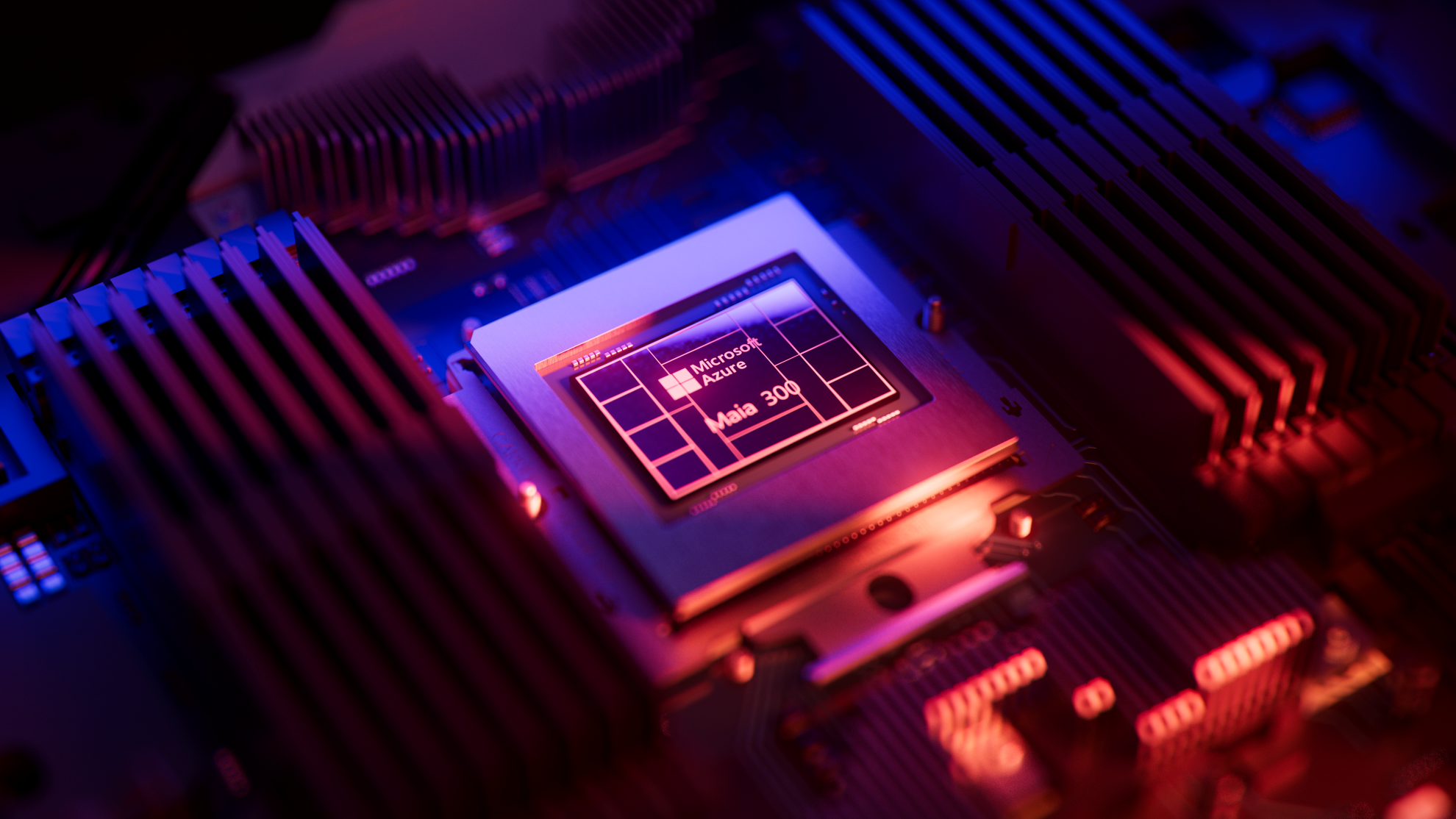
Microsoft is positioning its third-generation Maia accelerator as the engine that will run more of its own AI services. The company plans to begin production deployments in 2027 and scale the Maia family to multi-gigawatt installations, with the long-term goal of making it the primary inference system for Microsoft products. Inference is the work of running a trained model to generate answers, code, or other outputs.
The strategy gives Microsoft more control over the cost and energy demands of services such as Copilot and Microsoft Foundry. It could also reduce the company’s dependence on Nvidia and AMD accelerators, The Verge reports, though Microsoft is not saying it will stop using outside chips.
More tokens from each megawatt
Microsoft says Maia 300 will deliver 40% more inference tokens per megawatt than leading GPU-based systems. It has not named the systems used for that comparison. In a rack with 96 accelerators, the company also claims up to seven times the token throughput of Maia 200.
The rack-scale design operates within a 167-kilowatt power envelope and combines 27.6 terabytes of high-bandwidth memory with 1.7 petabytes per second of aggregate memory bandwidth. Each accelerator uses eight HBM4 memory stacks, while compute chiplets built on TSMC’s N2P process are separated from memory-controller and I/O functions. Microsoft says that layout is intended to reduce data movement, one of the major energy costs in large AI systems.
Built for reasoning and agents
Maia 300 is optimized for long-context reasoning, conversational responses, and multi-step agent tasks. Its predecessor, Maia 200, is already serving Microsoft production workloads, including Copilot, while GitHub Copilot and Microsoft Foundry are due to follow by the end of 2026.
The new chip’s efficiency figures remain Microsoft’s own projections rather than independent benchmarks. The practical test begins when Maia 300 enters production in 2027 and starts carrying the workloads Microsoft currently runs across a mix of its own hardware and third-party GPUs.