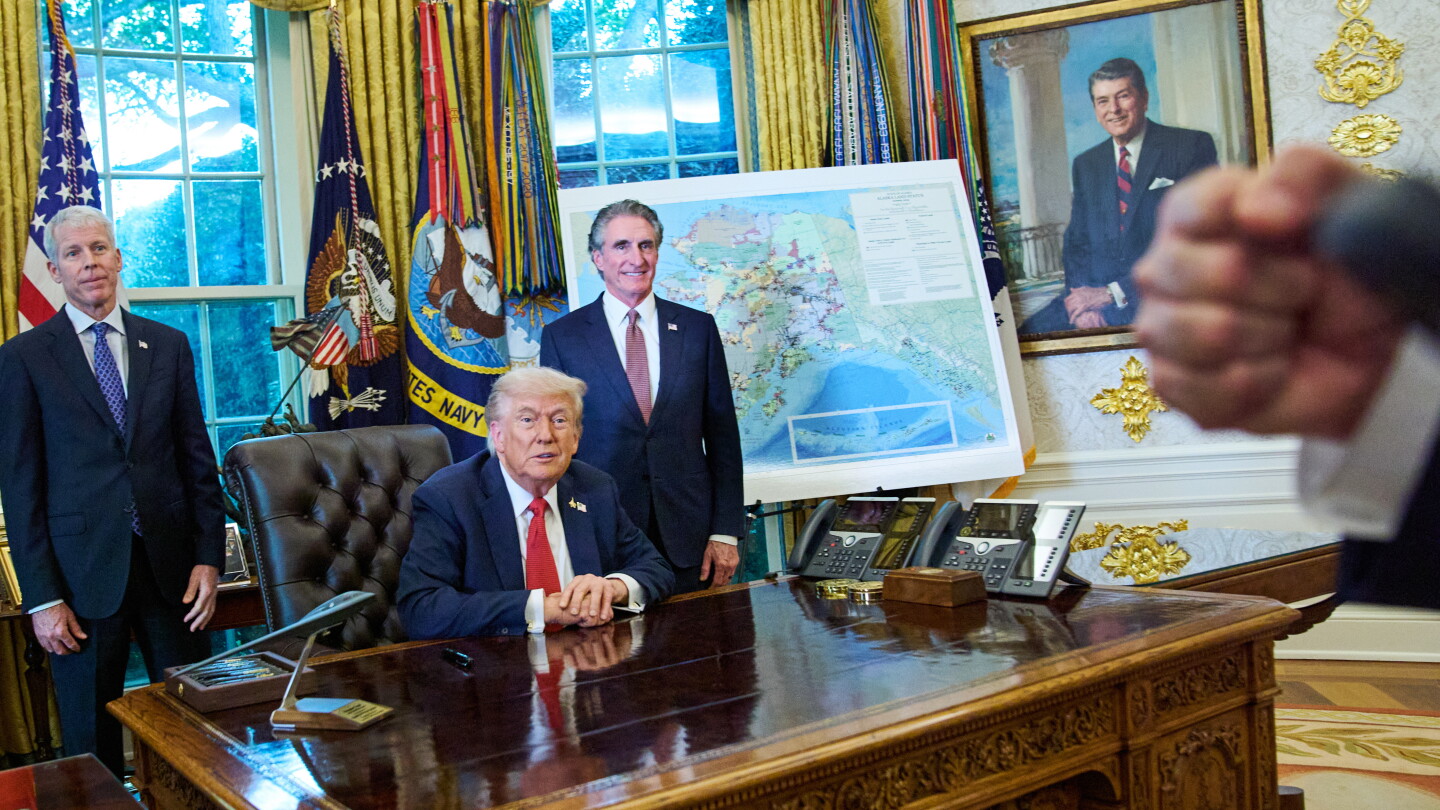
The Trump administration is considering at least 12 data centers and related infrastructure projects on federal public lands, a slate far larger than was previously known, according to a Washington Sun review of Bureau of Land Management right-of-way records.
Together, the proposals cover at least 17,600 acres in Arizona, Idaho, Nevada, Oregon, Utah and Wyoming. Some would place full data centers on public land. Others seek rights-of-way for supporting infrastructure such as access roads, telecommunications lines and water pipelines.
The records point to a broad but still preliminary buildout. The Sun found proposals for two Utah data centers that appear intended to use small nuclear reactors, four Arizona infrastructure projects covering more than 3,000 acres, one data center in Idaho, at least three projects in Nevada and one in Oregon. In Wyoming, Prometheus Hyperscale has sought rights-of-way for infrastructure serving a private-land development.
Most projects are still early proposals
Almost all of the projects appear to be in early stages. A BLM spokesperson told The Sun that each proposal would be evaluated under the National Environmental Policy Act so potential environmental effects could be understood, disclosed and addressed. Exact locations and project dimensions are expected to become public when those reviews begin.
That distinction matters: a right-of-way proposal is not a construction approval. The BLM has approved just one data center on public land, the 88.5-acre Townsite project near Boulder City, Nevada. The agency announced that decision in July, but The Sun reports the project is now on hold after a legal challenge.
The administration has made federal land part of its broader effort to accelerate AI infrastructure. The Energy Department separately identified 16 federal sites in 2025 for possible data-center and energy development. Those DOE sites are distinct from the BLM proposals identified by The Sun.
Local officials say they were not told
The Sun reports that officials and advocates in several affected states did not know about many of the proposals. Aaron Weiss of the Center for Western Priorities argued that communities should have more notice and opportunities to shape projects before formal reviews are underway.
The disclosure comes as data-center growth is driving disputes over land, electricity, water and pollution. Public participation has become a separate flashpoint: an Environmental Protection Agency proposal would remove a federal requirement for states to provide notice and comment before issuing air permits to some smaller industrial sources, the Associated Press reported. States could keep their own participation rules, while critics warn that communities with weaker requirements could learn less about planned facilities.
For the public-land proposals, the next concrete disclosures should come through the environmental-review process. Until then, the records show the scale of the administration's interest, not a final map of projects that will be built.
 Tech
Tech