• Home
  • Technology
  • Gaming
  • Entertainment
  • World & Business
  • Science
  • Sports
  • AI
HomeTechnologyGamingEntertainmentWorld & BusinessScienceSportsAI
Science
Announcement

JAXA's MMX mission is set to launch October 19, 2026, for a Phobos sample-return attempt

ESA says it is contributing deep-space communication technology and ground station support to the mission.

European Space AgencyES
1 Source, 2h ago, first seen 2h ago

TLDR

ESA says JAXA's Martian Moons eXploration (MMX) mission is set to launch October 19, 2026, and will attempt a world-first sample return from Phobos, a moon of Mars. ESA is contributing deep-space communication technology and ground station support.

Combined views

—

1 Source, first seen 2h ago

— likes— comments— saves— reposts

Combined views

—

1 Source, first seen 2h ago

— likes— comments— saves— reposts

JAXA has scheduled its Martian Moons eXploration spacecraft to lift off from Tanegashima Space Center aboard an H3 rocket at 4:41:03 a.m. Japan time on October 20. That is 7:41:03 p.m. UTC on October 19, which explains why the mission’s launch date appears differently across regions. NASA also lists the launch as October 19 in the US and October 20 in Japan.

Featured Source

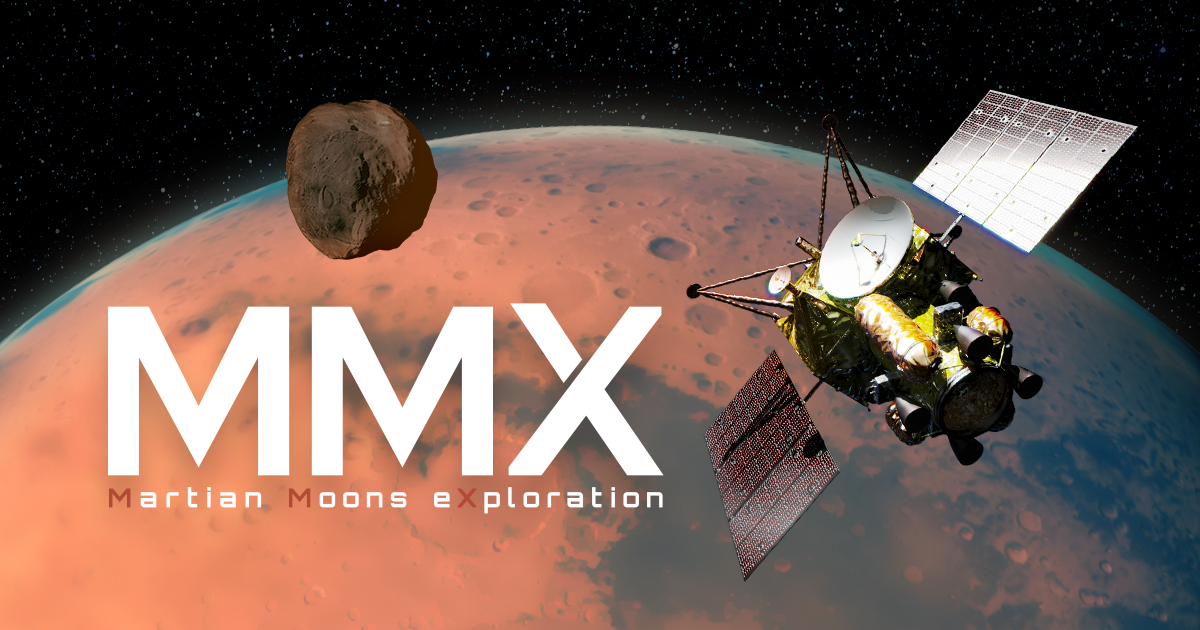
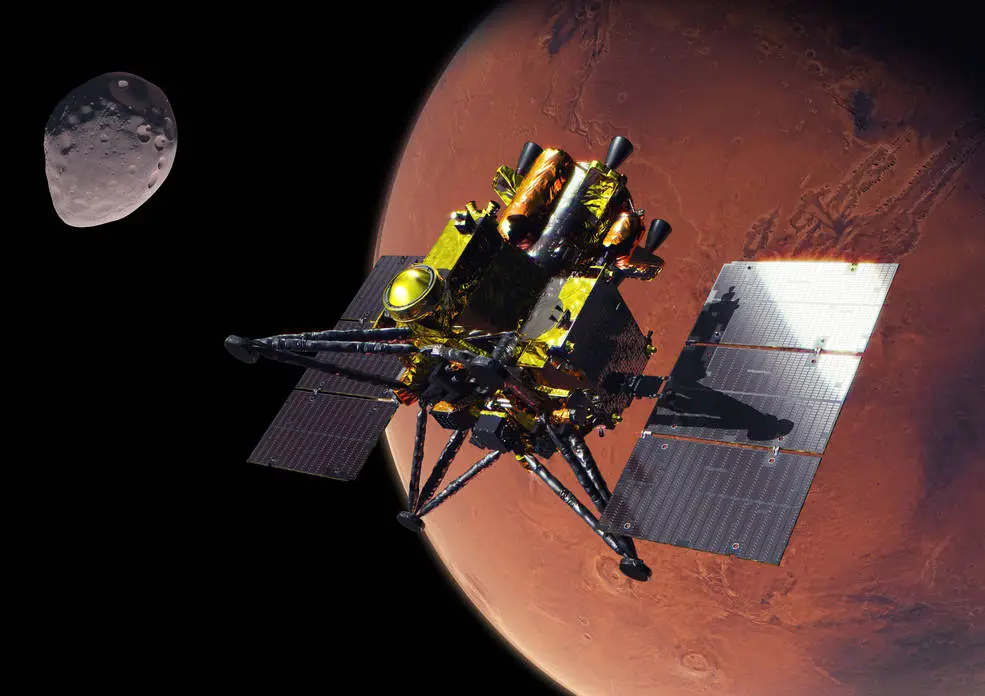
Known as MMX, the spacecraft is designed to study Mars’s two small moons, Phobos and Deimos, before landing on Phobos and collecting material for return to Earth. If the plan succeeds, ESA says it would mark the first landing on Phobos and the first sample brought back from the Mars system.

A five-year round trip

The JAXA-led mission is expected to reach Mars in August 2027 after a cruise of about a year. It will then observe Phobos and Deimos from orbit, deploy the 25-kilogram Idefix rover to survey Phobos’s surface and prepare for the main spacecraft’s landing.

NASA says sample collection is planned for no earlier than December 2028. MMX carries two collection systems: a corer intended to reach about two centimeters below the surface and a pneumatic sampler that uses pressurized gas to move loose material into a container. JAXA’s goal is to return more than 10 grams of Phobos material.

After roughly three years in the Mars system, MMX is scheduled to begin the trip home in 2030. Its return capsule is planned to enter Earth’s atmosphere in 2031 and land in Australia, where the sample would be recovered and transferred to JAXA’s Institute of Space and Astronautical Science for study.

What the sample could resolve

Scientists are still debating how Phobos and Deimos formed. One hypothesis holds that the moons are captured asteroids from the outer solar system. Another proposes that they formed from debris thrown into orbit by a giant impact on young Mars. Remote observations and laboratory analysis of the returned material could help distinguish between those possibilities while revealing more about the early Mars system.

The mission is an international effort. ESA has provided a transponder and power amplifier for deep-space communications, and its Estrack ground stations are expected to help send commands and receive telemetry and science data. NASA’s contributions include the MEGANE gamma-ray and neutron spectrometer, the pneumatic sampler, Deep Space Network communications and navigation support, and support for US scientists on the mission team. France’s CNES and Germany’s DLR jointly developed Idefix.

Sentiment

Positive——Negative

Summary

Not enough discussion yet.

No sentiment analysis available yet.

Useful links

MMX - Martian Moons eXploration

MMX - Martian Moons eXploration

CNES · YouTube

MMX : destination Phobos et Deimos, les lunes de Mars 🌕

ntrs.nasa.gov

Contamination Control and Assessment Strategy for Martian Moons Exploration (MMX) - NASA Technical Reports Server (NTRS)

PIVOT 公式チャンネル · YouTube

【世界初への挑戦】未知の天体フォボス探査計画「MMX」の裏側に迫る/火星の月から砂を持ち帰る5年の旅/着陸するまで相手の正体が分からない

NASA

NASA Briefing to Highlight Contributions to Martian Moons Mission

共同通信 KYODO NEWS · YouTube

【詳報】JAXA、火星衛星「フォボス」探査計画の管制室を公開 探査機は10月20日打ち上げ予定

Sentiment

Positive——Negative

Summary

Not enough discussion yet.

No sentiment analysis available yet.

Useful Links

MMX - Martian Moons eXploration

MMX - Martian Moons eXploration

ntrs.nasa.gov

Contamination Control and Assessment Strategy for Martian Moons Exploration (MMX) - NASA Technical Reports Server (NTRS)

NASA

NASA Briefing to Highlight Contributions to Martian Moons Mission

Related Videos

  • MMX : destination Phobos et Deimos, les lunes de Mars 🌕CNES · YouTube
  • 【世界初への挑戦】未知の天体フォボス探査計画「MMX」の裏側に迫る/火星の月から砂を持ち帰る5年の旅/着陸するまで相手の正体が分からないPIVOT 公式チャンネル · YouTube
  • 【詳報】JAXA、火星衛星「フォボス」探査計画の管制室を公開 探査機は10月20日打ち上げ予定共同通信 KYODO NEWS · YouTube

Useful Links

MMX - Martian Moons eXploration

MMX - Martian Moons eXploration

ntrs.nasa.gov

Contamination Control and Assessment Strategy for Martian Moons Exploration (MMX) - NASA Technical Reports Server (NTRS)

NASA

NASA Briefing to Highlight Contributions to Martian Moons Mission

Related Videos

  • MMX : destination Phobos et Deimos, les lunes de Mars 🌕CNES · YouTube
  • 【世界初への挑戦】未知の天体フォボス探査計画「MMX」の裏側に迫る/火星の月から砂を持ち帰る5年の旅/着陸するまで相手の正体が分からないPIVOT 公式チャンネル · YouTube
  • 【詳報】JAXA、火星衛星「フォボス」探査計画の管制室を公開 探査機は10月20日打ち上げ予定共同通信 KYODO NEWS · YouTube

4 Sources

MMX - Martian Moons eXplorationMMX - Martian Moons eXploration
esaMMX factsheet
NASANASA Briefing to Highlight Contributions to Martian Moons Mission4d
European Space Agency@esaLaunching on 19 October, @JAXA_en's Martian Moons eXploration (MMX) mission will attempt a world-first sample return from Mars’s moon Phobos. We're contributing deep-space communication technology and ground station support to help make the mission possible. Read more:2h
    • Home
    • Technology
    • Gaming
    • Entertainment
    • World & Business
    • Science
    • Sports
    • AI
    JAXA

    4 Sources

    MMX - Martian Moons eXplorationMMX - Martian Moons eXploration
    esaMMX factsheet
    NASANASA Briefing to Highlight Contributions to Martian Moons Mission4d
    European Space Agency@esaLaunching on 19 October, @JAXA_en's Martian Moons eXploration (MMX) mission will attempt a world-first sample return from Mars’s moon Phobos. We're contributing deep-space communication technology and ground station support to help make the mission possible. Read more:2h
    Today's Rank

    #1

    Today's Rank

    #1