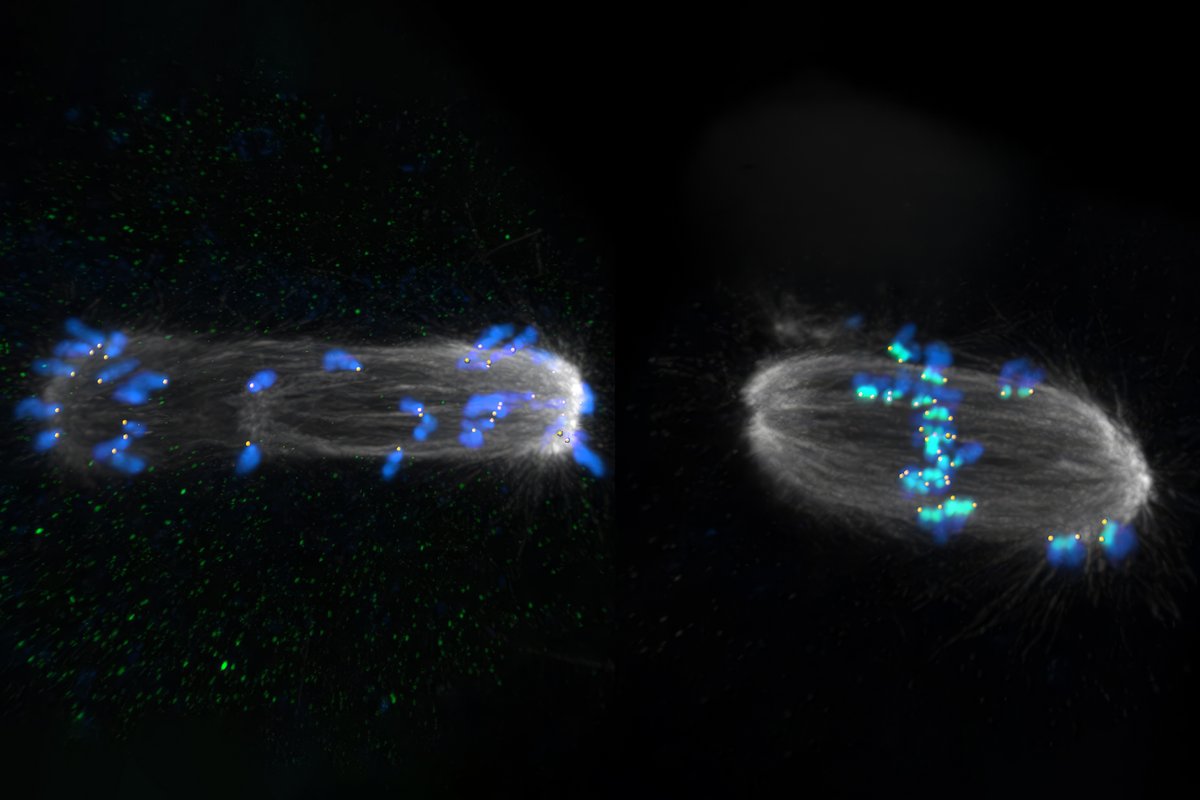
Researchers at Germany’s Max Planck Institute for Multidisciplinary Sciences have engineered a protein “glue” that reduces premature separation of chromosome copies in aging mouse eggs. Called TALhesin, the system also has an off switch: it can be cut apart when those copies need to separate. Biochemist Melina Schuh, a director at the institute in Göttingen, led the team. The study appeared November 26, 2026, in Science. SourceSource
According to the Max Planck Society’s account, reproduced by Medical Xpress, TALhesin increased the proportion of aged mouse eggs without premature chromosome separation from 46.7% to 74.1%, close to the 74.7% measured in young animals. Those percentages describe one specific chromosome defect—not eggs proven free of every chromosome error, and certainly not pregnancy rates. Source
The researchers also adapted the system for donated human eggs. That work establishes an early proof of principle, not evidence that TALhesin improves in vitro fertilization (IVF) outcomes or is safe for fertility treatment. SourceSource
The glue needs an exit strategy
A protein complex called cohesin holds sister chromatids—the identical copies of a chromosome—together. As eggs age, loss of cohesin can allow those copies to separate prematurely, contributing to eggs with the wrong number of chromosomes, a condition called aneuploidy. SourceSource These chromosome-number abnormalities contribute to age-related infertility, failed IVF cycles and miscarriage. Source
TALhesin provides an artificial tether. Its two DNA-binding proteins target a region near the centromere, where cohesin helps hold sister chromatids together. Components attached to the proteins chemically link them to each other. Source
But impressively sticky is only half the job. During meiosis, the specialized divisions that prepare an egg for fertilization, sister chromatids eventually must separate. The team therefore built in a site that the enzyme separase can cut. In artificially activated mouse eggs, separase cut TALhesin and the chromatids separated normally. That test did not demonstrate fertilization or pregnancy. Source



Comments