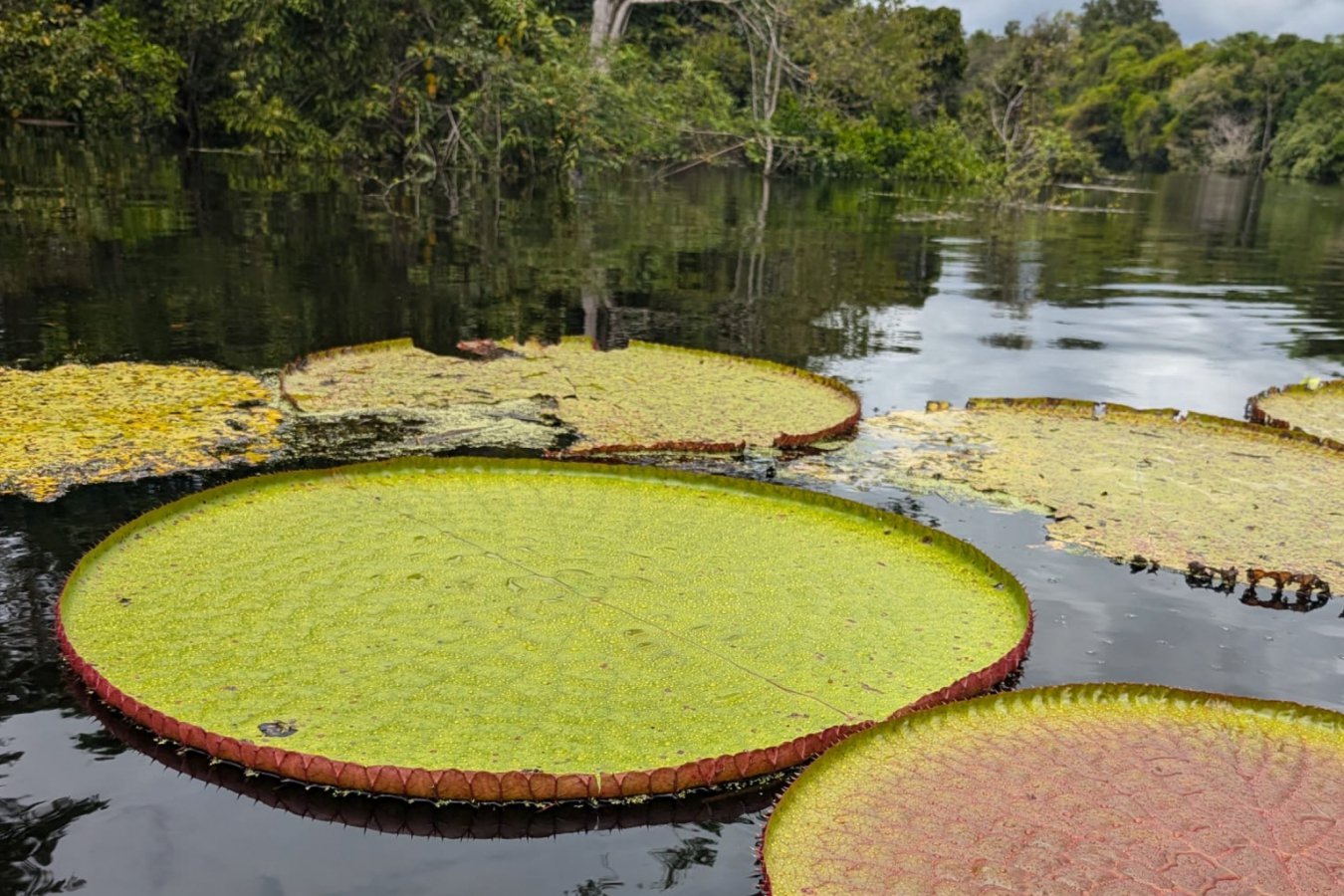
A study published Oct. 7 in Phytotaxa describes Victoria colombiana, a giant waterlily from Colombia's upper Orinoco drainage. The same study argues that Victoria mattogrossensis, a plant from the Pantanal region, also warrants recognition as a separate species. That brings the genus Victoria to five accepted species.
The path to V. colombiana started online. According to an account from the Royal Botanic Gardens, Kew, horticulturist Carlos Magdalena spotted the plant five years ago in an Instagram photo from Colombia's Inírida region. The photographer had identified it as the more common V. amazonica, but Magdalena noticed that the location was outside the known range of those waterlilies.
From a photo to a formal description
Satellite imagery helped the researchers find several large pads in lakes around the Inírida River, but those images could not establish a new species on their own. Botanists needed a flowering specimen that they could preserve and compare with other plants.
Kew says Magdalena and Mauricio Bernal of the Bogotá Botanical Garden worked with Nilo Rodríguez, Jaime Hernández and Gustavo Melo from Indigenous communities in the region to organize an expedition. After an early search found only nonflowering plants, Melo guided the team to another lake, where they documented five more individuals, including one in flower. The team recorded seven plants across two lakes.
The paper says the researchers combined maps of river drainage systems with morphological comparisons to distinguish the Colombian plant. Its authors also argue that rivers and floodwaters are the main way Victoria seeds disperse, and that long-separated river basins probably helped the genus diversify.
A rare plant with an uncertain future
The new species has pads measuring up to 2 meters, or about 6.6 feet, across, according to Kew. The team estimates that only 30 to 50 individual plants are currently known in the wild.
Researchers are working toward an official assessment that could classify V. colombiana as Critically Endangered, but that assessment has not yet been completed. They also hope to find more populations through satellite surveys and to collect seeds for cultivation and conservation.