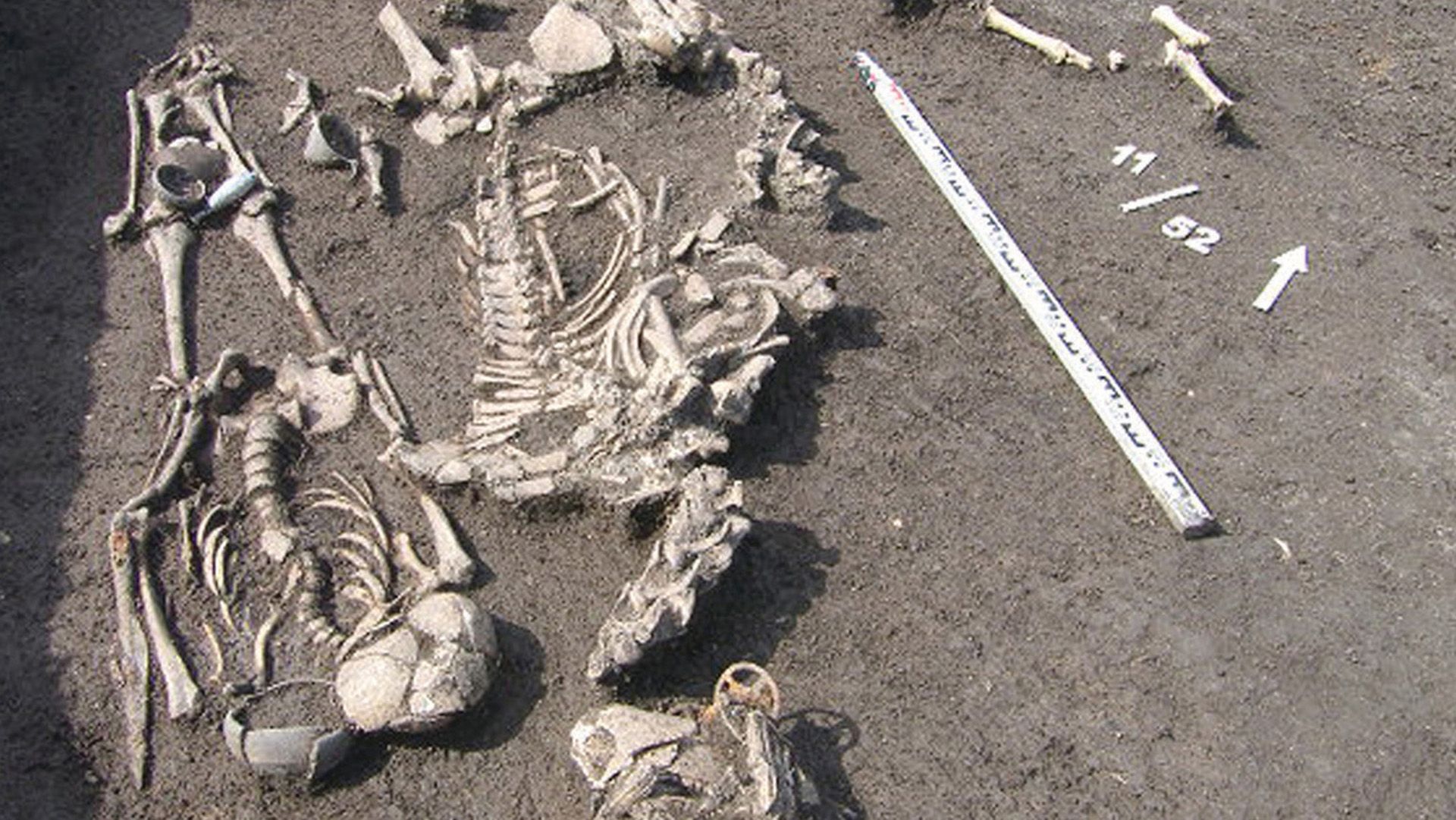
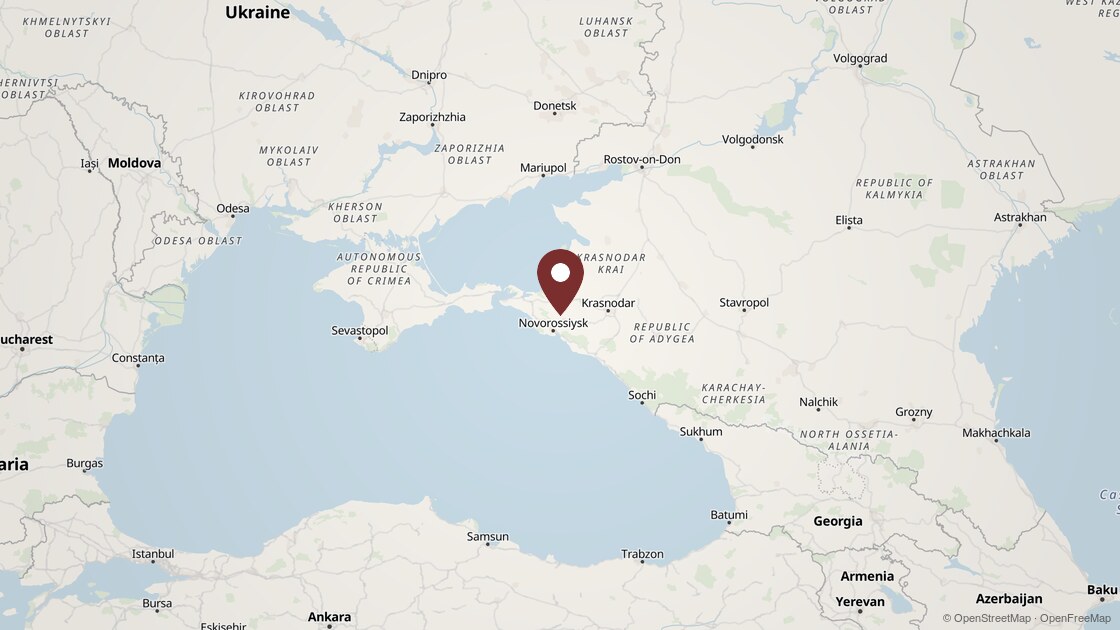
A 2026 study describes an elite Maeotian horseman buried at the Vinogradny 1 necropolis in Russia's Kuban region during the first third of the first century B.C. The grave lay near the center of a cemetery containing more than 150 burials, a position the researchers say reflects the warrior's high social status.
Beside the grave, a separate assemblage held the remains of three horses, two cattle, a pig, a dog and a fragment of a human pelvis, according to Live Science. Researchers interpret the fragment as evidence that a person was sacrificed during the funerary rites. The person's role is unknown, though serving the warrior is one possibility they raised.
Gold for wealth and the afterlife
Two gold staters helped researchers date and interpret the site. One was deposited as an offering in a ritual shaft at the center of the necropolis. The other was placed beneath the warrior's jaw, a position interpreted as Charon's obol, the payment ancient Greek tradition assigned to the ferryman of the dead.
The coins follow a Greek design associated with Lysimachus and show Alexander the Great. Live Science reported that they were minted during the reign of Mithridates Eupator, whose portrait was blended with Alexander's features. The study describes the coins as an unusual find at a Maeotian site.
Weapons and ritual protection
The warrior's grave also contained two iron spearheads, an iron arrowhead, riding gear and the remains of his sacrificed horse. Among the luxury goods was a glass alabastron, a small vessel for oil or perfume that researchers think was imported from Cyprus or the eastern Mediterranean.
A two-handled clay cup, known as a kantharos, was engraved with a pentagram. Researchers interpret the symbol as representing the sun and offering protection against magical threats. Together with the coins and other grave goods, the objects point to Greek influence on Maeotian funerary practices near the neighboring Bosporan kingdom.