Fossil teeth from southern China indicate Homo erectus survived on mainland Asia as recently as 184,000 years ago, roughly 200,000 years later than previously established. Tooth chemistry also suggests these ancient humans were living in dense tropical rainforest. The supposed grassland-and-woodland specialist apparently had a broader skill set. Source Source
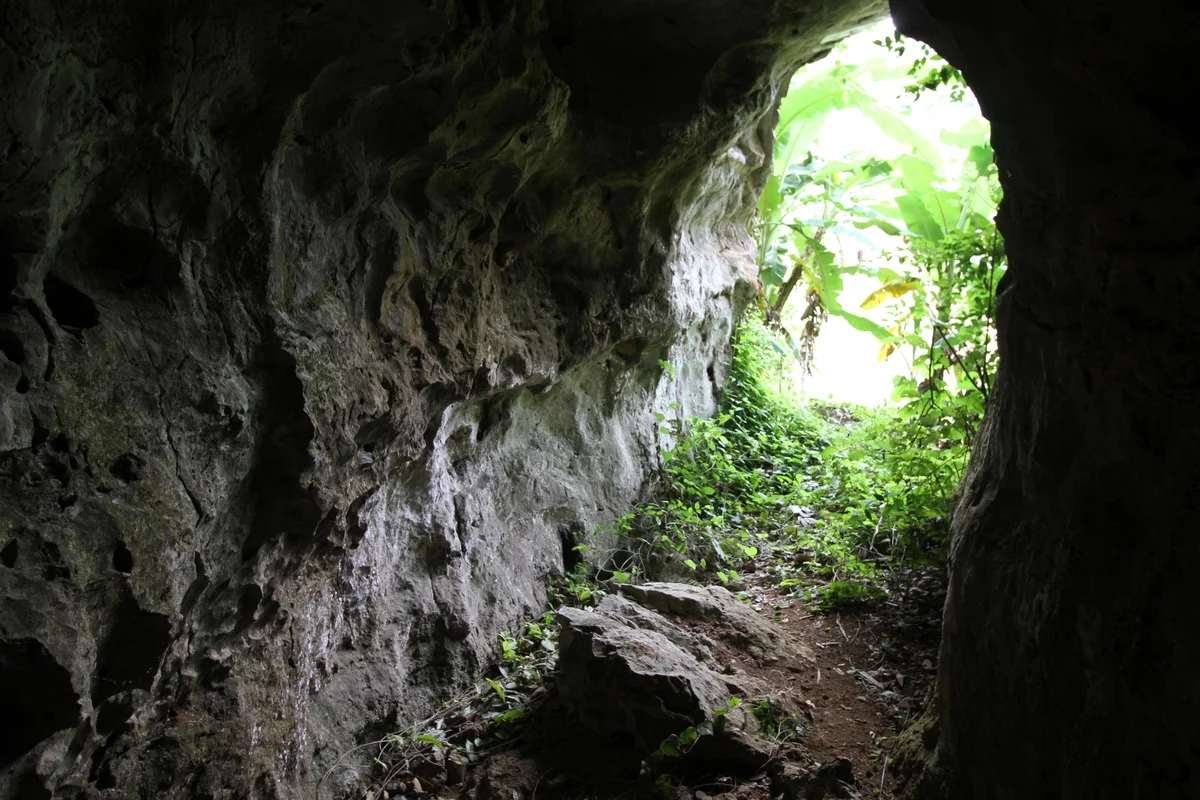
The findings, described in two Nature papers, come from Baxian and Naxian caves in Guangxi, about 15 kilometers apart. Researchers identified eight of nine ancient human teeth as H. erectus based on their sizes, shapes and CT scans of their internal structures. That’s eight teeth, not necessarily eight individuals. Source Source
The team used five independent dating techniques across teeth, surrounding sediments and cave mineral formations, placing the finds between 324,000 and 184,000 years ago. Previously, the youngest securely dated H. erectus fossils on the Asian mainland were about 400,000 years old. Source Source
Younger H. erectus fossils were already known from Java, where the species survived until about 110,000 years ago. These discoveries extend its known mainland history, not its worldwide survival record. Nor do they pin down when it became extinct. Source Source
The rainforest evidence is in the teeth
Carbon-isotope patterns in the human and animal teeth point to a food chain based on closed-canopy forest rather than grasses. Alongside fossils of rainforest-dwelling animals and other chemical evidence of humid conditions, those patterns suggest H. erectus lived within the rainforest ecosystem rather than merely passing through. Source Source
That challenges the idea that the species was restricted to more open habitats. It doesn’t establish rainforest as its preferred address. Source Source
“This emphasizes that behavioral flexibility was likely a key to Homo erectus success, both in terms of the long duration of the species and its broad dispersal,” Susan Antón, a New York University paleoanthropologist who wasn’t involved in the research, told Scientific American. Source
Strontium signatures reflect the geology of places where individuals consumed food and water while their teeth developed. Some signatures didn’t match the cave area, suggesting nonlocal origins and potentially considerable travel. Researchers suggest possible origins toward northern Vietnam, about 250 kilometers away. That’s a clue to movement, not a prehistoric travel itinerary: the route and distance aren’t established. Source Source Source
Eight identifications, one holdout
Researchers recovered ancient proteins from five teeth; four carried a signature in a protein called ameloblastin previously associated with Asian H. erectus. The team interpreted other protein differences as possible evidence of a previously unrecognized population of the species. The molecular evidence comes from proteins, not recovered DNA. Source Source
The ninth tooth, from Baxian Cave, still resists identification. Its physical features and protein evidence haven’t established which ancient human group it belonged to, and the comparative protein record is limited. Source
“We really cannot say at this stage what it is,” University of Copenhagen molecular paleoanthropologist Frido Welker told New Scientist. Source



Comments