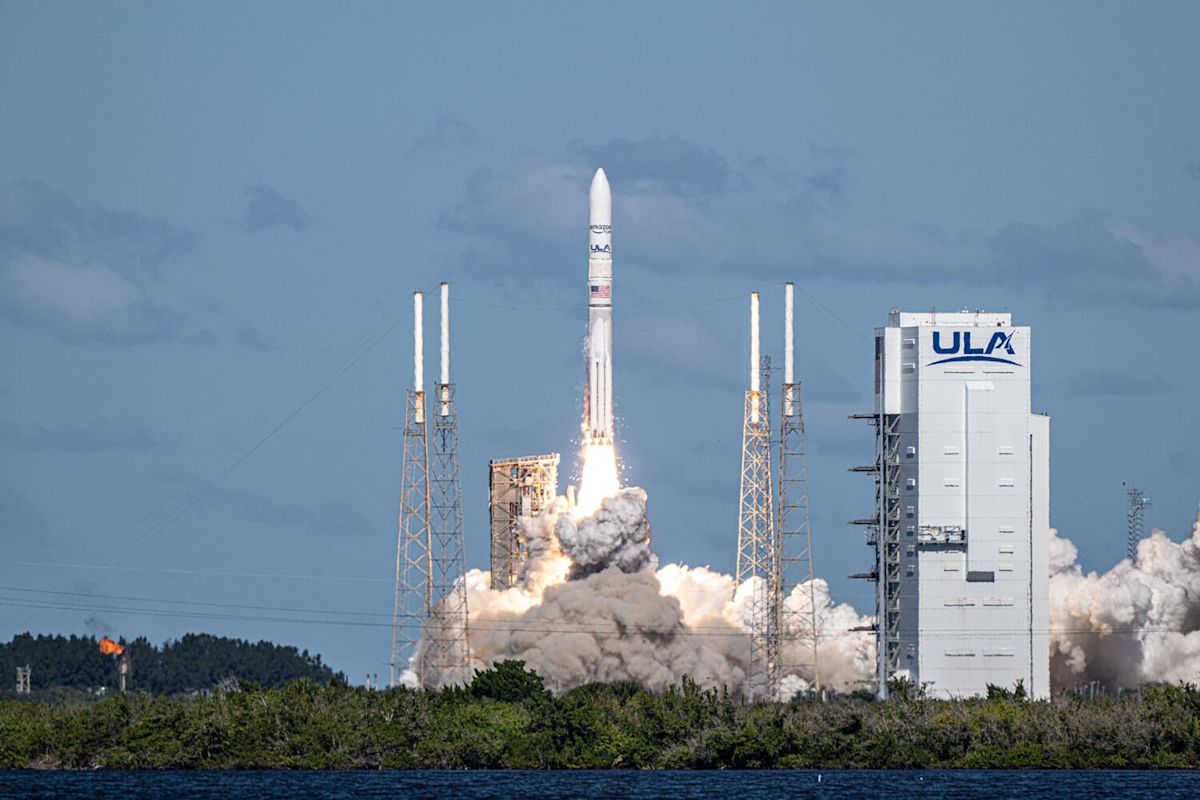
Vulcan’s upper stage appears to have done its job, United Launch Alliance says. It still couldn’t save the mission. In a November 17 update, the company said early indications point to low first-stage performance just after liftoff during the November 15 launch that failed to deliver Amazon’s Leo spacecraft to orbit. Source
According to ULA’s preliminary assessment, that shortfall left the vehicle too low and moving too slowly at stage separation to reach orbit. The second stage appears to have started normally, with its RL10 engines operating as planned, but couldn’t recover the lost performance. Stage separation wasn’t a fresh start. Source
ULA says telemetry and the mission appear to have been lost approximately 10 minutes into flight. Its preliminary account puts the performance shortfall much earlier, just after liftoff. Source
The company separately says all indications point to normal performance from the solid rocket boosters, following nozzle improvements implemented for this launch. Those solid boosters are separate from the rocket’s core first stage, whose performance ULA says fell short. The update does not identify a specific failed component or establish the root cause. Source
“It is very early in the process, and we want to focus on the data and avoid speculation until the investigation is complete,” ULA said. Source
The FAA is requiring a mishap investigation, according to a statement reproduced by Spaceflight Now. ULA will lead it, with the agency overseeing every step and approving the final report, including corrective actions. ULA’s own update confirms that oversight arrangement. Source Source
The failure also affected aircraft operations. In the statement shared by Spaceflight Now, the FAA said it activated two Debris Response Areas and briefly slowed aircraft outside the area where debris was falling or held aircraft at their departure locations. Source
ULA says it is committed to returning to flight “as safely and quickly as we can.” The update gives no date. Source


Comments