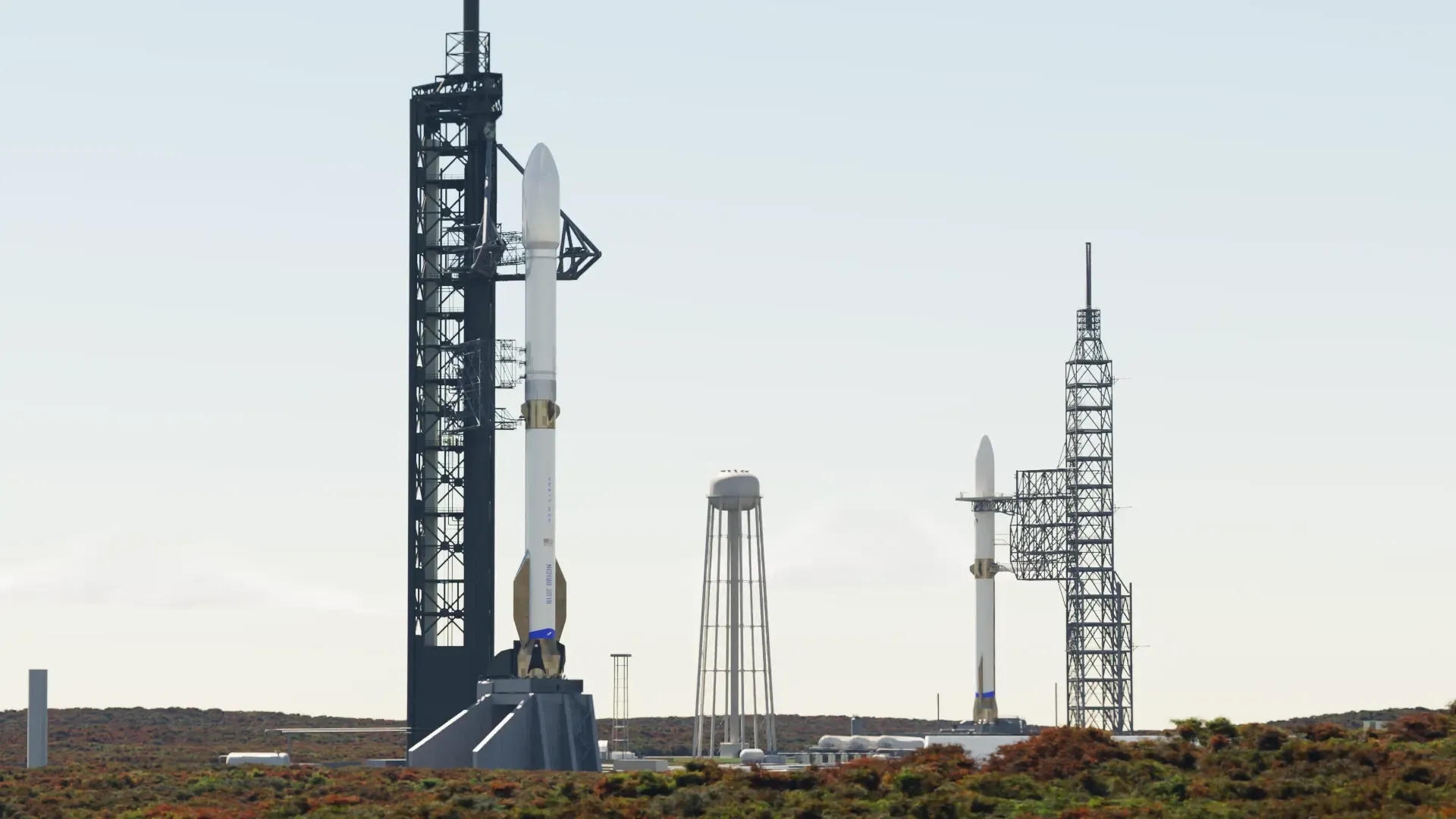
Blue Origin is rebuilding Launch Complex 36A around a different way of preparing New Glenn for flight after the rocket was damaged during a May 28 ground test. NASASpaceflight reports that major pieces of the launch site's support tower are going back into place as the company works toward a return before the end of 2026.
The accident happened during a hotfire, when a fully assembled rocket fires its engines while restrained on the ground. Blue Origin said all personnel were accounted for. The company later reported that the event destroyed the lightning tower, transporter-erector and its hydraulic cylinders. The site's propellant farm, integration facility, vehicle access tower and water tower survived in usable condition, while the large support tower could be repaired in place.
Rebuilding the pad around a new launch process
NASASpaceflight says Blue Origin took sections of the support tower down so crews could repair and upgrade them at ground level. The work added access floors, guard rails and equipment for handling cryogenic propellants. According to the outlet's Oct. 11 report, the first two refurbished tower modules had recently been stacked again.
Other visible progress includes a restored launch bridge, reinstalled main water piping and two deluge-system “rainbirds,” which spray large volumes of water to absorb the heat and acoustic energy of a launch. Those elements are part of restoring the pad, but Blue Origin is not simply recreating its old setup.
The company says it has adopted a horizontal-and-vertical hybrid process. The first and second stages will be joined horizontally inside the integration facility, then the assembled rocket will roll to the pad. A crane will rotate and lift it into the vertical position before the payload is attached. That plan lets Blue Origin proceed without replacing the transporter-erector that was lost in May.
Blue Origin has also said it will not move directly to New Glenn's larger 9x4 configuration. The company plans to continue building the current version, with a seven-engine first stage and two-engine second stage, known as 7x2.
The investigation has a fix, but the schedule is tight
In an Aug. 5 update, Blue Origin said investigators traced the hotfire anomaly to the main oxygen valve on one BE-4 engine. Recovered hardware, inspections and additional component and engine tests supported that finding, according to the company. Blue Origin said it was making small valve changes designed to be retrofitted to engines already built.
Important launch-site work remains. NASASpaceflight said tower-mounted connections that supply the rocket and rotating platforms that give crews access to its payload fairing had not yet appeared in site imagery. That does not show whether the hardware has been manufactured elsewhere, but it indicates that visible installation work is still ahead.
Blue Origin's public target remains a New Glenn return to flight by the end of 2026. The tower reconstruction, revised integration plan and engine-valve modification provide a defined route back to the pad, but the company has not announced a firm launch date.