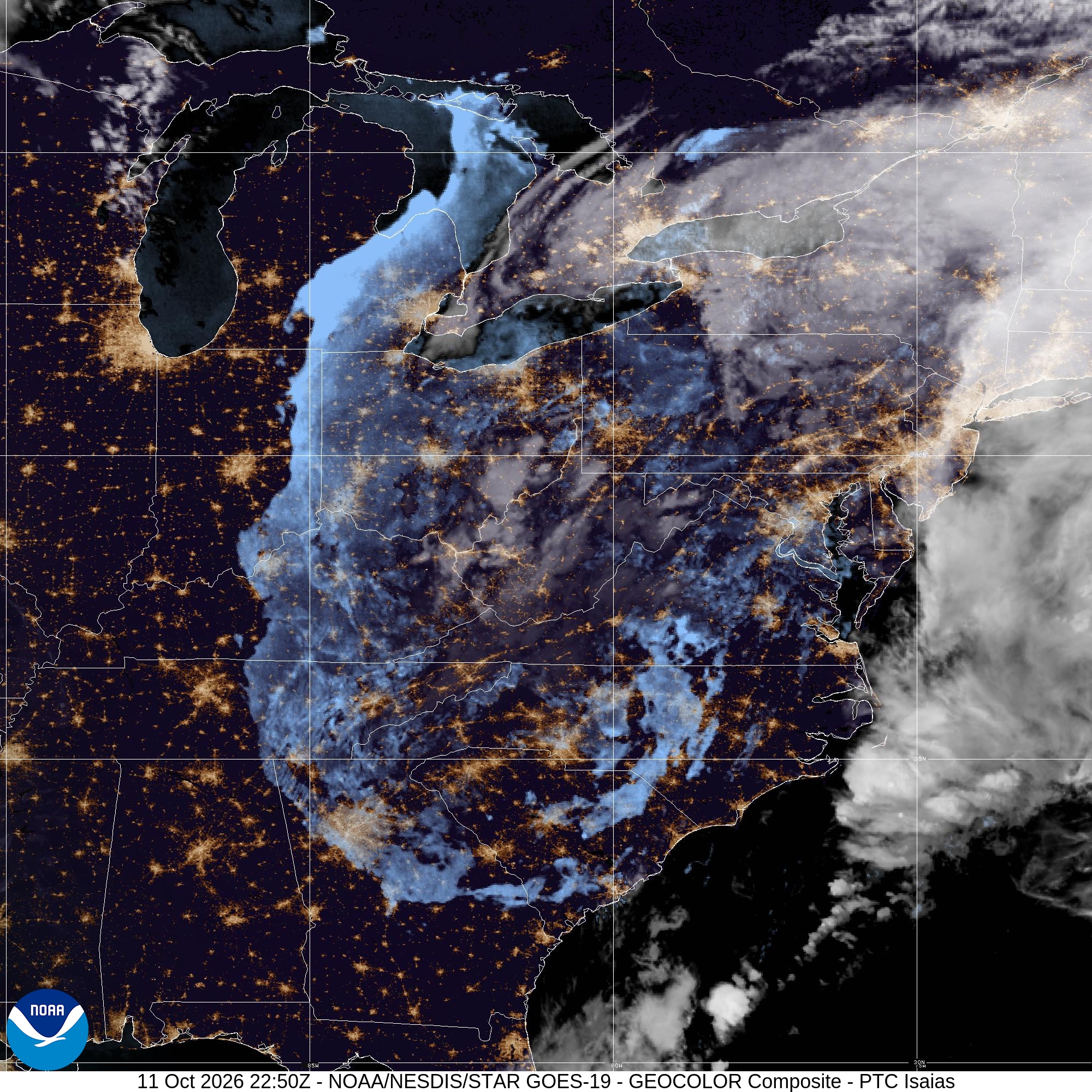
Hurricane Isaias became the Atlantic's first hurricane of 2026 unusually late in the season, then found enough favorable conditions near the Gulf of Mexico to intensify quickly. Its arrival broke a historically quiet stretch, but the storm's effects showed why a low storm count is not the same thing as low risk.
Scientific American reported that Isaias was the latest first hurricane of an Atlantic season on record. The magazine attributed much of the preceding calm to a powerful El Niño, which increased wind shear across the basin. Wind shear can disrupt a developing cyclone by pushing its thunderstorms away from its center.
A narrow opening for rapid growth
That hostile pattern briefly eased near the Gulf while ocean water remained warm enough to fuel the storm. Scientific American said those conditions gave Isaias a short window to strengthen rapidly.
Official updates captured how quickly conditions changed. At 3 p.m. CDT on October 9, the National Hurricane Center placed Isaias 90 miles south of Pensacola, Florida, with maximum sustained winds of 120 mph. Six hours later, the agency located the center about 50 miles east of Pensacola, with maximum sustained winds of 85 mph, and warned that life-threatening storm surge was already affecting the Gulf Coast.
By 10 p.m., the hurricane center said Isaias was moving over the western Florida Panhandle with 90 mph winds. The agency warned that damaging winds and flash flooding would continue inland.
A quiet season still carries risk
The hazards extended well beyond the wind readings. The 10 p.m. advisory forecast a storm surge of 3 to 5 feet from Dauphin Island to Florida's Aucilla River. It also projected 4 to 8 inches of rain across parts of the northern Gulf Coast and Southeast, with isolated totals as high as 15 inches, and warned that tornadoes were possible.
Scientific American reported that the storm spawned tornadoes and flooding, destroyed buildings, and knocked down power lines. Meteorologist Alan Gerard told the magazine that natural disasters do not require a busy season to cause serious harm: "It only takes one."
The broader Atlantic environment remained unfavorable for additional development, according to the magazine, especially across the Caribbean. But Isaias had already demonstrated the practical limit of measuring hurricane danger by the number of named storms. A season can be exceptionally calm overall while a single cyclone still finds a narrow opportunity to intensify and hit populated coastlines.