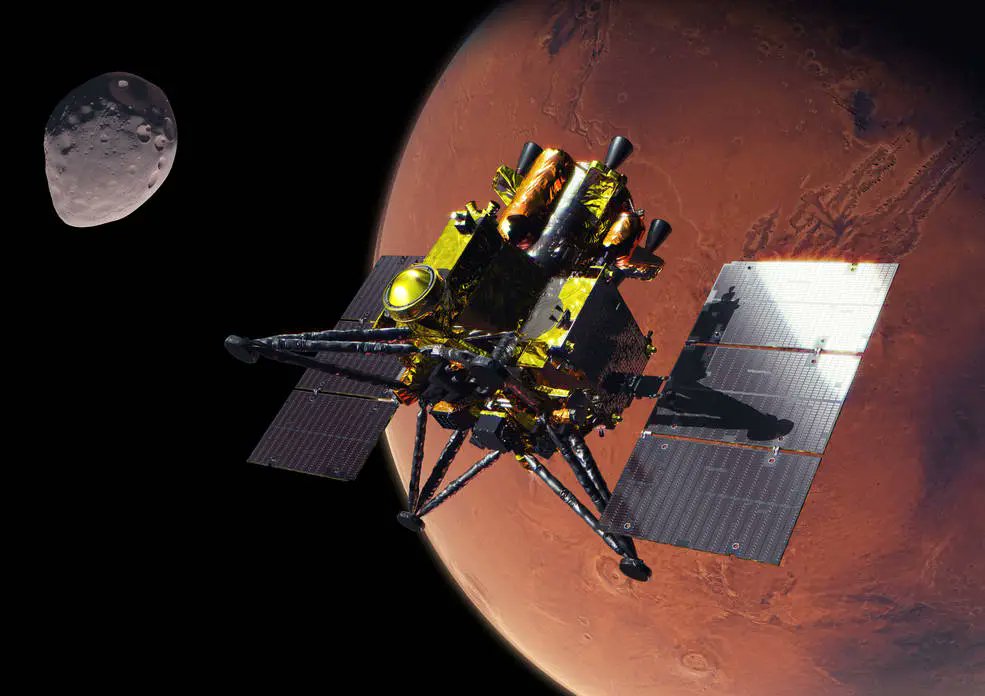
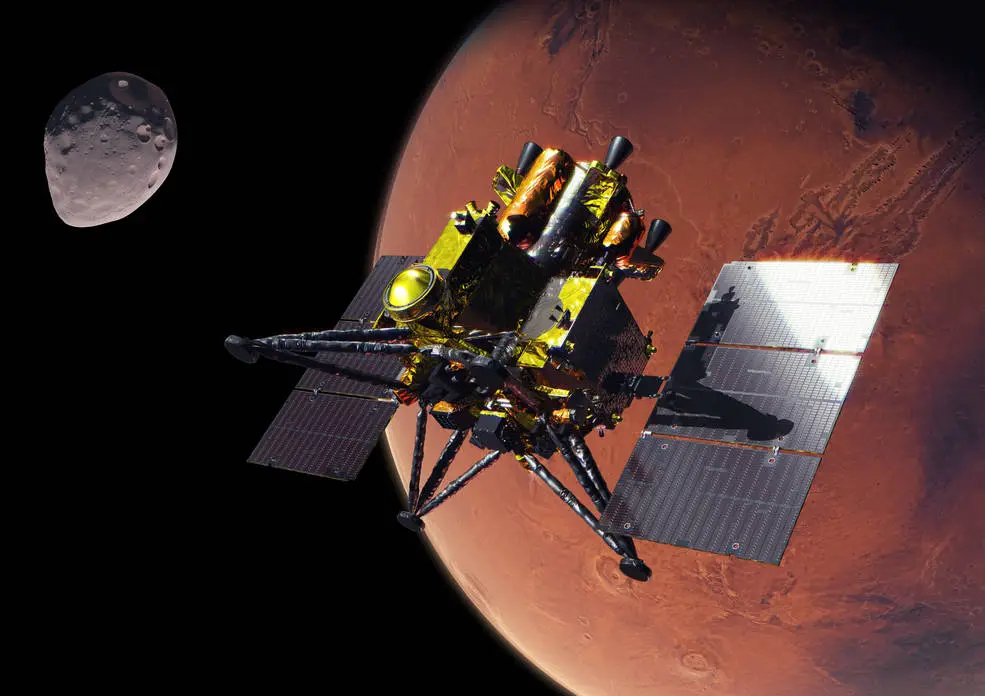
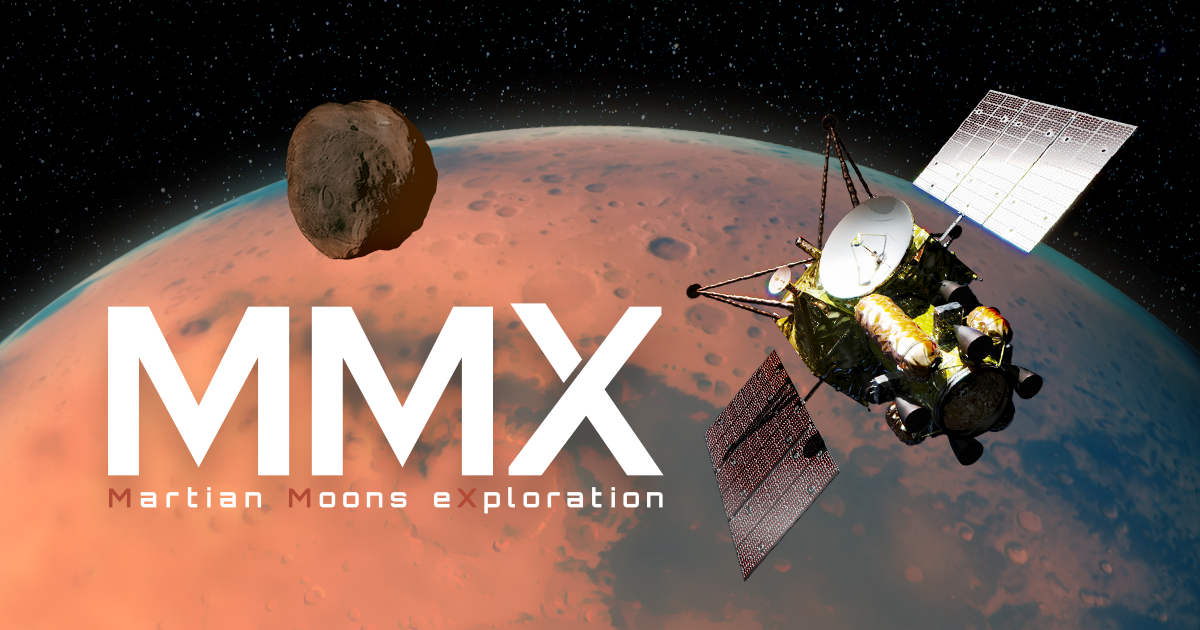
NASA has scheduled a media teleconference for 4 p.m. EDT on Thursday, Oct. 15, to outline the U.S. agency's role in the Japan Aerospace Exploration Agency's Martian Moons eXploration mission. Audio will stream on NASA's website.
The briefing comes shortly before MMX's planned departure from JAXA's Tanegashima Space Center. NASA's Oct. 8 advisory lists the launch for Monday, Oct. 19, EDT, which is Tuesday, Oct. 20, in Japan.
What NASA is contributing
NASA's hardware contributions include MEGANE, a gamma-ray and neutron spectrometer developed by the Johns Hopkins Applied Physics Laboratory, and a pneumatic surface sampler built by Honeybee Robotics, a Blue Origin company. The agency is also supplying communications and navigation support through its Deep Space Network and funding U.S. scientists on the MMX science team.
JAXA's account of the international partnership likewise lists MEGANE, the pneumatic sampler and ground-station support among NASA's contributions. The Oct. 15 briefing will include the MEGANE principal investigator and a Honeybee Robotics representative alongside two NASA planetary science officials.
Why MMX is going to Phobos
MMX is designed to survey both Phobos and Deimos, the two moons of Mars, before collecting material from Phobos. JAXA says the mission aims to return more than 10 grams, which would make it the first sample-return mission from the Mars region.
The mission is intended to help distinguish between two leading explanations for the moons' origin. They may be asteroids captured by Mars's gravity, or remnants of debris produced when another body struck the young planet. Remote observations and laboratory analysis of the returned material are meant to test those possibilities and add context to the evolution of the wider Mars system.
According to NASA's current timeline, MMX is scheduled to reach Mars in August 2027, collect its Phobos sample no earlier than December 2028 and return that material to Earth in 2031.