• Home
  • Technology
  • Gaming
  • Entertainment
  • World & Business
  • Science
  • Sports
  • AI
HomeTechnologyGamingEntertainmentWorld & BusinessScienceSportsAI
Science
Announcement

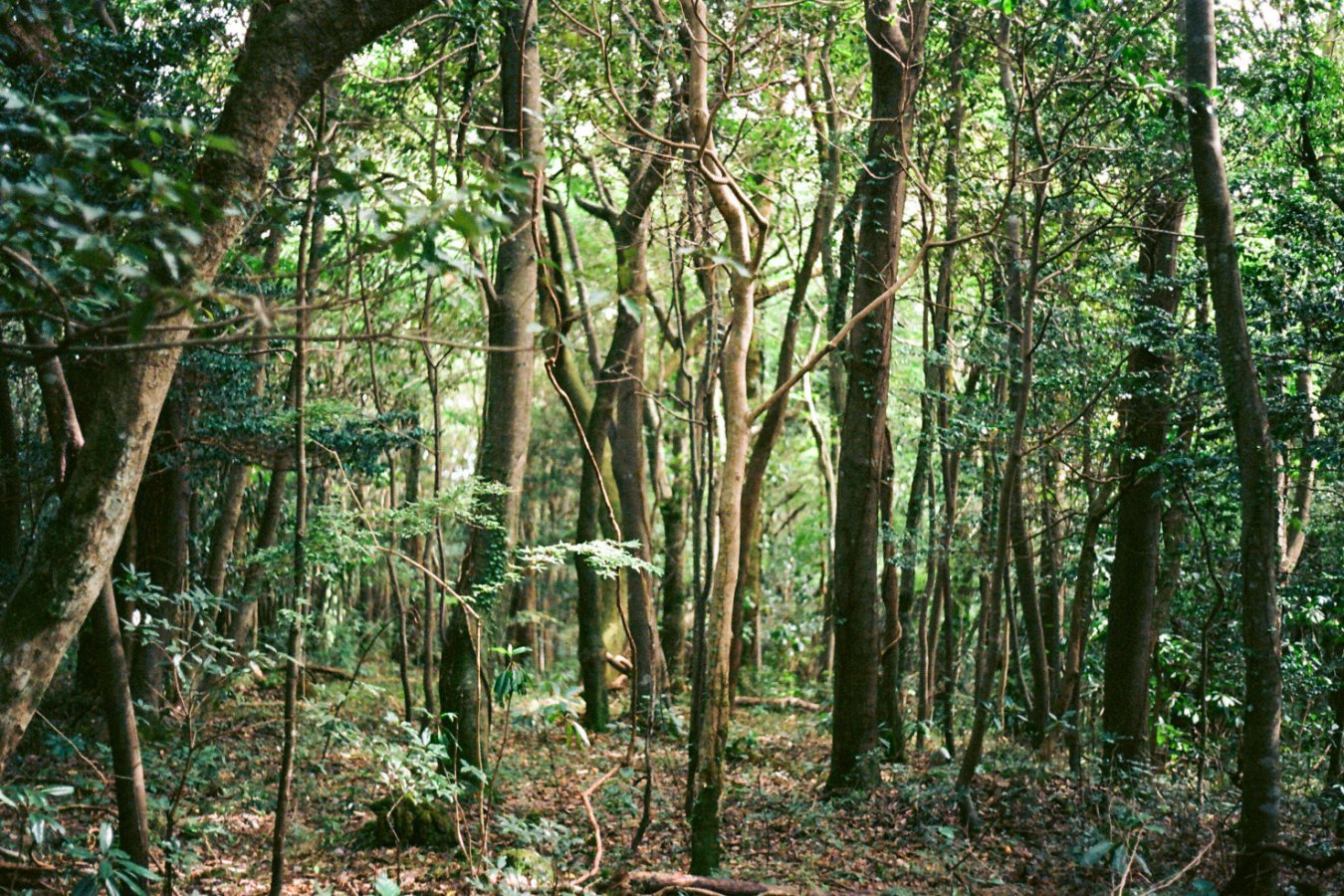
Forest and grassland carbon absorption reportedly rebounded in 2025

New Scientist credits favorable growing conditions for the rebound but says El Niño could cause another sharp slump in 2027.

New ScientistNS
2 Sources, 2h ago, first seen 2h ago

TLDR

New Scientist reports that carbon absorption by forests and grasslands bounced back in 2025 thanks to favorable growing conditions. It says El Niño could lead to another sharp slump in 2027.

Combined views

—

2 Sources, first seen 2h ago

— likes— comments— saves— reposts

Combined views

—

2 Sources, first seen 2h ago

— likes— comments— saves— reposts

A new low-latency carbon-budget analysis estimates that the world’s land ecosystems absorbed substantially more carbon in 2025 than they did a year earlier. The preprint, submitted in September 2026, puts the global net land sink at 2.36 billion metric tons of carbon for the year, an increase of 2.81 billion tons from 2024.

Featured Source

The researchers combined measurements of atmospheric carbon dioxide with three dynamic vegetation models, ocean-model emulators and four atmospheric inversions constrained by OCO-2 satellite observations. Those independent approaches did not produce exactly the same answer: the vegetation models estimated a 2.04-billion-ton land sink, while the inversions estimated 2.68 billion tons. The combined figure sits between them.

The land sink measures net carbon uptake by land ecosystems. A stronger sink does not mean fossil-fuel emissions fell. The study estimates those emissions actually rose 0.7 percent in 2025, to 10.38 billion tons of carbon.

A broad but uneven recovery

Atmospheric CO2 growth slowed from a record 3.76 parts per million in 2024 to 2.06 ppm in 2025, below the 2015–2022 average of 2.47 ppm. Ocean uptake stayed roughly level, so the authors identify the land rebound as the main reason for the slowdown.

Tropical lands shifted from being net carbon sources in 2024 to net sinks in 2025. Stronger uptake was concentrated across much of Africa and northern Eurasia, and the regional changes tracked shifts in GRACE-derived terrestrial water storage. In plain terms, wetter conditions were generally associated with stronger carbon uptake.

About 80 percent of the areas that suffered substantial sink losses in 2023 and 2024 showed at least some recovery in 2025. The models and atmospheric inversions put the overall recovery at 87.3 percent and 99.5 percent, respectively. Uptake in the tropics more than recovered relative to the recent baseline, while the northern extratropics remained below it.

The analysis is a preprint and has not yet completed peer review. It also follows a peer-reviewed study covering July 2024 through June 2025 that reported late-2024 carbon losses and contrasting early-2025 land-sink recovery signals. The newer full-year estimate sharpens the picture, but the spread between its model and inversion results shows that method uncertainty remains.

Why 2027 could look different

The rebound may be short-lived. In an Oct. 8 advisory, NOAA’s Climate Prediction Center said a strong-to-very strong El Niño was more than 83 percent likely to persist through January–March 2027. The agency also put the chance of a historically strong event during October–December 2026 at 83 percent.

New Scientist reports that El Niño could lead to another sharp slump in the land sink. The preprint does not make a quantitative forecast for 2027, but it found that regional carbon-flux changes in 2025 tracked shifts in terrestrial water storage. NOAA also cautions that even with an El Niño of the expected magnitude, typical impacts become more likely but are not guaranteed. Taken together, the evidence points to a risk of renewed weakening, not a certain outcome.

The larger lesson is that a one-year rebound is not the same as a durable improvement. The new estimate shows that land uptake can swing sharply even as fossil-fuel emissions keep rising.

Sentiment

Positive——Negative

Summary

Not enough discussion yet.

No sentiment analysis available yet.

Useful links

New Scientist

The land's ability to store carbon has bounced back after two bad years | New Scientist

cger.nies.go.jp

The Global Carbon Project (GCP) releases the Global Carbon Budget 2025 at COP 30 on November 11, 2025 | News & Events | Global Carbon Project Tsukuba International Office

Sentiment

Positive——Negative

Summary

Not enough discussion yet.

No sentiment analysis available yet.

Useful Links

New Scientist

The land's ability to store carbon has bounced back after two bad years | New Scientist

cger.nies.go.jp

The Global Carbon Project (GCP) releases the Global Carbon Budget 2025 at COP 30 on November 11, 2025 | News & Events | Global Carbon Project Tsukuba International Office

Useful Links

New Scientist

The land's ability to store carbon has bounced back after two bad years | New Scientist

cger.nies.go.jp

The Global Carbon Project (GCP) releases the Global Carbon Budget 2025 at COP 30 on November 11, 2025 | News & Events | Global Carbon Project Tsukuba International Office

5 Sources

www.cpc.ncep.noaa.govClimate Prediction Center: ENSO Diagnostic Discussion
arXiv.orgLow latency global carbon budget reveals strong land sink recovery in 2025
The Advanced PortfolioLow Latency Global Carbon Budget Reveals Late 2024 Carbon Losses and Contrasting Early 2025 Land Sink Recovery Signals
New Scientist@newscientistCarbon absorption by forests and grasslands bounced back in 2025 thanks to favourable growing conditions, but El Niño could lead to another sharp slump next year https://www.newscientist.com/article/2593284-the-land-carbon-sink-has-rebounded-strongly-after-two-terrible-years/?utm_term=Autofeed&utm_campaign=echobox&utm_medium=social&utm_source=Twitter#Echobox=17918972022h
    • Home
    • Technology
    • Gaming
    • Entertainment
    • World & Business
    • Science
    • Sports
    • AI

    5 Sources

    www.cpc.ncep.noaa.govClimate Prediction Center: ENSO Diagnostic Discussion
    arXiv.orgLow latency global carbon budget reveals strong land sink recovery in 2025
    The Advanced PortfolioLow Latency Global Carbon Budget Reveals Late 2024 Carbon Losses and Contrasting Early 2025 Land Sink Recovery Signals
    New Scientist@newscientistCarbon absorption by forests and grasslands bounced back in 2025 thanks to favourable growing conditions, but El Niño could lead to another sharp slump next year https://www.newscientist.com/article/2593284-the-land-carbon-sink-has-rebounded-strongly-after-two-terrible-years/?utm_term=Autofeed&utm_campaign=echobox&utm_medium=social&utm_source=Twitter#Echobox=17918972022h
    Today's Rank

    #1

    Today's Rank

    #1