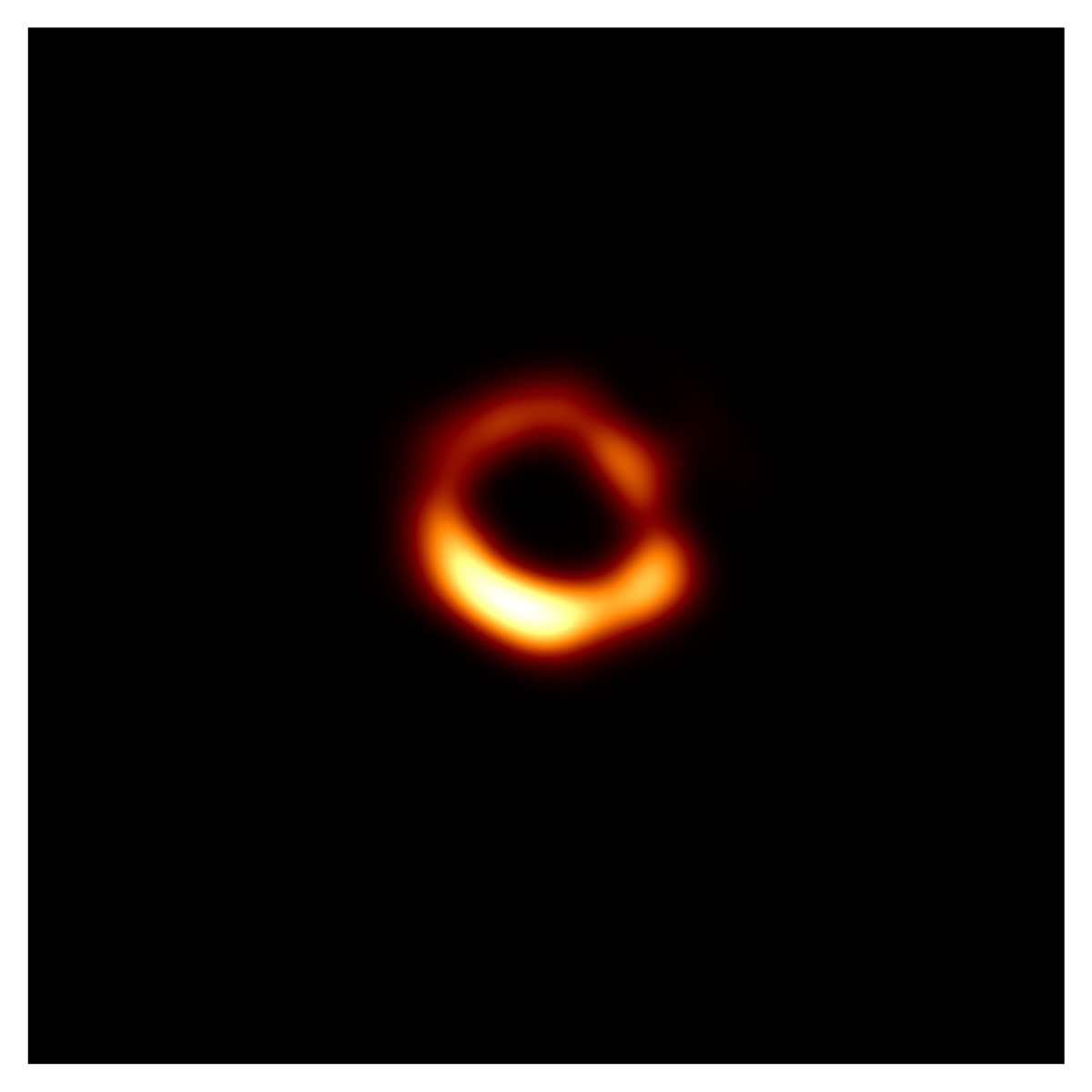
An independent reanalysis of the Event Horizon Telescope’s measurements of M87* produced an image nearly identical to the one released in 2019, New Scientist reports. Source
That’s a reconstruction of existing measurements, not a new telescope observation. Most analyses have recovered similar rings, but one published in 2022 found none, according to New Scientist. Source
The Event Horizon Telescope links radio telescopes across the world to work as an Earth-sized dish. But its scattered telescopes leave large gaps in the measurements that imaging algorithms must fill, Nithyanandan Thyagarajan of CSIRO in Australia explained to New Scientist. The atmosphere can also distort the short-wavelength radio signals. This is not point-and-shoot astronomy. Source
Thyagarajan and his colleagues developed a new data-processing pipeline that combined measurements from groups of three telescopes instead of the usual pairs, New Scientist reports. Source
“By combining measurements from sets of three telescopes, we preserve the information about the object’s shape while cancelling out errors from the atmosphere and the telescopes,” Thyagarajan told New Scientist. Source
The team also developed a machine-learning algorithm trained on images that weren’t of black holes, aiming to reduce bias from their expectations about the result. A useful precaution when the expected answer already has a very famous portrait. Source
New Scientist links the ring to how light bends around a massive object, as predicted by general relativity. Recovering a nearly identical image through a different processing method strengthens confidence in the original reconstruction and its consistency with that theory. Einstein gets supporting evidence, not immunity from the next test. Source




Comments