• Home
  • Technology
  • Gaming
  • Entertainment
  • World & Business
  • Science
  • Sports
  • AI
HomeTechnologyGamingEntertainmentWorld & BusinessScienceSportsAI
Science
Announcement

Japanese hydrogel rapidly reprograms cancer cells into stem-like cells in 24 hours

Hokkaido University says cells form spheroids and upregulate stemness genes across six human cancer cell lines.

For all CuriousFA
Sci Nature NewsSN
2 Sources, 10d ago, first seen 10d ago

TLDR

In 2021, Hokkaido University said the hydrogel could help researchers generate cancer stem cells for study and drug testing, potentially advancing understanding of cancer relapse and treatment resistance. The team reported that a targeted inhibitor eradicated gel-induced stem cells from patient-derived brain cancer cells in lab work; the gel is not a patient therapy.

Combined views

9K

2 Sources, first seen 10d ago

393 likes11 comments77 saves85 reposts

Combined views

9K

2 Sources, first seen 10d ago

393 likes11 comments77 saves85 reposts

A laboratory study published in 2021 is circulating again online after social posts highlighted its counterintuitive approach: using a hydrogel to turn differentiated cancer cells into cells with cancer-stem-cell traits.

Featured Source

Researchers at Hokkaido University and Japan's National Cancer Center Research Institute reported in Nature Biomedical Engineering that a double-network hydrogel rapidly reprogrammed tumor cells in laboratory experiments. The method gives researchers a way to produce more of a rare, treatment-resistant cancer-cell population for laboratory study and drug screening. It does not treat patients or make healthy stem cells.

Cancer stem cells can be resistant to chemotherapy and radiotherapy and have been linked to recurrence. Because they occur in small numbers, they can be difficult to identify and study.

The gel induced stem-like traits within 24 hours

The double-network gel combines two chemical networks and holds a large amount of water, giving it soft, wet properties that resemble biological tissue. The researchers tested whether that environment could act as a niche that induces stemness in cancer cells.

Within 24 hours, cells on the gel formed spheroids and showed elevated levels of the stemness genes Sox2, Oct3/4 and Nanog. The result appeared across six human cancer cell lines representing brain, uterine, lung, colon and bladder cancers, plus sarcoma. The researchers also observed the effect in brain cancer cells taken from patients with glioblastoma.

The study included an animal experiment to test whether the gel-induced cells behaved like cancer stem cells. Human brain cancer cells cultured on the double-network gel were more tumorigenic after injection into the brains of immunodeficient mice than cells grown on single-network gels.

The team also identified biological signals involved in the process. Calcium-channel receptors and the protein osteopontin were necessary for the gel-mediated induction of stemness in brain cancer cells, according to the paper.

A research tool, not a cancer treatment

In another experiment, patient-derived brain cancer cells grown on the gel expressed platelet-derived growth factor receptors. A targeted inhibitor of those receptors eradicated the gel-induced cancer stem cells in culture.

That result does not show that the hydrogel or inhibitor treats cancer in people. Instead, it illustrates the platform's proposed use: generating cancer stem cells consistently enough to investigate their biology and screen potential drugs against them.

A joint release from Hokkaido University and the National Cancer Center Research Institute said the researchers hoped the method could eventually support cancer diagnosis, drug development and personalized medicine. Those remain prospective applications.

The date is an important part of the story. The paper was published March 29, 2021, and the university announced it the following day. The current attention reflects renewed circulation of that laboratory finding, not a newly reported clinical breakthrough.

Sentiment

Positive——Negative

Summary

Not enough discussion yet.

No sentiment analysis available yet.

Sentiment

Positive——Negative

Summary

Not enough discussion yet.

No sentiment analysis available yet.

4 Sources

www.global.hokudai.ac.jpUprooting cancer: Hydrogel rapidly reverts cancer cells back to cancer stem cells | Hokkaido University
NatureRapid reprogramming of tumour cells into cancer stem cells on double-network hydrogels2020d
For all Curious@fascinatingonXJapanese scientists just built a gel that turns ordinary cancer cells into their toughest form. In 24 hours. Sounds backwards. It's actually brilliant. Cancer stem cells survive chemo and radiation and can bring a tumor back later. They're also rare, so studying them is brutal. Hokkaido University's double-network hydrogel changes that. On it, cells formed spheres and switched on the stemness genes SOX2, OCT3/4 and NANOG across six human cancer cell lines, including brain, lung, colon, bladder and uterine. In patient-derived brain cancer cells, a targeted inhibitor then wiped out the gel-made stem cells. It's still lab work. But the cells behind relapse just lost their hiding spot. Source: Nature Biomedical Engineering; Hokkaido University; National Cancer Center Research Institute10d
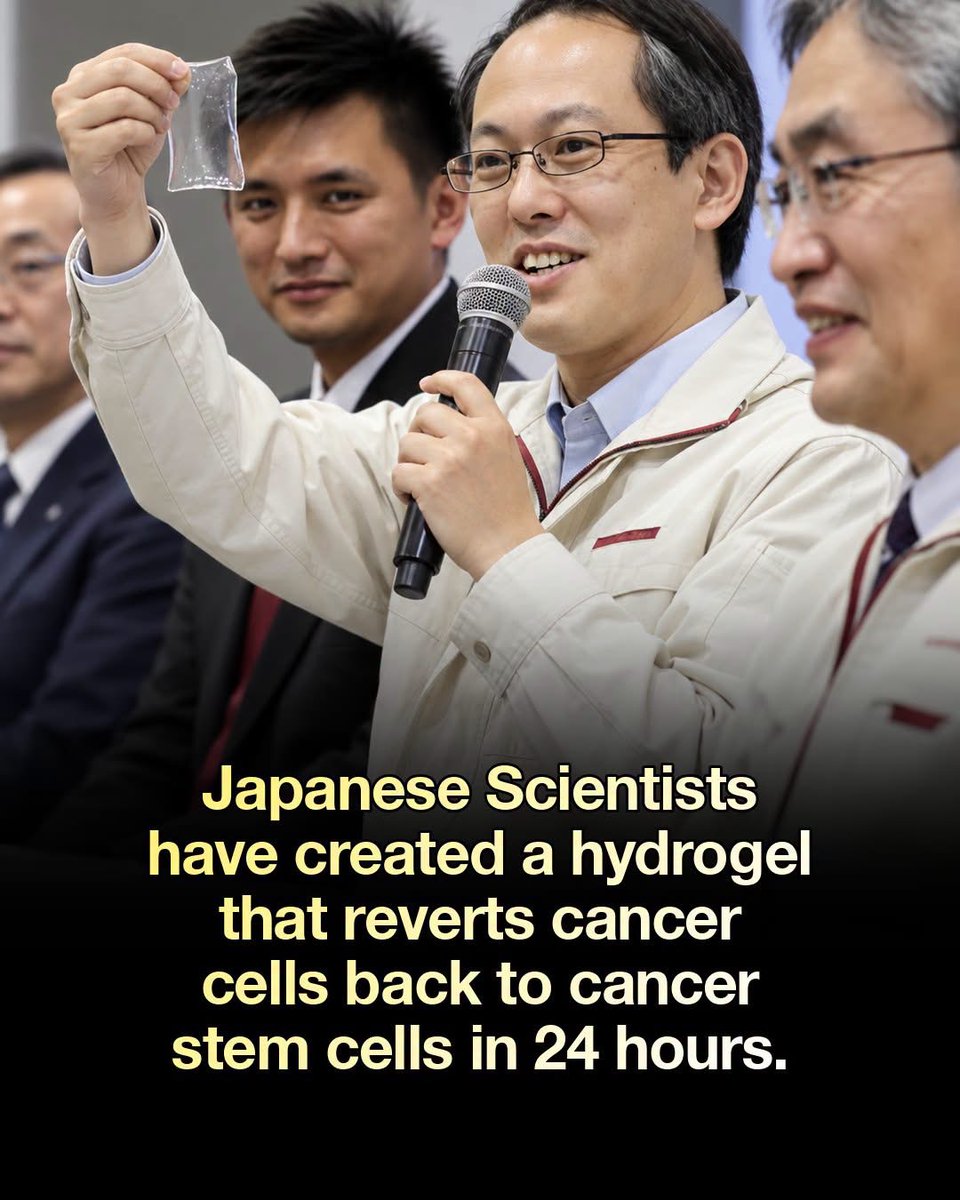
Sci Nature News@SciNatureNewsJUST IN🚨: Japanese Scientists have created a hydrogel that reverts cancer cells back to cancer stem cells in 24 hours.1d
    • Home
    • Technology
    • Gaming
    • Entertainment
    • World & Business
    • Science
    • Sports
    • AI

    4 Sources

    www.global.hokudai.ac.jpUprooting cancer: Hydrogel rapidly reverts cancer cells back to cancer stem cells | Hokkaido University
    NatureRapid reprogramming of tumour cells into cancer stem cells on double-network hydrogels2020d
    For all Curious@fascinatingonXJapanese scientists just built a gel that turns ordinary cancer cells into their toughest form. In 24 hours. Sounds backwards. It's actually brilliant. Cancer stem cells survive chemo and radiation and can bring a tumor back later. They're also rare, so studying them is brutal. Hokkaido University's double-network hydrogel changes that. On it, cells formed spheres and switched on the stemness genes SOX2, OCT3/4 and NANOG across six human cancer cell lines, including brain, lung, colon, bladder and uterine. In patient-derived brain cancer cells, a targeted inhibitor then wiped out the gel-made stem cells. It's still lab work. But the cells behind relapse just lost their hiding spot. Source: Nature Biomedical Engineering; Hokkaido University; National Cancer Center Research Institute10d
    Sci Nature News@SciNatureNewsJUST IN🚨: Japanese Scientists have created a hydrogel that reverts cancer cells back to cancer stem cells in 24 hours.1d
    Today's Rank

    #12

    Today's Rank

    #12