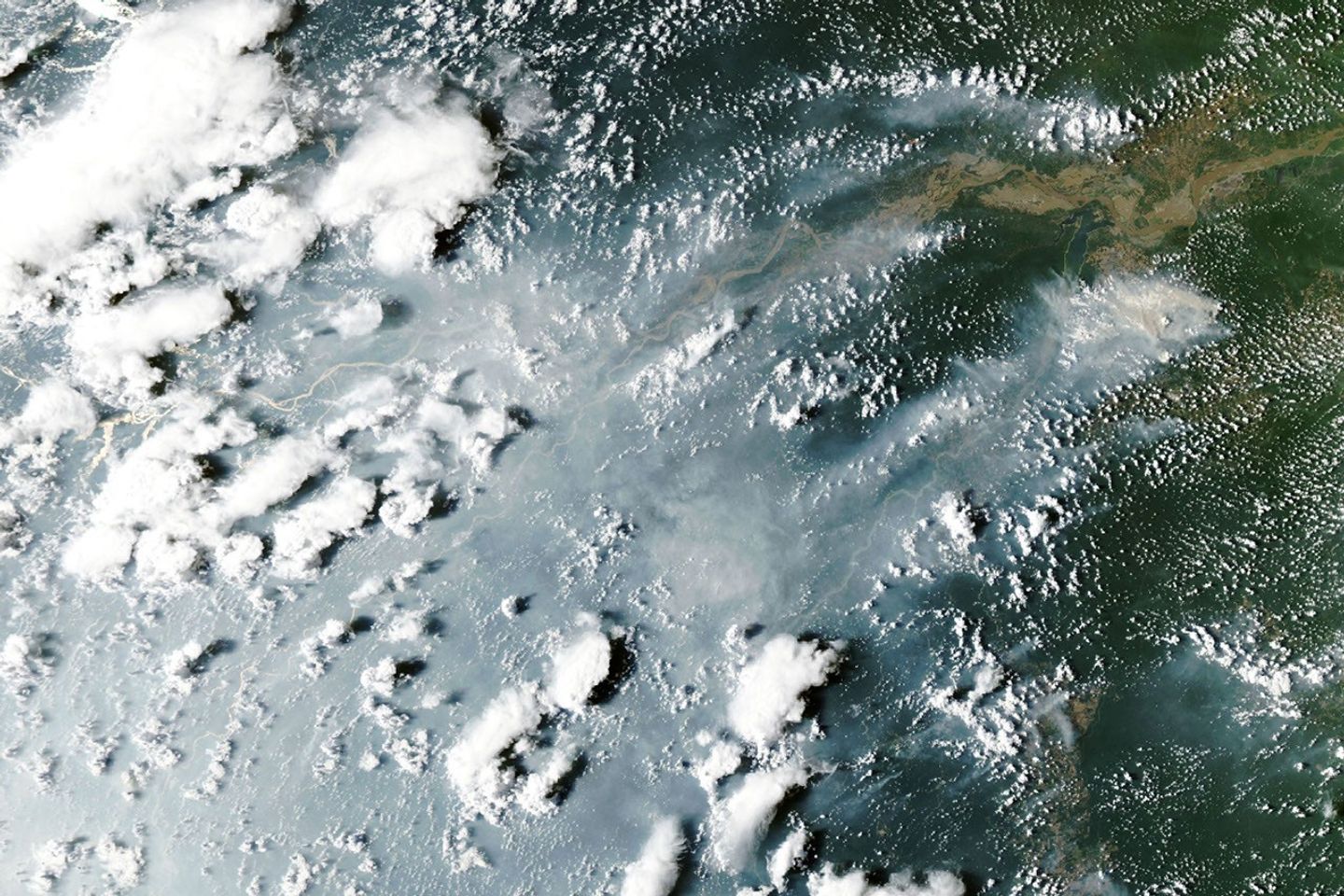
An article credited to Adam Voiland of NASA Earth Observatory and published by SciTechDaily on Oct. 20, 2026 reports a sharp increase in fires and smoke across the central and eastern Amazon since September 2026. It cites monitoring systems including FIRMS, the Global Fire Emissions Database and NASA Worldview for the increase.
On Oct. 12, NASA's Aqua satellite captured smoke plumes from fires on both sides of the Amazon River, the article reports. It says dense smoke enveloped Manaus that day and cites city officials reporting concentrations of fine particulate matter, or PM2.5, above 135 micrograms per cubic meter. The account also reports that schools closed and public events were canceled amid the smoke.
El Niño intensified drought across the Amazon in 2026, according to the article. Citing NASA Goddard Earth system scientist Douglas Morton, it attributes the overwhelming majority of fires then burning in the Brazilian Amazon to human activity. Some agricultural burns escaped into the dry forest understory, the account says.
University of Maryland researcher Shane Coffield's satellite analysis suggests 50 to 70 uncontrolled fires in the Santarém area, according to the article. Coffield says his team identified about 40 percent more fires around Santarém than appear in FIRMS active-fire counts. That comparison covers the Santarém area, not the whole Amazon.
Scientists expect fire risk farther north in November and December 2026, the article reports. Morton predicts drought and wildfire risk will peak in southern Amazon regions of Brazil and Paraguay around August and September 2027. He urged people to avoid burning to reduce the risk.