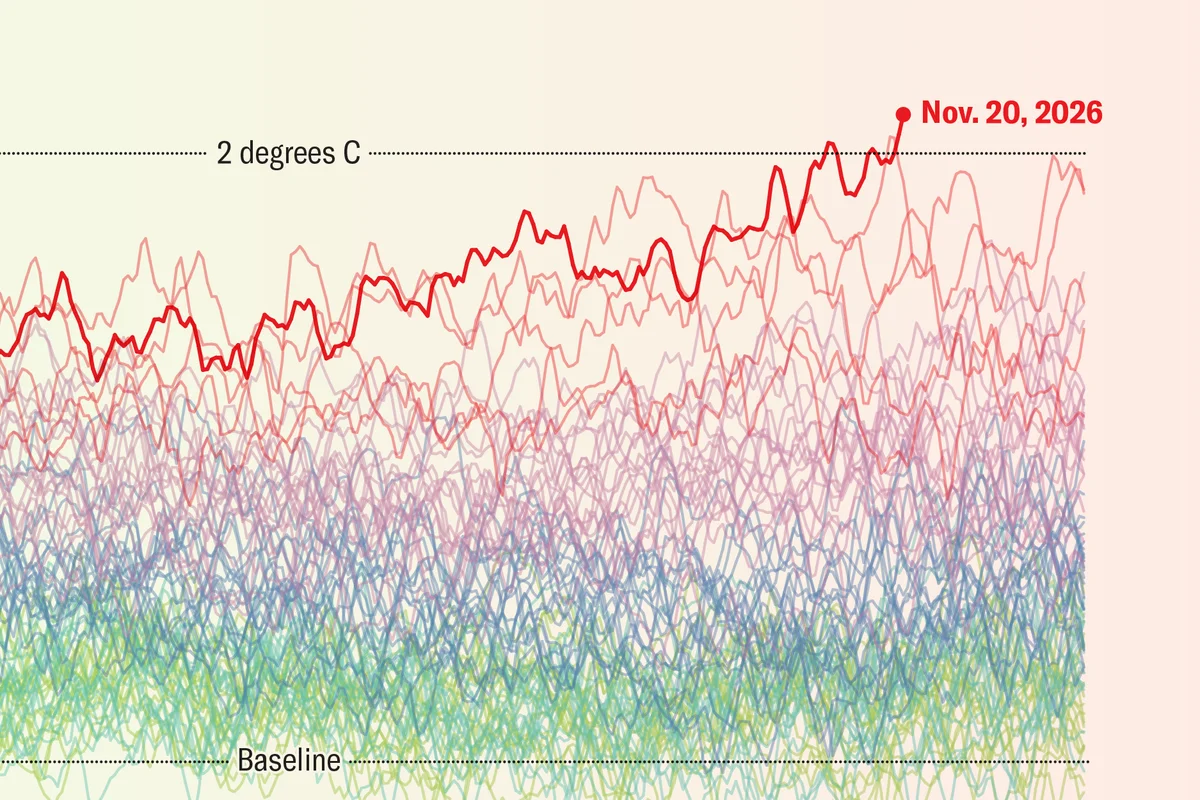
Earth’s average temperature on November 20, 2026, was 2.12°C above the preindustrial average, according to preliminary Copernicus Climate Change Service (C3S) data reported by Scientific American. The outlet describes it as the largest daily temperature anomaly ever recorded. Source
The record concerns the departure from the preindustrial average, not the highest absolute global temperature. Source Sparknify identifies that baseline as the 1850–1900 average. Source
Why the Paris limits aren’t daily thresholds
Under the 2015 Paris Agreement, countries agreed to limit warming to “well below” 2°C above preindustrial levels and try to keep it under 1.5°C. Those goals concern temperatures averaged over many years, not an individual day’s reading. Scientific American notes that even a single year above 2°C would not, by itself, establish a permanent breach of the agreement’s limit. Source
That’s a distinction about the timescale, not a scientific all-clear.
El Niño adds to the problem
Scientific American attributes the record to long-term, human-driven climate change combined with an El Niño that is still strengthening. El Niño doesn’t give fossil fuels an alibi. Source
“I think we will likely see more days exceeding 2 degrees C over the next couple of months (possibly through March 2027),” Climate Central scientist Zachary Labe told Scientific American. He also expects those days to remain “more a rarity than the norm when comparing every day.” Source





Comments