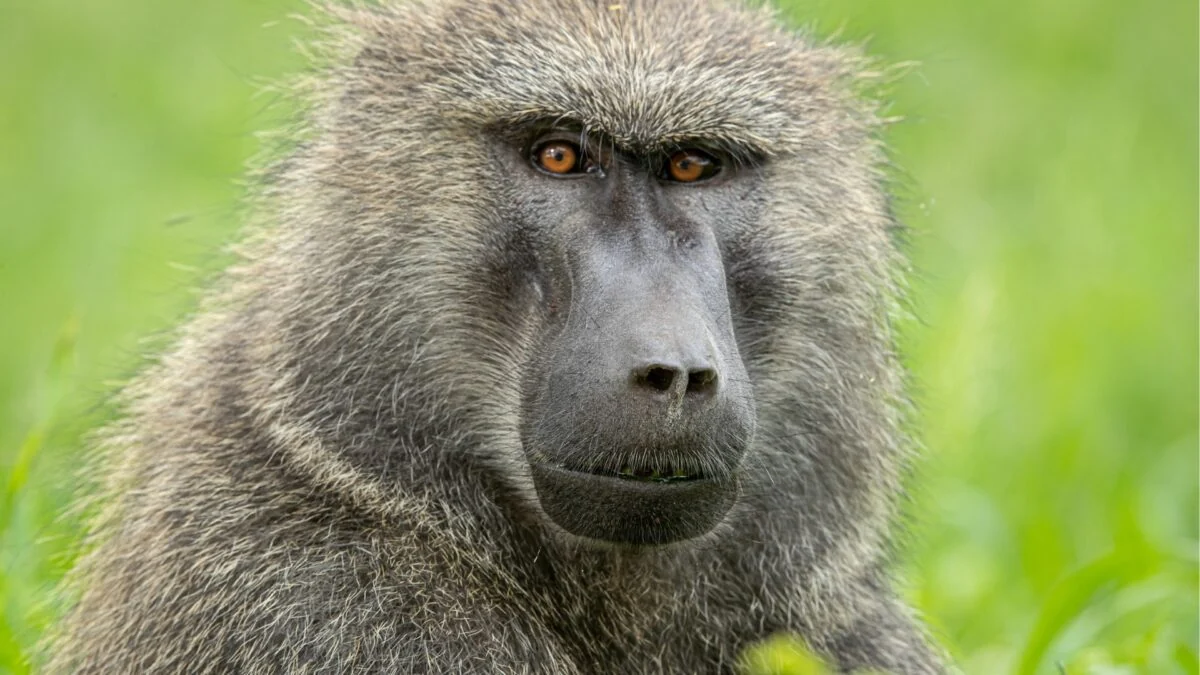
An adult male baboon is hardly the easy option for a hunting eagle. Yet researchers in Chad report bone damage suggesting eagles may be killing them—including one animal estimated at 26.2 kilograms, about 58 pounds. Source
The study was published November 18, 2026, in the American Journal of Biological Anthropology. Its authors point to Verreaux’s eagles as the likely predators, but did not witness a killing and cannot definitively rule out scavenging. Source
What the bones reveal
During fieldwork in Chad’s Ennedi reserve in February–March 2025 and June 2026, researchers recovered baboon remains beneath sandstone cliffs. They found punctures in adult males’ eye sockets and punctured or raked shoulder blades, resembling damage associated with eagle talons and feeding. Source
One male with the relevant damage had an estimated body mass of 21.8 kilograms. Another, recovered in June 2026, was estimated at 26.2 kilograms. The team estimated mass from measurements of the rounded heads of thigh bones, rather than weighing living baboons. Source
“We saw the eagles while we were searching for the baboons, but we never imagined that they might be a threat to them,” lead author Catherine Hobaiter said in a University of St Andrews statement carried by Phys.org. “Then we found the first skull with a puncture mark, and then another, and another.” Source
The authors considered alternatives, including gunshot wounds and fights between male baboons, but say the additional skull damage expected from those causes was absent. Scavenging remains possible, although they argue that the severity of the punctures favors a lethal encounter. Their conclusion is that “predation seems the likeliest explanation for the punctures and raking.” Source
The full skeletal sample represents nine individuals, not nine confirmed eagle kills. The 26.2-kilogram male also had a badly healed leg fracture that shortened one hindlimb; the paper does not establish what role, if any, that injury played in an encounter. Source
Too heavy to carry isn’t necessarily too big to kill
According to the paper, some researchers have adopted 20 kilograms as an upper limit for eagle predation on primates, while no confirmed case has exceeded 13 kilograms. Those are different thresholds—and neither is an eagle’s legally enforced baggage allowance. Source
As the authors explain, eagles can kill large prey, dismember it and carry manageable portions. They also discuss hunting tactics involving sustained talon grips or knocking prey from cliffs. Those behaviors offer possible explanations for the baboon evidence; the researchers did not observe them killing these males. Source
On June 19, 2026, the team observed baboons alarm-calling and dropping from exposed positions into shelter as two Verreaux’s eagles approached along a cliff. Other raptors observed there elicited no response. Source
If eagles regularly prey on baboons above 20 kilograms, the authors argue, some early human relatives may also have been vulnerable. They suggest that such pressure could matter to explanations of male cooperation, infant care and body-size differences between the sexes. This study does not demonstrate those evolutionary effects. Source






Comments