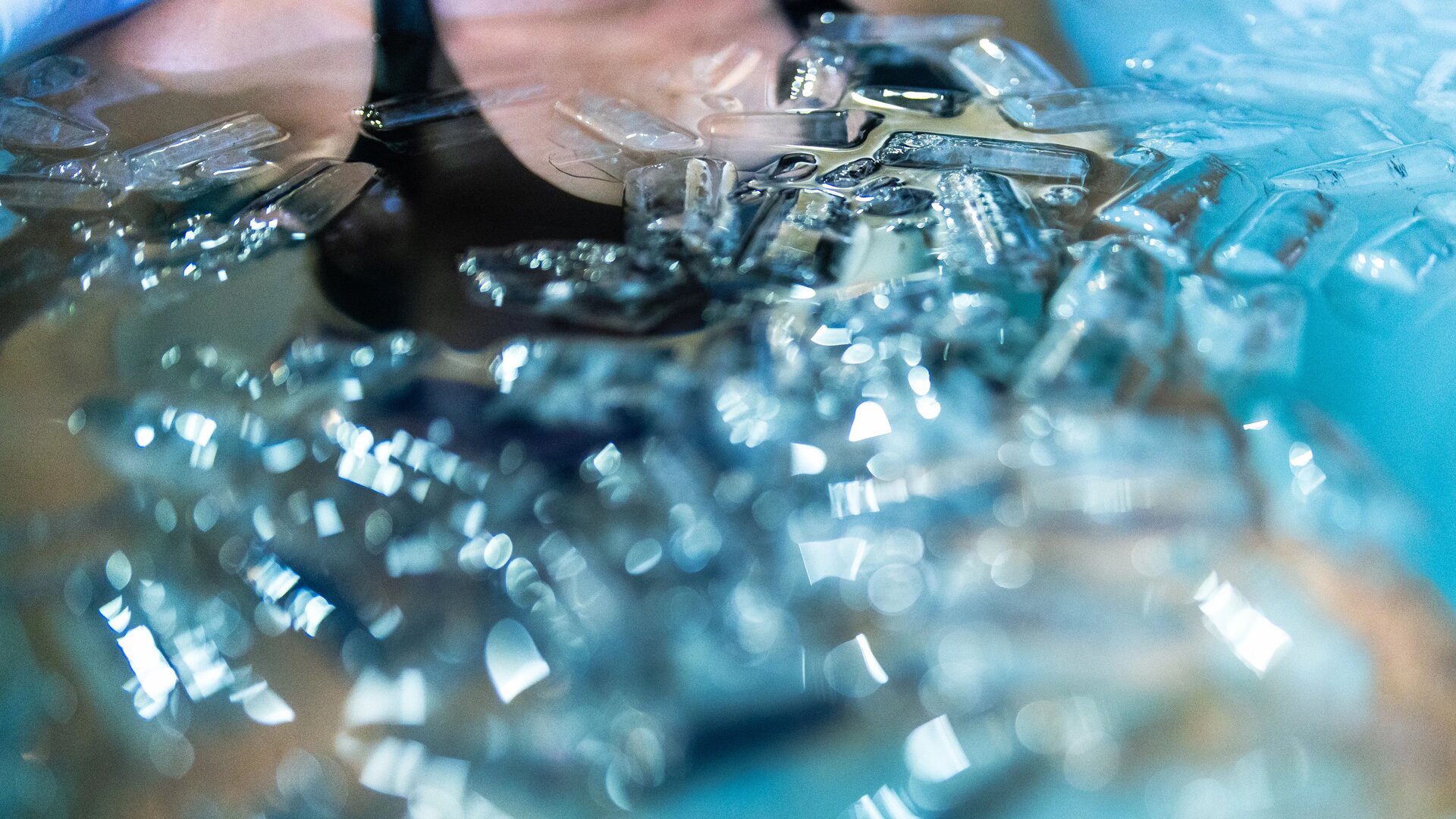
An ice bath may make sore muscles feel better. In a small trial described by researcher Freya Bayne, cold-water immersion appeared to reduce perceived soreness but showed no statistically significant strength-recovery advantage over heat treatments or simply resting. Source
The cold plunge’s decidedly unglamorous competition: sitting still.
In an account published by Scientific American on November 14, 2026, Bayne describes an experiment involving 40 healthy, physically active adults. The account first appeared in The Conversation. Participants completed strenuous exercise targeting their quadriceps, the large muscles at the front of the thigh. Researchers then randomly assigned them to cold-water immersion, hot-water immersion, hot-air exposure or passive rest immediately afterward. Source
Over the next 72 hours, the team monitored strength, pain, soreness and biological markers linked to muscle damage, inflammation and cellular stress. None of the recovery methods restored strength significantly faster than the others, Bayne writes. The lack of a statistically significant difference doesn’t establish that the methods work equally well. Source
Feeling better isn’t the whole result
“A person may feel less sore but may still have reduced muscle function,” Bayne writes. Cold-water immersion appeared more effective at reducing perceived soreness, even though it wasn’t shown to improve the other recovery markers she describes. Source
New Scientist also reports that muscle-damage markers persisted longer in participants who took ice baths than in those who rested. The available excerpt gives no statistical detail for that comparison; it does not establish lasting muscle injury. Source
According to Bayne, the hot-water group had higher levels of heat shock protein 72, or HSP72, a protein involved in cellular protection and repair processes. Heat-based methods were also associated with more favorable changes in markers linked to muscle damage and inflammation. Source
Those biological differences did not establish that heat restored strength significantly faster during the follow-up. The hot bath doesn’t get to skip the evidence requirement. Source
Ten people per group
There were just ten participants in each group, and the sample wasn’t large enough to explore differences between men and women. The experiment also followed recovery from one specific exercise protocol for only three days. It cannot establish how repeated use affects long-term training adaptations or whether other forms of cold exposure would produce similar results. Source
Feeling better is welcome. It just isn’t a strength test. Source




Comments