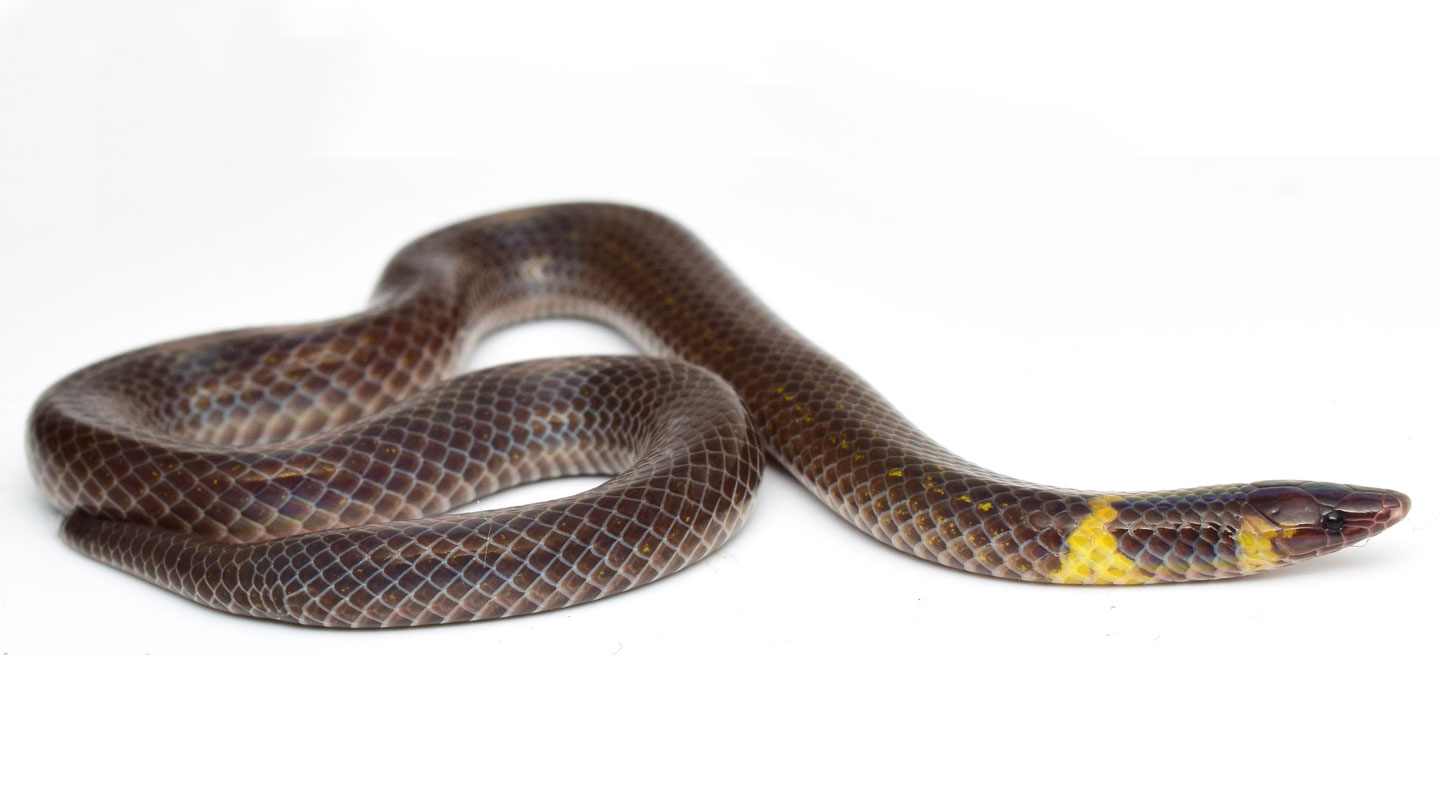
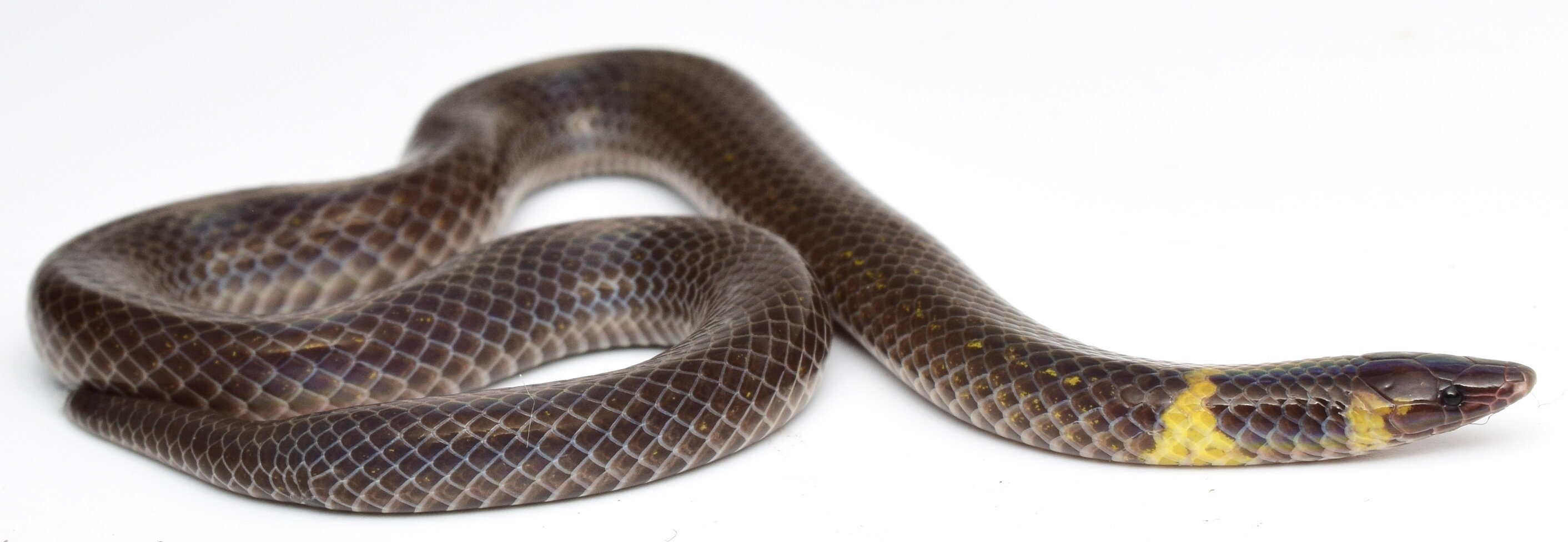
Researchers filmed three species of dwarf reedsnakes rolling down a laboratory track, giving scientists a closer look at an escape behavior previously documented in snapshots. The movement analysis appeared Oct. 19 in Current Biology, Science News reports. The earlier snapshots, published in 2023, showed a Pseudorabdion longiceps cartwheeling away from danger.
The researchers collected 11 P. saravacense, one P. collaris and one P. longiceps from Malaysia’s Kubah National Park, along with six Calamaria reed snakes for comparison. Cameras above and beside a 2.2-meter track recorded the snakes after a gentle tap prompted each to move. All 13 Pseudorabdion snakes cartwheeled; none of the six Calamaria snakes did, according to Science News. The laboratory trials involved taps, not predator encounters.
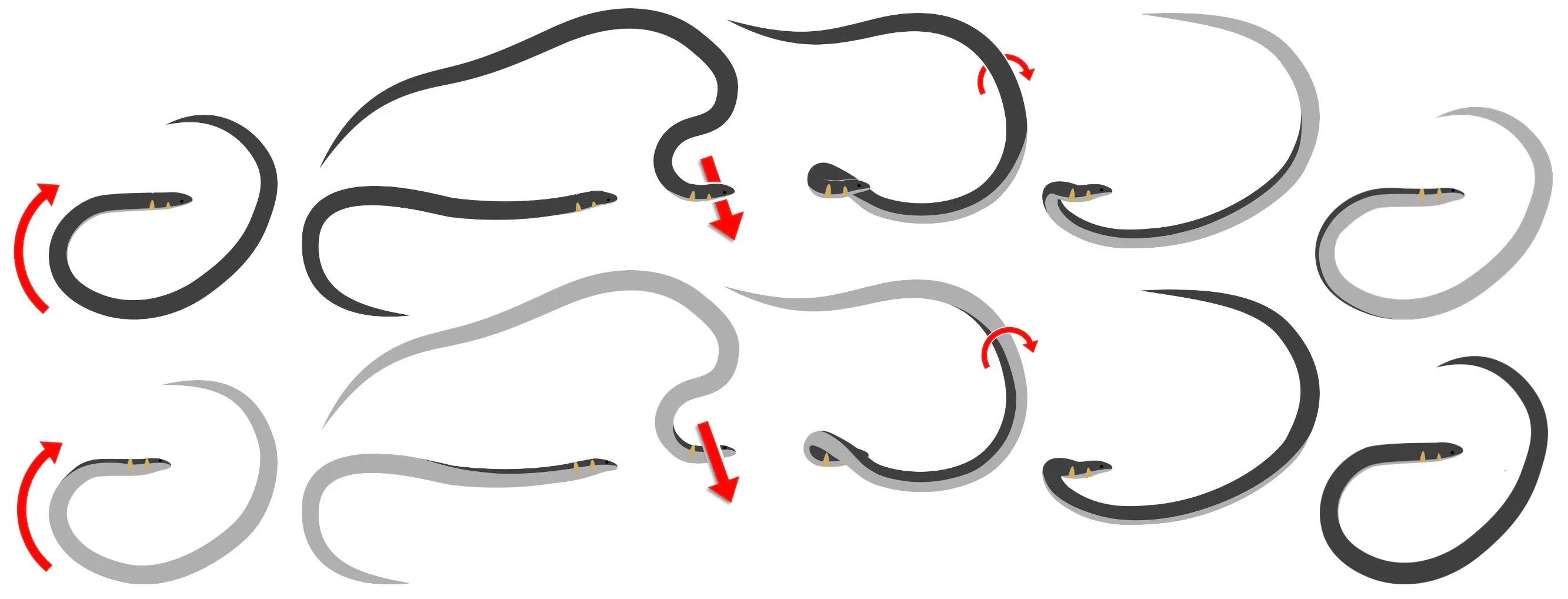
A rolling snake starts curled into a C, with its head lifted toward its direction of travel. It whips its tail behind it, briefly leaves the ground, then swings the tail forward past its head to start another roll, Science News explains. Toho University’s account of the study says the side touching the ground and the direction of the arched-body stroke alternate between cycles. The head stays aligned with travel and at a relatively stable height, particularly during faster rolling, even as the rear of the body rotates.
Toho University reports measured peak rolling speeds of 1.72 to 3.69 meters per second, about four times the peak forward speed measured when the snakes moved by lateral undulation, a typical side-to-side form of snake locomotion. Brown University biologist Jessica Tingle, who was not involved in the work, told Science News she is curious whether the snakes’ anatomy, physiology or neural control enables the movement.