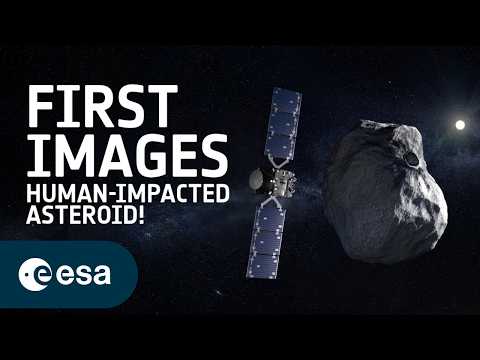
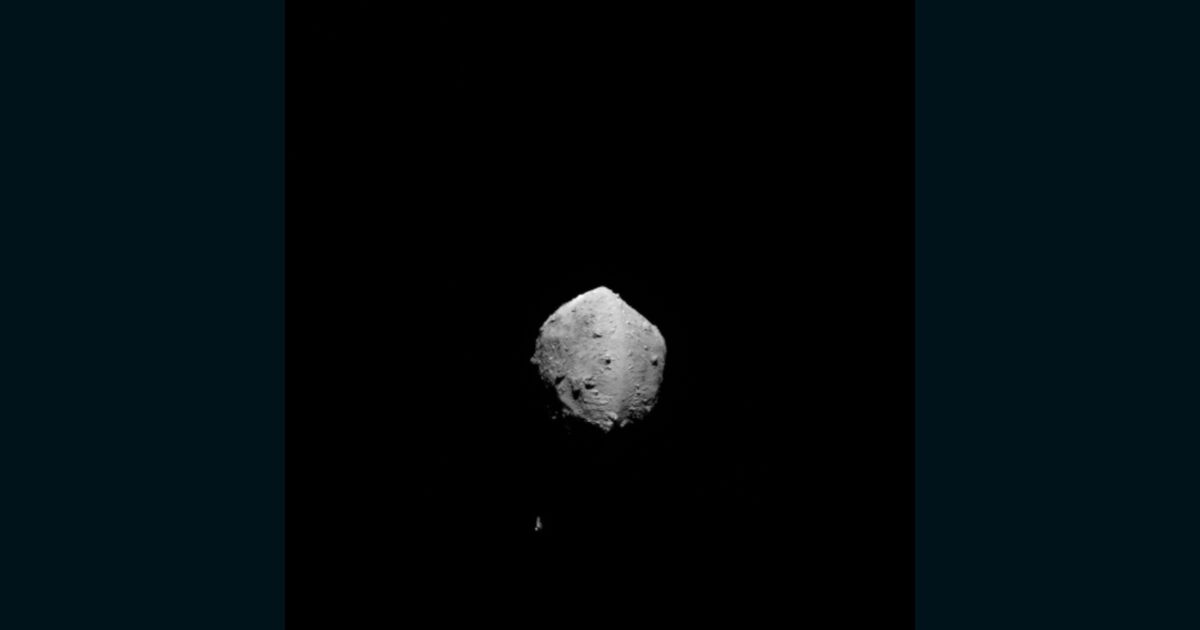
ESA plans to unveil Hera’s first close-up images of Dimorphos on November 25, 2026, at 19:45 CET (18:45 UTC). The reveal will stream on ESA WebTV and ESA’s YouTube livestream, giving the asteroid NASA deliberately hit four years ago its post-collision close-up. Source Source Source
NASA’s DART spacecraft struck Dimorphos on September 26, 2022. According to ESA, Earth-based telescope observations showed that the impact shortened the moonlet’s orbital period around its larger companion, Didymos, by about 33 minutes. That means less time to complete each orbit around Didymos. The asteroid’s timetable got a measurable edit. Source
In its pre-unveiling announcement, ESA says Hera has reached the asteroid pair after a two-year journey and will study the impact’s physical effects. Source Source
Hera principal investigator Patrick Michel sets out the questions in ESA’s announcement:
“How did the impact change Dimorphos? What is the mass of the asteroid and which of its properties explain its response to DART impact?” Source
A “kinetic impact” uses a collision to change an asteroid’s motion. ESA says scientists need additional close-up data to turn that approach into a well-understood planetary-defense technique that could be repeated. DART demonstrated an orbital change. One successful shove is not yet an instruction manual. Source
ESA plans to move the spacecraft closer over the following months and deploy two shoebox-sized CubeSats early in 2027. Those smaller spacecraft are intended to venture nearer and take risks the main spacecraft cannot. Source
The event itself is set for the dinosaur hall of Berlin’s Museum für Naturkunde. If you’re making the case for asteroid defense, that’s a hard backdrop to beat. Source



Comments