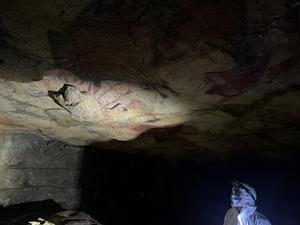
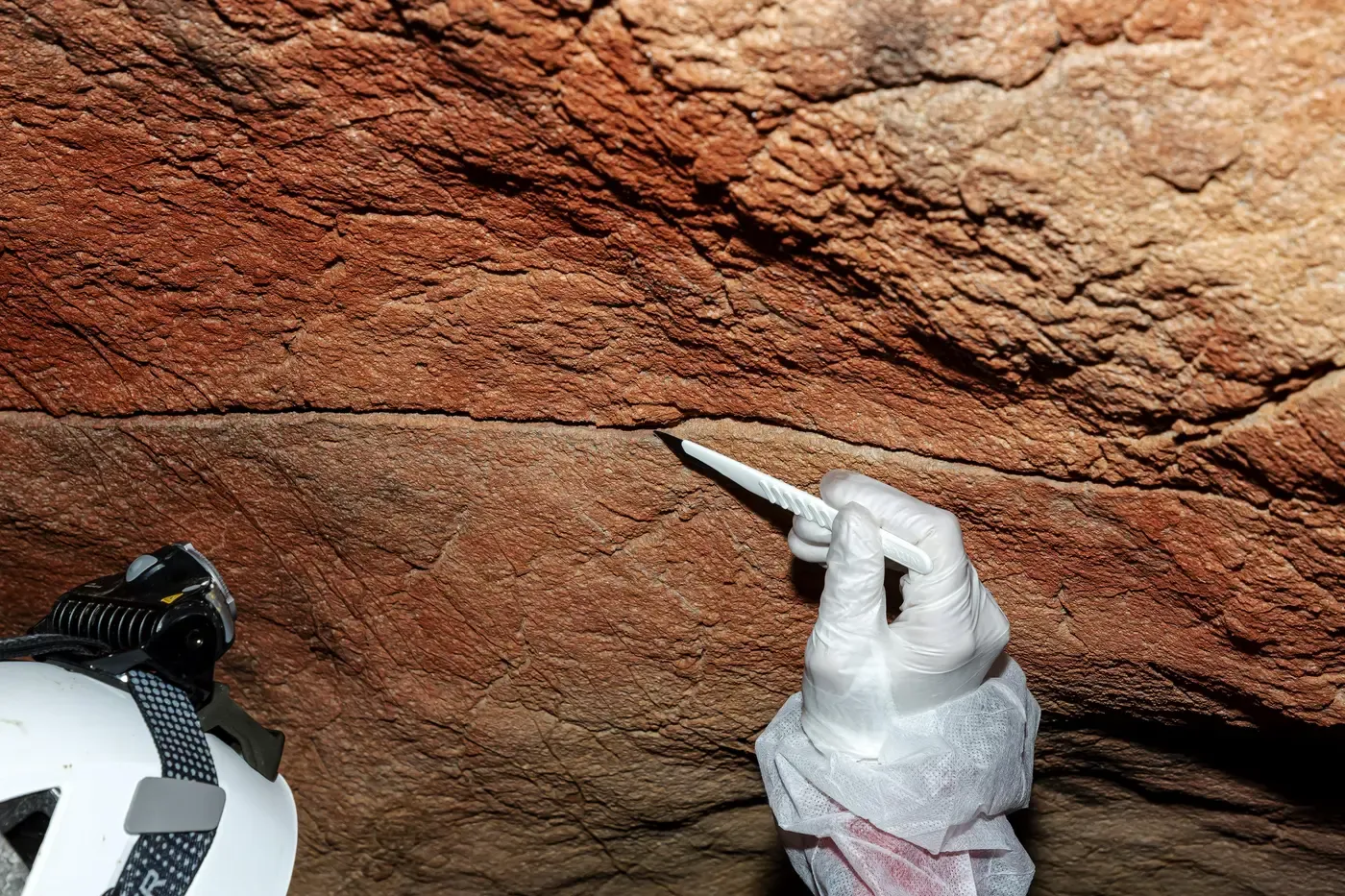
Researchers recovered ancient human DNA from cave walls in Spain and Portugal, including surfaces with no pigment, according to an account authored by the Max Planck Institute for Evolutionary Anthropology and published by SciTechDaily on Oct. 23, 2026. The institute calls it the first recovery of ancient human DNA from cave walls.
The researchers examined 24 rock-art panels in 11 caves and collected 54 samples. Five yielded ancient human mitochondrial DNA, genetic material found in cells’ energy-producing structures. Three positive samples came from Escoural Cave in Portugal: one from a calcite crust with pigment beneath it and two from unpigmented walls. The other two came from unpigmented surfaces beside rock art in Spain’s Covarón Cave. The unpigmented areas had initially been sampled as negative controls.
How the DNA reached the walls is less clear. Two positive samples lacked detectable mitochondrial DNA from other animals, which the institute says strongly suggests direct human deposition. The other three contained both human and animal DNA, suggesting sediment or water may have carried genetic material onto the surfaces.
According to the institute, analysis identified the DNA in the two Covarón samples as Homo sapiens and placed their nuclear DNA within a Western hunter-gatherer genetic cluster. Cave-wall sampling could help researchers investigate prehistoric cave visitors without disturbing archaeological deposits. But the results do not identify any artists. First author Alba Bossoms Mesa says researchers “cannot directly connect the traces of ancient human DNA we have found to the creation of rock art.”
The institute’s account reports ancient human DNA in only one of the 24 rock-art panels examined and at two additional locations beside panels. A prehistoric bird-bone airbrush from Altamira yielded no ancient human DNA.