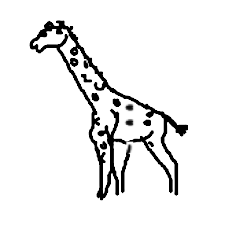
Sam Greydanus announced PenGPT on November 23, describing two small AI models that generate handwriting and text-prompted sketches. He says their code and model weights are on GitHub, though he isn’t releasing the datasets. SourceSource
The handwriting model has 6 million parameters and, according to Greydanus, writes print and cursive while picking up unfamiliar handwriting from a few example words. A separate, 54-million-parameter model handles sketches. Despite the GPT name, the output here is a sequence of pen movements—not a chatbot answer wearing a fancy font. Source
How PenGPT writes and sketches
Both models use the same system for representing strokes. Pen positions snap to a grid, producing movements in eight directions plus pen-up and pen-down instructions. Common movement sequences are compressed into tokens that the models learn to generate. The handwriting model receives text; the sketcher receives a numerical representation from SigLIP 2 that lets a typed prompt guide the drawing. Source
For handwriting continuation, Greydanus trains on sequences containing up to four words from one writer. That teaches the model to keep later words stylistically consistent with earlier ones. He says his demonstration used one to three example words from each of 21 writers excluded from training, then generated more text in their styles without fine-tuning. Source
Working from a photograph requires adaptation: Greydanus traces example words with InkSight, then fits a new writer-specific vector while leaving the rest of the model frozen. The no-fine-tuning method above starts with example pen strokes, not a raw photo. Source
Most of the work went into data
Greydanus reports assembling 495,590 handwriting words from scans and 477,670 sketches from 10 public datasets. By his estimate, about 80% of the project’s effort went into building and checking the data. The pen gets the starring role; data cleanup gets most of the shift. Source
Where PenGPT falls short
In his reported OCR test—measuring how often a text-recognition model read a sampled word exactly—generated handwriting scored 54%, compared with 66% for real handwriting. That’s a machine-reading comparison, not a human legibility survey. He also cautions that most handwriting strokes were reconstructed from scans, so their order is inferred rather than a record of the original writer’s movements. Source
The sketcher has a different problem: it can combine concepts without reliably following instructions about their relationships. Greydanus says a teapot with a face works, but specifying who wears a hat is troublesome. Prompts saying “facing left” and “facing right” produce the same drawing. Source
Greydanus says he selected the opening drawings by eye from the best third of samples, while some novel combinations were chosen from several attempts. His post also includes examples described as unpicked. The selected showcase doesn’t establish typical output quality; the performance findings reported here come from the creator’s account, not independent validation. Source





Comments