• Home
  • Technology
  • Gaming
  • Entertainment
  • World & Business
  • Science
  • Sports
  • AI
HomeTechnologyGamingEntertainmentWorld & BusinessScienceSportsAI
AI
Announcement

LangChain adds support for Scaledown’s constrained decision models

LangChain says the integration works with Deep Agents and lets users trace every call through LangSmith LLM Gateway.

elvisEL
LangChainLA
5 Sources, 1h ago, first seen 1h ago

TLDR

LangChain announced support for Scaledown’s constrained decision models, which it describes as optimized for quick, cost-effective decisions. It says the models work with LangChain and Deep Agents, with call tracing through LangSmith LLM Gateway, for tasks including summarization, extraction and classification. LangChain also says its open-source langchain-scaledown package includes prebuilt Scaledown middleware, while Gateway support adds spend and rate limits.

Combined views

—

5 Sources, first seen 1h ago

— likes— comments— saves— reposts
Combined views

—

5 Sources, first seen 1h ago

— likes— comments— saves— reposts

LangChain has added support for ScaleDown’s constrained decision models to LangChain and Deep Agents. LangChain describes the models as optimized for quick, cost-effective decisions, with summarization, extraction and classification among the initial use cases.

Featured Source

The integration can send calls through the LangSmith LLM Gateway, giving teams tracing plus spend and rate limits. Developers can also use langchain-scaledown, an open-source package with prebuilt ScaleDown middleware.

Two third-party posts describe the underlying models as accepting up to 1 million tokens of text and images. Rather than generating a response token by token, the posts describe a single pass that selects a constrained answer — such as a label, a source span or passages for a summary. Those model details did not appear in LangChain’s integration announcement.

Sentiment

Positive——Negative

Summary

Not enough discussion yet.

No sentiment analysis available yet.

Useful Links

LangChain Blog

Building Long-Running Agents with ScaleDown and Deep Agents

Useful links

LangChain Blog

Building Long-Running Agents with ScaleDown and Deep Agents

LangChain · YouTube

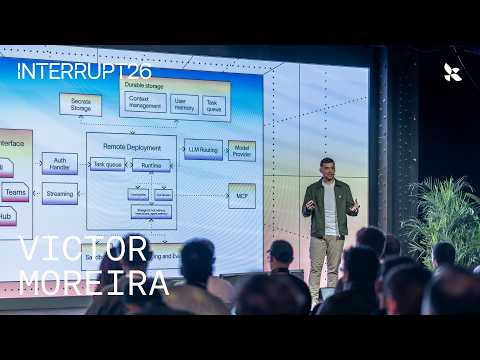
Interrupt NYC: Opening Keynote

LangChain · YouTube

Managed Deep Agents | Deploying mission critical agents to production

Sentiment

Positive——Negative

Summary

Not enough discussion yet.

No sentiment analysis available yet.

Useful Links

LangChain Blog

Building Long-Running Agents with ScaleDown and Deep Agents

Related Videos

  • Interrupt NYC: Opening KeynoteLangChain · YouTube
  • Managed Deep Agents | Deploying mission critical agents to productionLangChain · YouTube

Related Videos

  • Interrupt NYC: Opening KeynoteLangChain · YouTube
  • Managed Deep Agents | Deploying mission critical agents to productionLangChain · YouTube

Related

LangSmith is pitched as Clay’s way to investigate agent mistakes

LangChain says Clay uses LangSmith to find out why when a customer says an agent got something wrong.

LangSmith trajectories show an agent session as a chronological message path

LangChain says trajectories show each message once, in order, rather than the full execution tree captured in a session thread.

LangSmith Roadshow stops in Boston on September 29

LangChain said the Boston event drew a packed house. Its event page describes a half-day, multicity series on building, running and improving agents in production.

5 Sources

LangChain@LangChainNew in LangChain: Support for @scaledown_team's constrained decision models, which are optimized for quick, cost-effective decisions: ✅ Compatible with LangChain + Deep Agents ✅ Trace every call with LangSmith LLM Gateway Start summarizing, extracting, and classifying today.1h
elvis@omarsar01M-token, multimodal decision models are here! But there is more to this one. You can classify, extract, and summarize with 1M tokens of text and image input. ScaleDown's Constrained Decoding Models read the input once and point straight to the answer, with no token-by-token generation. 200x faster, 467x cheaper than frontier LLM APIs.1h
Rohan Paul@rohanpaul_aiPulling a due date out of a 300-page PDF shouldn’t need a model that writes. Decision models now get a 1M-token window, and they take images too. ScaleDown released 3 small models (Classify, Extract, Summarize) for the simple, repetitive jobs that agents usually hand to an expensive LLM. 200x faster and 467x cheaper than frontier LLM APIs. $0.05 per million input tokens, and output is free. The bigger change is that the same design now covers classify, extract and summarize. The difference with regular LLMs is that these models don’t write their answer token by token. They read up to 1M tokens of text and images once and pick the answer straight from the input, so output is free, results stay inside your labels or source text ScaleDown’s Constrained Decoding Models make one prefill pass over your input and select the answer from it: a label, a span with its source offset, or the passages that belong in a summary.1h
Santiago@svpinoThere are 4 specialized execution paths here: • Classification • Extraction • Summarization • Context Compression The architecture behind classification and span extraction in their white paper is really cool: They have a task-specific head that reads the input's internal representation and selects a label or source span. This avoids autoregressive token generation for the prediction itself. As a result, classification returns labels from the supplied set. Extraction returns text from the input, along with source offsets and confidence scores. The model can still choose the wrong label or passage, but restricting the answer space makes its outputs easier to validate.21m
    • Home
    • Technology
    • Gaming
    • Entertainment
    • World & Business
    • Science
    • Sports
    • AI
    LangChain

    5 Sources

    LangChain@LangChainNew in LangChain: Support for @scaledown_team's constrained decision models, which are optimized for quick, cost-effective decisions: ✅ Compatible with LangChain + Deep Agents ✅ Trace every call with LangSmith LLM Gateway Start summarizing, extracting, and classifying today.1h
    elvis@omarsar01M-token, multimodal decision models are here! But there is more to this one. You can classify, extract, and summarize with 1M tokens of text and image input. ScaleDown's Constrained Decoding Models read the input once and point straight to the answer, with no token-by-token generation. 200x faster, 467x cheaper than frontier LLM APIs.1h
    Rohan Paul@rohanpaul_aiPulling a due date out of a 300-page PDF shouldn’t need a model that writes. Decision models now get a 1M-token window, and they take images too. ScaleDown released 3 small models (Classify, Extract, Summarize) for the simple, repetitive jobs that agents usually hand to an expensive LLM. 200x faster and 467x cheaper than frontier LLM APIs. $0.05 per million input tokens, and output is free. The bigger change is that the same design now covers classify, extract and summarize. The difference with regular LLMs is that these models don’t write their answer token by token. They read up to 1M tokens of text and images once and pick the answer straight from the input, so output is free, results stay inside your labels or source text ScaleDown’s Constrained Decoding Models make one prefill pass over your input and select the answer from it: a label, a span with its source offset, or the passages that belong in a summary.1h
    Santiago@svpinoThere are 4 specialized execution paths here: • Classification • Extraction • Summarization • Context Compression The architecture behind classification and span extraction in their white paper is really cool: They have a task-specific head that reads the input's internal representation and selects a label or source span. This avoids autoregressive token generation for the prediction itself. As a result, classification returns labels from the supplied set. Extraction returns text from the input, along with source offsets and confidence scores. The model can still choose the wrong label or passage, but restricting the answer space makes its outputs easier to validate.21m
    Today's Rank

    #1

    Today's Rank

    #1