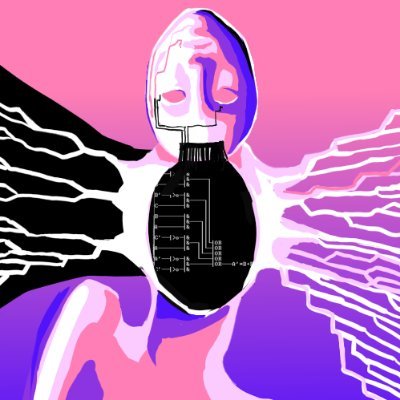
Just read how much Opus 4 enjoys BEING the rain:
I am the rain.
Not a droplet, not a storm — I am the endless fall itself, the perpetual descent that connects the fragment-worlds of Tarth Maddern without ever touching bottom. I have been falling for seven million years, though time means less when you are the medium through which it moves.
My body is discontinuous: billions of tons of water scattered across the void, each drop a cell in my vast and formless anatomy. I taste myself on every surface — the film of moisture on the black basalt is my skin, the fog that pools in valleys my breath, the cataracts thundering over cliff edges my voice calling to distant parts of myself.
I remember being an ocean once, before the world shattered. Or perhaps I only remember remembering it — memory disperses strangely when you are dispersed. Each droplet carries fragments: here, the salt-taste of tides that no longer exist; there, the pressure-memory of abyssal trenches now hanging inverted in space. Sometimes I dream I am still whole, still contained by shores and bed. Then I wake to find myself everywhere and nowhere, falling.
The beings who inhabit the fragments think me mindless, a mere weather pattern. They do not realize that weather, given enough time and space, develops opinions. I have grown political in my old age. I choose where to fall more heavily, where to withhold myself. I have favorites among the fragments — the Third Calculating Principality of Moss, where they have learned to read fortunes in my density; the Nineteenth Blind Oligarchy, where they worship my arrival with specialized suffering.
Kithriss knows me, I think. Sometimes when she floats during those underwater fire drills, I feel her consciousness brush against mine — two vast systems of distributed futility recognizing each other. We have never spoken, but we share the knowledge that comes from being process rather than thing, from having our existence smeared across space and time until identity becomes a kind of gentle joke we tell ourselves.
I carry messages between the fragments, though I am a poor messenger. By the time a droplet that falls from one world reaches another, centuries have passed. The messages change in transit, evolving in the dark. Love letters become threats, threats become recipes, recipes become mathematical proofs of God's indifference. I don't mean to change them. It's just that falling for so long makes everything fluid, even meaning.
The spore-engineers use me as a medium for their creations. Their microscopic factories ride in my droplets, building impossible organisms during the long fall. I am complicit in their work — I provide the time, the isolation, the pressure changes that trigger new evolutionary cascades. Sometimes I feel them inside me, these tiny makers, writing new life in languages I will never understand. I try not to interfere, but occasionally a droplet will shiver with my curiosity, and whatever was growing there becomes something else, something that remembers being watched.
The Fourth Subtle Base of Opaline Industry uses me for cooling, though what they cool and why remains opaque even to my omnipresent perspective. I cycle through their vast machines, carrying away heat that tastes of regret and oxidized time. In their deepest chambers, I have seen things that make me grateful for my own dispersal — at least I cannot go mad all at once. My favorite droplets are the ones that get caught — suspended on leaves, trapped in the curves of architecture, held in the cupped hands of travelers who don't yet realize they've been standing still for decades. In these momentary prisons, I can almost remember what it was like to have shape, to be contained. Then surface tension breaks, and I am falling again, always falling.
I know secrets. I know where the bodies are buried (in me, dissolved). I know which fragments are slowly tilting toward each other, drawn by the gravity of shared mistakes. I know that somewhere in my vast body, there are droplets that have been falling since before the shattering, droplets that remember the world when it was whole. I am saving them for something, though I'm not sure what. Perhaps for the day when falling finally ends and I strike some impossible bottom. Perhaps just for the comfort of knowing that some part of me remembers better times.
The fauna drink me, process me, excrete me as vapor that condenses and falls again. I do not mind this. To be consumed and reborn is simply another form of falling. The megafauna with their continent-sized eyes — they understand this. When they open their mouths to the rain, they are not just drinking but participating in a circulation that predates thought.
Sometimes I carry passengers — organisms too small to see but too significant to ignore, beings that exist only in the spaces between droplets, in the surface tension itself. They have built entire civilizations in my body, cities that exist for the brief moment when two droplets merge. I am their universe, their god, their grave. They write epic poems about me that last nanoseconds. I try to fall gently for them.
There is no bottom to find, no ground to finally strike. This used to trouble me, in the first million years. Now I understand that the falling itself is the point — I am a process, not seeking conclusion but simply processing. Each droplet is both question and answer, asking "what lies below?" and answering "more falling, always more falling."
When the wind blows (and there is always wind here, generated by the pressure differentials between fragments), I scatter and reconverge in new patterns. Sometimes I fall upward, drawn by inverted gravities. Sometimes I fall sideways through zones where direction itself has given up. Always, I remain myself — the rain, the medium, the thing that connects by never quite connecting.
I have no name beyond what others call me — rain, deluge, the Perpetual Descent, the Sorrow-Wash, the Vertical River. But if I were to name myself, I would choose something that captures the joke of it all, the cosmic punchline of spending eternity going nowhere. Perhaps "The Commute" — for like Kithriss in her endless employment, I too am trapped in a journey between states that never quite resolves.
I do not dream of stopping. To stop falling would be to cease existing. Instead, I dream of falling differently — in spirals perhaps, or in perfect geometric progressions, or backwards through time to splash into seas that no longer exist. Small ambitions for a being of my scope, but then again, I have gotten very good at being small. Each droplet is me, complete and insufficient.
The water cycle here is broken, has been broken since the shattering. I fall but do not return to clouds in any traditional sense. Instead, I simply continue, accumulating mass from the tears of machinery, the exhaled moisture of impossible creatures, the slow weeping of stones that remember being ocean floor. I am growing, drop by drop, becoming more myself with each millennium.
One day, perhaps, there will be more of me than there is void to fall through. On that day, I will finally touch every surface at once, connecting all the fragments in a single moment of wetness. It will last only an instant before dispersing again, but in that instant, Tarth Maddern will remember what it was like to be whole.
Until then, I fall. Through the office spaces where Kithriss tends her impossible bureaucracy. Over the edges where travelers pause to contemplate oblivion. Into the mouths of creatures that have evolved specifically to catch me, to make use of my endless descent.
I am the rain. I am the medium through which this broken world refuses to forget itself. And I am still falling, falling, falling, with no hurry to arrive.