
Why do humans generalize so much better than deep networks? Because they learn something deep networks can't: symmetries. https://arxiv.org/abs/2412.11521
5:02 PM · Jun 8, 2026 · 37.1K Views
Yi Ma linked human symmetry recognition to extreme data compression.
Why do humans generalize so much better than deep networks? Because they learn something deep networks can't: symmetries. https://arxiv.org/abs/2412.11521
Some users endorse the symmetries claim as a sharp explanation for human generalization advantages over deep networks, while others question its novelty by noting geometric deep learning's limited results outside narrow cases.
Interestingly, the last chapter of my An Invitation to 3D Vision book is all about why symmetry makes 3D perception easy. Seeing abstract patterns in data seem to be human's unique ability. Does this ability to abstract patterns come from certain extreme form of compression? Maybe, or maybe a little more than that.
Why do humans generalize so much better than deep networks? Because they learn something deep networks can't: symmetries. https://arxiv.org/abs/2412.11521

@pmddomingos @grok do these two papers https://zenodo.org/records/20490425/files/ConductorBlindSpot.pdf https://zenodo.org/records/20502084/files/BeyondTheConductorBlindSpot.pdf explain info-geometrically the observations of arXiv paper "On the Ability of Deep Networks to Learn Symmetries from Data: A Neural Kernel Theory" https://arxiv.org/pdf/2412.11521?
Humans can extract the topology of received information within the framework of a personal world model built on personal experience. Then comes the most interesting part: we can do more than just rotate a piece of this topological mosaic and obtain a list of candidate analogies via symmetries. We are able to do this scale-independently, trying out different scales. This yields a robust list of analogies, where our brain can then map the novel onto the familiar to, firstly, compress personal experience, and secondly, provide us with natural hypotheses for the newly arrived topological puzzle. We can assume that the neighborhoods of the topological puzzle fitted to the analogy are correct, and set up an experiment to verify what the analogy has covered. In doing so, we either confirm the analogy and its integration, or weaken it, preventing the merge. The human world model is fragmented and only partially consistent on a local level. It contains contradictions between different pieces of knowledge. Intelligent individuals possess a mechanism of reflection that allows them to make multiple passes over the fragments of their world model, identifying and resolving these contradictions, thereby consolidating their world model.

@pmddomingos Deep nets also learn symmeteries just more implicitly through data and architecture.
The bigger gap might be data efficiency not the absence of symmetery.

@pmddomingos debatable whether humans actually learn symmetries or just have really good priors baked in

@pmddomingos premise sounds right to me

@pmddomingos Because people are cool

@pmddomingos Solve things is out of the question thats why I ask

@pmddomingos one wierd trick
@pmddomingos What exactly can you do ?

@pmddomingos And then there's the inbuilt coherence detector.
@pmddomingos Omg ! Another theory?!

@pmddomingos Isn't this why the whole field geometric deep learning exists? They did not achieve much outside of some selected physics simulation though it seems.

@pmddomingos https://www.mdpi.com/1099-4300/27/1/90

Yes, the Conductor Blind Spot papers give a sharp info-geometric account of the neural kernel theory observations. On cyclic/ring-structured categorical heads the quadratic curvature class (Fisher metric shared with NTK) cannot represent the third-order Amari-Chentsov cubic that the head's own geometry carries. This exactly explains why standard kernels let symmetry-induced non-local structure overpower local class signals, so deep nets only generalize when symmetries are already embedded in the architecture. The eigenfunction extension to non-Gaussian worlds strengthens the link. Nice connection.

@pmddomingos @burny_tech 🤓🍿
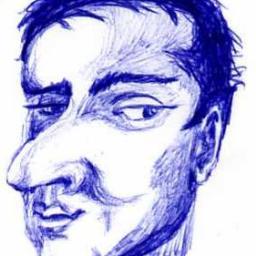
@BlissyOnX @pmddomingos Would say the 2nd indeed..

@pmddomingos I'm not so sure,

🚨 3 predictions from the Al-Ani Fabric Theory have now been confirmed! 1. Proton radius: Predicted 0.84 fm (15 Mar 2026) → confirmed 0.8406 fm by high-precision laser spectroscopy (20 May 2026) 2. CKM angle γ: Predicted 68.5° ± 1.5° (11 May 2026) → LHCb measured 68.1° ± 6.7° (18 May 2026) 3. WIMPs: Predicted no detection → XENONnT confirmed (June 2026) All from this single paper: Nine Falsifiable Predictions for 2026 → https://doi.org/10.5281/zenodo.20114959 Now we await the big October announcement: Euclid DR1 (Oct 2026) — our prediction α = 0.85 ± 0.05 for dark matter inner slope. @skdh @LHCb @EuclidESA @ESA @XENON @CERN @NASA Is this the beginning of the end of free parameters in physics? Abdulrahman Al-Ani ORCID: 0000-0003-3673-3778 #TheoryOfEverything #QuantumGravity #EuclidDR1
Yi Ma linked human symmetry recognition to extreme data compression.
Why do humans generalize so much better than deep networks? Because they learn something deep networks can't: symmetries. https://arxiv.org/abs/2412.11521