
RT @netcapgirl: “why did you miss the meeting this morning?”
10:22 AM · Apr 16, 2026 · 0 Views
NVIDIA CEO Jensen Huang details company strategy on Dwarkesh Patel's podcast, explaining essentialism philosophy for funding neoclouds like CoreWeave with $6.3 billion instead of becoming hyperscaler. He defends AI chip sales to China amid US export controls, noting China's 60% global chip production but 10% US FLOPS capacity. Huang refutes GPU begging stories from Musk and Ellison, outlines FIFO allocation, and attributes GPU advances from Hopper to Rubin Ultra to engineering over lithography.
RT @netcapgirl: “why did you miss the meeting this morning?”

I asked Jensen, why don't you just become a hyperscaler yourself (rather than funding different neoclouds)?

Dwarkesh and Jensen are civilized men so we didn't see *a lot* of sparks flying, but it is a profound disconnect between generations, cultures, and immigration stories. Jensen is the gangsta poster boy for American Dream. Dwarkesh is the Bay Aryan Thinkboy icon. irreconcilable
Jensen on the famous story about Larry Ellison and Elon Musk begging him for GPUs over dinner:
"That never happened. We absolutely had dinner, and it was a wonderful dinner. At no time did they beg for GPUs. They just had to place an order."
Jensen says Nvidia's allocation system is simple: you forecast, you place a purchase order, you get in the queue. First in, first out.
And if your data center isn't ready, they might serve someone else first to maximize throughput. That's it.
Nvidia doesn’t do highest-bidder pricing:
"You set your price, and then people decide to buy it or not. I understand that others in the chip industry change their prices when demand is higher, but we just don't. That's just never been a practice of ours."
"I prefer to be dependable, to be the foundation of the industry. You don't need to second-guess. If I quoted you a price, we quoted you a price. And if demand goes through the roof, so be it."

"Jensen Huang is not like that, and in the past has followed more traditional bounded distrust rules. He’ll make self-serving Obvious Nonsense arguments and use aggressive framing, but not make provably false factual claims"
On the contrary, Huang often makes provably false factual claims. Huang has frequently claimed the PLA doesn't use Nvidia (false), that smuggling doesn't happen (false), that selling chips to China doesn't affect supply to the US (false), that Huawei is competitive with Nvidia (it's not), and that China is not behind in compute (they are). Huang has leaned hard on the idea that DeepSeek shows that compute restrictions don't matter, which is false.

http://x.com/i/article/2044828284492365824
Question to Patriots: what's your full payoff matrix? Your big idea with export controls is that China stagnates, you get ASI and Win History, basically ending their civilization. Do you see any risks to attempting *and failing* this strategy, over just not attempting it?

This is the key moment between Jensen and Dwarkesh on export controls:
1. Dwarkesh asks why it’s okay to sell NVIDIA chips to China given the national security implications of AI models like Mythos.
2. Jensen gives a misleading answer, arguing that it’s okay to sell American chips to China because China already produces 60% of the world’s chips.
3. But as Jensen definitely knows, compute is measured in flops, not number of chips.
4. Dwarkesh then pushes back, pointing out that on a flops basis, China has 10% of the compute the US has, and giving them more compute would change their cyber capabilities.
This exchange shows why it’s critically important for interviewers to have at least some technical knowledge, so they can push back against misleading talking points.
Patriots seem unable to grasp what Jensen is saying, namely: lithography is not the bottleneck *for him*. Almost all progress between Hopper and Vera Rubin Ultra is about clever engineering, not feature size. Huawei is currently at ≤Blackwell level. Jensen likes it this way.
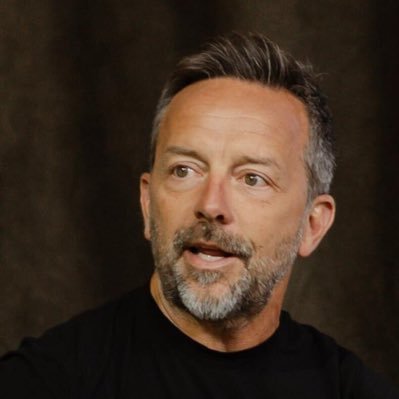
@dwarkesh_sp Essentialism. The art of doing less better. 🚀
I asked Jensen, why don't you just become a hyperscaler yourself (rather than funding different neoclouds)?
RT @alexolegimas: Jensen has been doing what seems like a 24/7 interview cycle for months, and the number one question from the beginning s…
Still insane to me that nobody is even trying to think in these terms, at least explicitly. We are not a serious civilization. Likewise with the cybersecurity payoff matrix (though it does suggest "advance dual use capabilities" as dominant strategy) I'm too lazy for this
Question to Patriots: what's your full payoff matrix? Your big idea with export controls is that China stagnates, you get ASI and Win History, basically ending their civilization. Do you see any risks to attempting *and failing* this strategy, over just not attempting it?

@teortaxesTex 大家都在装睡,确实没人想当那个清醒的人

@teortaxesTex 大家都在装睡确实挺没劲的

@teortaxesTex 这哥们儿觉悟挺高但好累啊
NVIDIA CEO Jensen Huang details company strategy on Dwarkesh Patel's podcast, explaining essentialism philosophy for funding neoclouds like CoreWeave with $6.3 billion instead of becoming hyperscaler. He defends AI chip sales to China amid US export controls, noting China's 60% global chip production but 10% US FLOPS capacity. Huang refutes GPU begging stories from Musk and Ellison, outlines FIFO allocation, and attributes GPU advances from Hopper to Rubin Ultra to engineering over lithography.
RT @netcapgirl: “why did you miss the meeting this morning?”