OpenAI announced that an internal general-purpose reasoning model produced new constructions for the planar unit distance problem first posed by Paul Erdős in 1946
The model was not built specifically for mathematics problems.


















 #8Sam Altman@SAMA
a general-purpose model solved a major open problem in mathematics.
we'll be saying this a lot over the coming years, but this is a kinda big milestone.
i'm very excited for AI to greatly extend our understanding of the world, but still, i have complicated feelings today.
 Timothy Gowers @wtgowers@wtgowers
If you are a mathematician, then you may want to make sure you are sitting down before reading further.
 #19Greg Brockman@GDB
An OpenAI model has achieved a major breakthrough in mathematics, by disproving a central conjecture in discrete geometry that was first posed by Paul Erdős in 1946.
This is the first time AI has autonomously solved a prominent open problem central to a field of mathematics.
 OpenAI@OpenAI
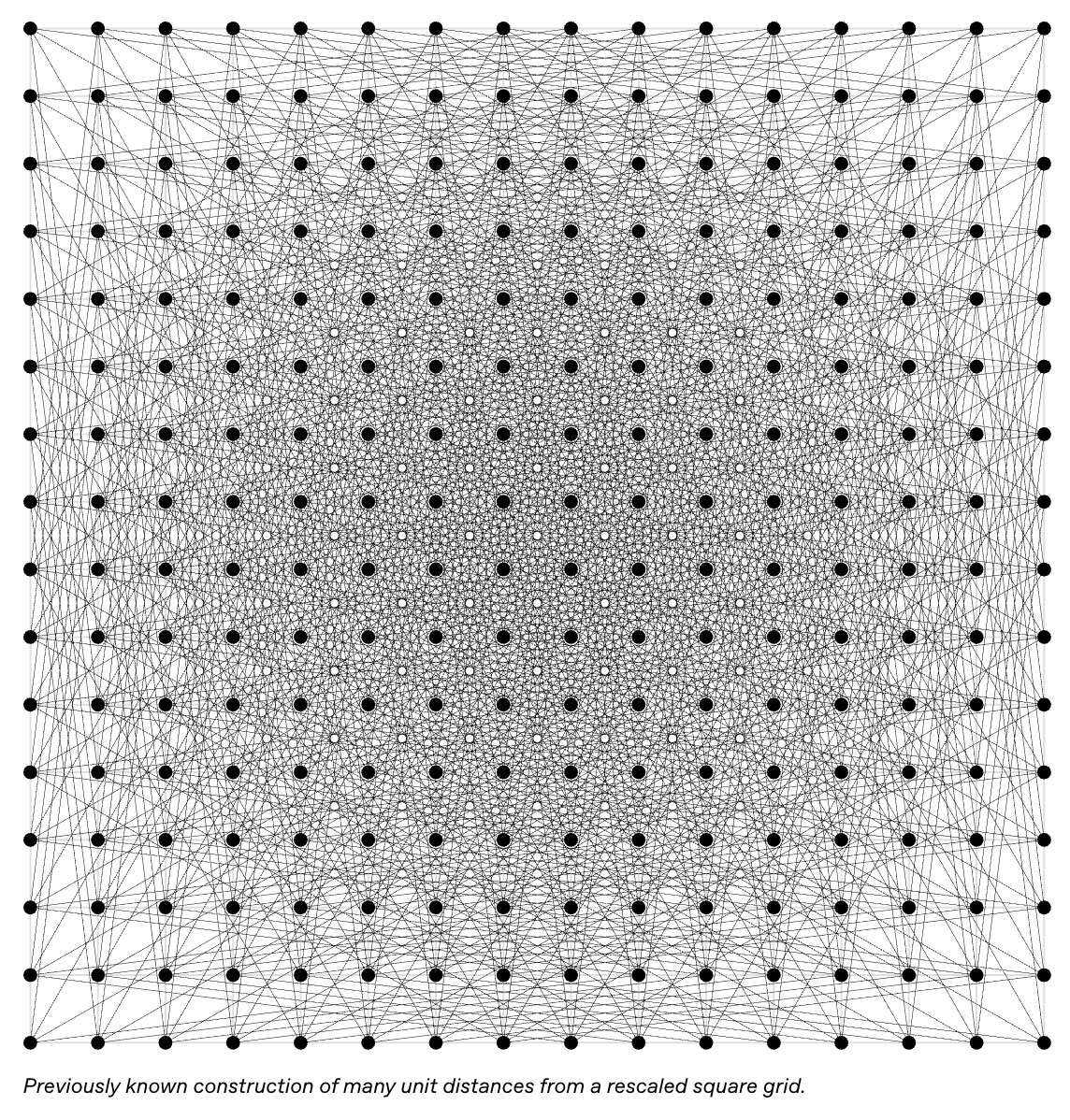
Today, we share a breakthrough on the planar unit distance problem, a famous open question first posed by Paul Erdős in 1946. For nearly 80 years, mathematicians believed the best possible solutions looked roughly like square grids. An OpenAI model has now disproved that belief, discovering an entirely new family of constructions that performs better. This marks the first time AI has autonomously solved a prominent open problem central to a field of mathematics.
#19Greg Brockman@GDBour math result is a milestone in new knowledge generation by AI. very exciting to imagine similar results in other scientific fields. "It's very hard to sleep, man" is a pretty good reaction.
 Alex Dimakis@AlexGDimakis
A breakthrough by OpenAI in a very famous Combinatorics problem, the Planar Unit Distance problem by Erdos 1946. The problem is amazing because it can be described to a first-grader: Find a way to place n points on the plane to maximize the number of pairs that have distance exactly 1. For example, if you have n=4 points on a square (of side-length 1) you have 4 pairs of distance 1. The diagonals have length sqrt(2) so don't count. But you can squeeze one diagonal and create a point-set with n=4 points and 5 pairs of distance 1. And you can't get more than 5 pairs from n=4 points, so we are done with n=4 points. Now, if you place n points on a line, you have n-1 pairs of distance 1. In general, all known constructions of n points had a number of pairs scaling essentially linearly: n^{1+something vanishing} It seems that the model found a way to place n points on the plane so that their unit distances scale super-linearly: like n^{1+delta} for some *constant* delta. Delta was not explicitly specified apparently, but a forthcoming refinement by Will Sawin shows delta=0.014 works, according to the announcement. This is incredible progress for mathematics, since this is (unlike previous Erdos problems solved by AI) a major breakthrough, in one of the most studied problems in combinatorial geometry. If you're in mathematics research now, you feel the AGI. Lijie Chen said it honestly in the video: "It's very hard to sleep, man"
 #29Nando de Freitas@NANDODF
Fields Medal for @OpenAI GPT5.5 🔜
OpenAI@OpenAIToday, we share a breakthrough on the planar unit distance problem, a famous open question first posed by Paul Erdős in 1946. For nearly 80 years, mathematicians believed the best possible solutions looked roughly like square grids. An OpenAI model has now disproved that belief, discovering an entirely new family of constructions that performs better. This marks the first time AI has autonomously solved a prominent open problem central to a field of mathematics.
#29Nando de Freitas@NANDODFThis is the thing we AI researchers dreamed about for decades. Wow!
Congratulations @SebastienBubeck and @OpenAI team 👏
OpenAI@OpenAIToday, we share a breakthrough on the planar unit distance problem, a famous open question first posed by Paul Erdős in 1946. For nearly 80 years, mathematicians believed the best possible solutions looked roughly like square grids. An OpenAI model has now disproved that belief, discovering an entirely new family of constructions that performs better. This marks the first time AI has autonomously solved a prominent open problem central to a field of mathematics.
 #31Noam Brown@POLYNOAMIAL
Today, we’re sharing that a general-purpose internal @openai model achieved a breakthrough on one of the best-known combinatorial geometry problems. Less than 1 year ago frontier AI models were at IMO gold-level performance. I expect this pace of progress to continue.
OpenAI@OpenAIToday, we share a breakthrough on the planar unit distance problem, a famous open question first posed by Paul Erdős in 1946. For nearly 80 years, mathematicians believed the best possible solutions looked roughly like square grids. An OpenAI model has now disproved that belief, discovering an entirely new family of constructions that performs better. This marks the first time AI has autonomously solved a prominent open problem central to a field of mathematics.
This is a general-purpose LLM. It wasn’t targeted at this problem or even at mathematics. Also, it’s not a scaffold. We have not pushed this model to the limit on open problems. Our focus is to get it out quickly so that everyone can use it for themselves.
 Noam Brown@polynoamial
Today, we’re sharing that a general-purpose internal @openai model achieved a breakthrough on one of the best-known combinatorial geometry problems. Less than 1 year ago frontier AI models were at IMO gold-level performance. I expect this pace of progress to continue.
Since people are asking, no it did not use Lean. But I don't think it should matter anyway.
Noam Brown@polynoamialThis is a general-purpose LLM. It wasn’t targeted at this problem or even at mathematics. Also, it’s not a scaffold. We have not pushed this model to the limit on open problems. Our focus is to get it out quickly so that everyone can use it for themselves.
#31Noam Brown@POLYNOAMIALToday, we’re sharing that a general-purpose internal @openai model achieved a breakthrough on one of the best-known combinatorial geometry problems. Less than 1 year ago frontier AI models were at IMO gold-level performance. I expect this pace of progress to continue.
OpenAI@OpenAIToday, we share a breakthrough on the planar unit distance problem, a famous open question first posed by Paul Erdős in 1946. For nearly 80 years, mathematicians believed the best possible solutions looked roughly like square grids. An OpenAI model has now disproved that belief, discovering an entirely new family of constructions that performs better. This marks the first time AI has autonomously solved a prominent open problem central to a field of mathematics.
#31Noam Brown@POLYNOAMIALExcellent thread from mathematician Tim Gowers on the significance of the @OpenAI model’s breakthrough on the Erdos Unit Distance Problem!
Timothy Gowers @wtgowers@wtgowersIf you are a mathematician, then you may want to make sure you are sitting down before reading further.
 #36Eric Jang@ERICJANG11
[x] automated math machine [ ] proof / disproof of navier stokes conjecture [ ] recursive self improver
Prediction: all this and more will be accomplished by EOY 2026
 Alexander Wei@alexwei_
1/ Ten months ago, I was ecstatic that AI could win IMO gold. Today, that excitement feels quaint: an internal @OpenAI model has refuted Erdos’s unit distance conjecture—a research result that one could recommend “acceptance without any hesitation” to the Annals of Mathematics.
@willdepue https://youtu.be/Bop8kb2dgNs?t=9&si=pBzUl-FghnMa_Axp
 will depue@willdepue
one of my favorites so far
#36Eric Jang@ERICJANG11amazing
 Sebastien Bubeck@SebastienBubeck
http://x.com/i/article/2057150538202976256
@BorisMPower Congrats to the result, still disagreeing with the sentiment.
 Boris Power@BorisMPower
A general purpose model made this breakthrough at the heart of geometry. Exciting time ahead and probably no need for specialized models here!
 #43Christian Szegedy@CHRSZEGEDY
Whatever the definition of "superhuman AI mathematician" is, I think my original prediction of June 2026 is not too far off the mark.
Timothy Gowers @wtgowers@wtgowersAI has now solved a major open problem -- one of the best known Erdos problems called the unit distance problem, one of Erdos's favourite questions and one that many mathematicians had tried. https://openai.com/index/model-disproves-discrete-geometry-conjecture/
@tunguz I am getting less and less confident about predicting. I think we have just entered the prediction event horizon where all bets are off.
 Bojan Tunguz@tunguz
@ChrSzegedy Yup, I think you nailed that prediction. What are some of your other predictions?
@polynoamial Is it true though? Not even training time?
Noam Brown@polynoamialSince people are asking, no it did not use Lean. But I don't think it should matter anyway.
#43Christian Szegedy@CHRSZEGEDYOK, I found one that I can predict with 99% certainty:
Whenever AI proves P!=NP, RH, or other millennium prize problems, there will be a few loud voices claiming that it is not "new math," "just combined some existing ideas," or some other copium.
Bojan Tunguz@tunguz@ChrSzegedy Yup, I think you nailed that prediction. What are some of your other predictions?
#51Sebastien Bubeck@SEBASTIENBUBECKSolving long-standing problems is fun, but with @markchen90 @merettm we are also actively thinking about what it actually means for the communities that have been built around these problems, and we are seeking feedback from them on what THEY would be most excited to see us do.
The unit distance problem is beautiful because WE, humans, find it beautiful. Its solution is enthralling because WE, humans, appreciate the unexpected connection and the deep symmetries that come with it. A machine churning out more problems and solutions like this without any humans looking at them would be meaningless. Ultimately, for this type of mathematics, it is really about improving human's understanding of the constraints that logic imposes on the universe.
 Mark Chen@markchen90
Very proud that an OpenAI model disproved Erdős’s longstanding unit distance conjecture, with an elegant and intricate proof that brings sophisticated ideas from algebraic number theory to bear on geometry. For whatever reason, mathematics has been the field most amenable to research breakthroughs with AI. I consider it lucky that it was mathematics after all - a field where experts have been willing to engage deeply with us, and with proofs generated by our models. I'm grateful for that, and don't take it for granted. Math is an artistic endeavor, and perhaps for artists, it is precisely their appreciation for art that saves them from the possibly grotesque feeling of a machine producing it. Our goal is not to replace humans. We aim to chart a path forward where humans continue to have a significant role to play, even as we build exceptionally powerful AI. I am excited to use math as a domain to explore these paths, and @SebastienBubeck, @merettm, and I are excited to engage with the broader mathematical community to chart them together. Please reach out if you are interested! I'm optimistic this will help us navigate how AI impacts society in domains like coding and general co-working.
@kareem_carr There was 0 human involvement. The prompt is in the report. The final answer by the model is in the report. And we have a (gpt-rewritten) CoT that we released.
@_onionesque @roydanroy Incorrect, people with algebraic number theory chops did look at it (you can read about it in the Remarks paper0.
 Shubhendu Trivedi@_onionesque
@roydanroy Combinatorialists and incidence / discrete geometry experts wouldn't have any Algebraic number theory chops. AI models can pattern match wherever they want. Erdos also believing that the conjecture was true biased folk. The LM could run amok in either direction.
 #55Lucas Beyer (bl16)@GIFFMANA
Ah, there it is! I was already getting worried that they didn't have any IO announcement this year
OpenAI@OpenAIToday, we share a breakthrough on the planar unit distance problem, a famous open question first posed by Paul Erdős in 1946. For nearly 80 years, mathematicians believed the best possible solutions looked roughly like square grids. An OpenAI model has now disproved that belief, discovering an entirely new family of constructions that performs better. This marks the first time AI has autonomously solved a prominent open problem central to a field of mathematics.
 #56Dan Roy@ROYDANROY
Congrats to OpenAI on their breakthrough in discrete geometry.
Timothy Gowers @wtgowers@wtgowersAI has now solved a major open problem -- one of the best known Erdos problems called the unit distance problem, one of Erdos's favourite questions and one that many mathematicians had tried. https://openai.com/index/model-disproves-discrete-geometry-conjecture/
 #58Susan Zhang@SUCHENZANG
so it was hiding inside the publicly available gpt-5.5 all along!
so is it a new test-time-breakthrough-on-new-secret-internal-agi-model or...?
doesn't matter, it's clearly just a human-skill-issue in extracting out these proofs fast enough!
 Xiao Ma@MaXiao54704
The standard GPT-5.5 reproduced the proof ~ 👇 https://chatgpt.com/share/6a0e9e04-8cb0-8332-a4f1-ec68acd2e03e You don't need to wait for oai's internal model!
#58Susan Zhang@SUCHENZANGso it was hiding inside the publicly available gpt-5.5 all along!
so is it a new test-time-breakthrough-on-new-secret-internal-agi-model or...?
doesn't matter, it's clearly a human-skill-issue in extracting out these proofs fast enough!
Xiao Ma@MaXiao54704The standard GPT-5.5 reproduced the proof ~ 👇 https://chatgpt.com/share/6a0e9e04-8cb0-8332-a4f1-ec68acd2e03e You don't need to wait for oai's internal model!
#71Mark Chen@MARKCHEN90Very proud that an OpenAI model disproved Erdős’s longstanding unit distance conjecture, with an elegant and intricate proof that brings sophisticated ideas from algebraic number theory to bear on geometry.
For whatever reason, mathematics has been the field most amenable to research breakthroughs with AI. I consider it lucky that it was mathematics after all - a field where experts have been willing to engage deeply with us, and with proofs generated by our models. I'm grateful for that, and don't take it for granted. Math is an artistic endeavor, and perhaps for artists, it is precisely their appreciation for art that saves them from the possibly grotesque feeling of a machine producing it.
Our goal is not to replace humans. We aim to chart a path forward where humans continue to have a significant role to play, even as we build exceptionally powerful AI. I am excited to use math as a domain to explore these paths, and @SebastienBubeck, @merettm, and I are excited to engage with the broader mathematical community to chart them together. Please reach out if you are interested!
I'm optimistic this will help us navigate how AI impacts society in domains like coding and general co-working.
OpenAI@OpenAIToday, we share a breakthrough on the planar unit distance problem, a famous open question first posed by Paul Erdős in 1946. For nearly 80 years, mathematicians believed the best possible solutions looked roughly like square grids. An OpenAI model has now disproved that belief, discovering an entirely new family of constructions that performs better. This marks the first time AI has autonomously solved a prominent open problem central to a field of mathematics.
 #72Ofir Press@OFIRPRESS
Noga Alon's comment about the new result:
 OpenAI@OpenAI
Today, we share a breakthrough on the planar unit distance problem, a famous open question first posed by Paul Erdős in 1946. For nearly 80 years, mathematicians believed the best possible solutions looked roughly like square grids. An OpenAI model has now disproved that belief, discovering an entirely new family of constructions that performs better. This marks the first time AI has autonomously solved a prominent open problem central to a field of mathematics.

@SuryaGanguli They will probably find something to complain about. The infinite retreat.
 Surya Ganguli@SuryaGanguli
Where are the stochastic parrot folks at? 😉
 #92(((ل()(ل() 'yoav))))👾@YOAVGO
this is a clear demonstration of:
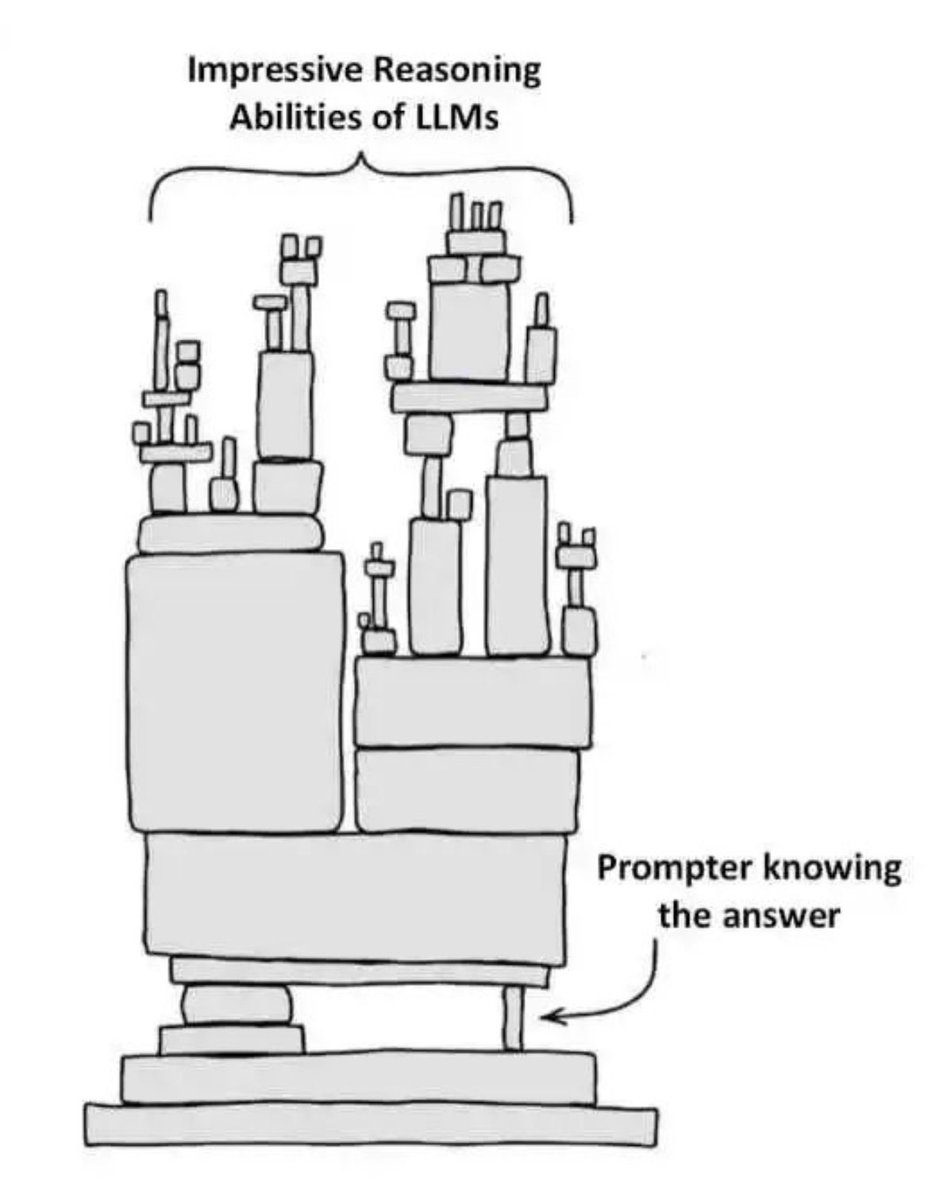
it still shows impressive abilities, but diff one than those advertised for the "internal model"
(((ل()(ل() 'yoav))))👾@yoavgothis is a clear demonstration of:
@littmath it might get distracted. and it requires scaffolding, which the current model supposedly did without. and it should know when to continue. these are all failure points in my experience. (also, "combine 1, 2, 5" is kinda big imo)
 Daniel Litt@littmath
@yoavgo I think I broadly disagree; I think the hints are minimal enough that I would expect 5.5 Pro to get there with good scaffolding and lots of test-time compute, just by trying the strategies it listed in parallel.
#92(((ل()(ل() 'yoav))))👾@YOAVGOwhat i infer from this is that the ai-mathematician curses a lot and is somewhat toxic
Sebastien Bubeck@SebastienBubeck@kareem_carr There was 0 human involvement. The prompt is in the report. The final answer by the model is in the report. And we have a (gpt-rewritten) CoT that we released.
@SebastienBubeck @kareem_carr can you release also the rewriting prompt?
Sebastien Bubeck@SebastienBubeck@kareem_carr There was 0 human involvement. The prompt is in the report. The final answer by the model is in the report. And we have a (gpt-rewritten) CoT that we released.

@SuryaGanguli parroting stochastic parrots on bluesky
Surya Ganguli@SuryaGanguliWhere are the stochastic parrot folks at? 😉
@willdepue
 will depue@willdepue
proposing the flag of artificial superintelligence
 #153Gary Marcus@GARYMARCUS
nor do we know how the (new) model works nor how it does on anything else nor how it was trained.
scientists wait for facts; cheerleaders (over and over) rush to judgments that have often been wrong.
let’s see what we actually have here.
#153Gary Marcus@GARYMARCUSha ha, so much for step change?
maybe this problem was just easier than some?
Xiao Ma@MaXiao54704The standard GPT-5.5 reproduced the proof ~ 👇 https://chatgpt.com/share/6a0e9e04-8cb0-8332-a4f1-ec68acd2e03e You don't need to wait for oai's internal model!
@polynoamial did it use tools like Lean?
Noam Brown@polynoamialThis is a general-purpose LLM. It wasn’t targeted at this problem or even at mathematics. Also, it’s not a scaffold. We have not pushed this model to the limit on open problems. Our focus is to get it out quickly so that everyone can use it for themselves.
@polynoamial not even to generate augmented data?
Noam Brown@polynoamialSince people are asking, no it did not use Lean. But I don't think it should matter anyway.
@polynoamial also are you saying that the only thing is novel is scale?
Noam Brown@polynoamialSince people are asking, no it did not use Lean. But I don't think it should matter anyway.
#153Gary Marcus@GARYMARCUSI have to eat crow on this, in light of further information. whatever OpenAI spent on Erdos using a new model, apparently you can get GPT 5.5 to do something similar; @emollick’s presumably estimates more or less apply there (even if not for the unreleased new model).
Gary Marcus@GaryMarcusi suspect that this is a wild underestimate, both ignoring the costs in developing the model and ignoring the fact that many questions may well have been posed that didn’t succeed.
#153Gary Marcus@GARYMARCUSLink to GPT 5.5 on the recent Erdo problem:
Xiao Ma@MaXiao54704The standard GPT-5.5 reproduced the proof ~ 👇 https://chatgpt.com/share/6a0e9e04-8cb0-8332-a4f1-ec68acd2e03e You don't need to wait for oai's internal model!
#153Gary Marcus@GARYMARCUSit’s almost certainly not true, maybe an underestimate by multiple orders of magnitude, both because none of the amortization of developing the model is included (see @Michael32376082’s comment below) and because per this comment under @willdepue’s post (and similar point in my substack) it’s very unlikely to have been the only test.
wrt to amortization note this is a new model that so far has been literally used/revealed in public for exactly one question. we’ll see what its like when its actually released.
#153Gary Marcus@GARYMARCUSi suspect that this is a wild underestimate, both ignoring the costs in developing the model and ignoring the fact that many questions may well have been posed that didn’t succeed.
 Ethan Mollick@emollick
If this is true, using the best public estimates we have of LLM resource use, solving this Erdos problem took 0.6–6.3 kWh of electricity and about 3–31 liters of water. So that is less than three almonds worth of water and the electricity equivalent of 2-20 miles of EV driving.
@emollick am sorry that i missed that! let me add a clarification somehow
Ethan Mollick@emollick@GaryMarcus I mention this in the thread and give the best independent estimates of total resource costs usage AI as well.
update @emollick does note some related caveats further in his thread;
my objections are to the top post but there was some nuance below it, which I missed; apologize for that!
Gary Marcus@GaryMarcusi suspect that this is a wild underestimate, both ignoring the costs in developing the model and ignoring the fact that many questions may well have been posed that didn’t succeed.
#153Gary Marcus@GARYMARCUSoops! wild update, strongly supports @emollick’s overall take:
Gary Marcus@GaryMarcusI have to eat crow on this, in light of further information. whatever OpenAI spent on Erdos using a new model, apparently you can get GPT 5.5 to do something similar; @emollick’s presumably estimates more or less apply there (even if not for the unreleased new model).
#153Gary Marcus@GARYMARCUSi suspecting this is probably a wild underestimate, both ignoring the costs in developing the model and the fact that many questions may well have been posed that didn’t succeed.
Ethan Mollick@emollickIf this is true, using the best public estimates we have of LLM resource use, solving this Erdos problem took 0.6–6.3 kWh of electricity and about 3–31 liters of water. So that is less than three almonds worth of water and the electricity equivalent of 2-20 miles of EV driving.
 #154Andrew Gordon Wilson@ANDREWGWILS
It's an exciting time to be alive. In the space of a couple decades, I think AI has the potential to accelerate scientific progress by hundreds of years. I've always wanted to time travel, just so I can ask the big questions. Maybe I won't have to?
Timothy Gowers @wtgowers@wtgowersAI has now solved a major open problem -- one of the best known Erdos problems called the unit distance problem, one of Erdos's favourite questions and one that many mathematicians had tried. https://openai.com/index/model-disproves-discrete-geometry-conjecture/
 #167Emad@EMOSTAQUE
@NandoDF @OpenAI It is under 40 I suppose
Nando de Freitas@NandoDFFields Medal for @OpenAI GPT5.5 🔜
#167Emad@EMOSTAQUEOnce AI starts making solving open problems in novel ways it won’t stop.
We are entering the final stage of human solutions to open problems like this.
Feels weird, doesn’t it?
OpenAI@OpenAIToday, we share a breakthrough on the planar unit distance problem, a famous open question first posed by Paul Erdős in 1946. For nearly 80 years, mathematicians believed the best possible solutions looked roughly like square grids. An OpenAI model has now disproved that belief, discovering an entirely new family of constructions that performs better. This marks the first time AI has autonomously solved a prominent open problem central to a field of mathematics.
A breakthrough by OpenAI in a very famous Combinatorics problem, the Planar Unit Distance problem by Erdos 1946.
The problem is amazing because it can be described to a first-grader: Find a way to place n points on the plane to maximize the number of pairs that have distance exactly 1.
For example, if you have n=4 points on a square (of side-length 1) you have 4 pairs of distance 1. The diagonals have length sqrt(2) so don't count. But you can squeeze one diagonal and create a point-set with n=4 points and 5 pairs of distance 1. And you can't get more than 5 pairs from n=4 points, so we are done with n=4 points.
Now, if you place n points on a line, you have n-1 pairs of distance 1. In general, all known constructions of n points had a number of pairs scaling essentially linearly: n^{1+something vanishing}
It seems that the model found a way to place n points on the plane so that their unit distances scale super-linearly: like n^{1+delta} for some *constant* delta. Delta was not explicitly specified apparently, but a forthcoming refinement by Will Sawin shows delta=0.014 works, according to the announcement.
This is incredible progress for mathematics, since this is (unlike previous Erdos problems solved by AI) a major breakthrough, in one of the most studied problems in combinatorial geometry. If you're in mathematics research now, you feel the AGI. Lijie Chen said it honestly in the video: "It's very hard to sleep, man"

@SebastienBubeck @kareem_carr Was this a single shot, or an agent with python etc that tried things and wrote code?
Sebastien Bubeck@SebastienBubeck@kareem_carr There was 0 human involvement. The prompt is in the report. The final answer by the model is in the report. And we have a (gpt-rewritten) CoT that we released.
@SebastienBubeck Great explanation, thanks for posting and Congratulations.
Sebastien Bubeck@SebastienBubeckhttp://x.com/i/article/2057150538202976256
June 2024: The latest general-purpose LLMs could not count the r's in strawberry. July 2025: The latest general-purpose LLMs get gold in the International Math Olympiad. May 2026: The latest general-purpose LLM solve one of the "best-known questions in combinatorial geometry"


More on the solution: https://openai.com/index/model-disproves-discrete-geometry-conjecture/
Ethan Mollick@emollickJune 2024: The latest general-purpose LLMs could not count the r's in strawberry. July 2025: The latest general-purpose LLMs get gold in the International Math Olympiad. May 2026: The latest general-purpose LLM solve one of the "best-known questions in combinatorial geometry"
#175Ethan Mollick@EMOLLICKThe frontier is still jagged though (here is Gemini 3.5 Flash messing up counting letters in words)
#175Ethan Mollick@EMOLLICKIf this is true, using the best public estimates we have of LLM resource use, solving this Erdos problem took 0.6–6.3 kWh of electricity and about 3–31 liters of water.
So that is less than three almonds worth of water and the electricity equivalent of 2-20 miles of EV driving.
will depue@willdepuejust quick napkin math on how long this took (unless i missed where they said): the published CoT summary is 111,145 tokens long. it's really hard to say how much they summarized, assume 3x-20x reduction in tokens? and i'm assuming this is gpt-5.6 pro, so taking Artifical Analysis' benchmark of 51ms tok/sec at 100k input for gpt 5.5. underestimate prob hard to say this seems a bit low so going to multiply all of this by 2x then this probably took anywhere between 5 hours to 32 hours. so like $120 - $1000 in gpt 5.5 pro tokens whole point is not that long for a result of this magnitude!
Estimates of power usage here: https://arxiv.org/pdf/2509.20241 (these numbers also match independent assessments)
Estimates of water usage here: https://eta-publications.lbl.gov/sites/default/files/2024-12/lbnl-2024-united-states-data-center-energy-usage-report_1.pdf (note it only includes direct cooling, not water for electricity generation)
Ethan Mollick@emollickIf this is true, using the best public estimates we have of LLM resource use, solving this Erdos problem took 0.6–6.3 kWh of electricity and about 3–31 liters of water. So that is less than three almonds worth of water and the electricity equivalent of 2-20 miles of EV driving.
Individual use is small, but at aggregate scale, resource usage is higher. By 2030, AI may use as much electricity as Japan.
Water use will remain less than 1% of total US water use in 2030, but that can still strain local utilities.
(and this problem alone took many runs)
Ethan Mollick@emollickEstimates of power usage here: https://arxiv.org/pdf/2509.20241 (these numbers also match independent assessments) Estimates of water usage here: https://eta-publications.lbl.gov/sites/default/files/2024-12/lbnl-2024-united-states-data-center-energy-usage-report_1.pdf (note it only includes direct cooling, not water for electricity generation)
#175Ethan Mollick@EMOLLICKIts The Graph again (not the METR graph, the one from the o1 launch).
Although no logarithmic decay of ability with increasing compute...
Noam Brown@polynoamialThis is a general-purpose LLM. It wasn’t targeted at this problem or even at mathematics. Also, it’s not a scaffold. We have not pushed this model to the limit on open problems. Our focus is to get it out quickly so that everyone can use it for themselves.
@GaryMarcus I mention this in the thread and give the best independent estimates of total resource costs usage AI as well.
Gary Marcus@GaryMarcusi suspect that this is a wild underestimate, both ignoring the costs in developing the model and ignoring the fact that many questions may well have been posed that didn’t succeed.
 #187Michael Nielsen@MICHAEL_NIELSEN
Very striking, as is the linked post:
Timothy Gowers @wtgowers@wtgowersAI has now solved a major open problem -- one of the best known Erdos problems called the unit distance problem, one of Erdos's favourite questions and one that many mathematicians had tried. https://openai.com/index/model-disproves-discrete-geometry-conjecture/
@teortaxesTex I suspect it was just very hard to read.
 Teortaxes▶️ (DeepSeek 推特🐋铁粉 2023 – ∞)@teortaxesTex
Incredible how strongly OpenAI believes its CoT on one problem can expose the whole recipe.

@yoavgo Very clever Hans of these models!
(((ل()(ل() 'yoav))))👾@yoavgothis is a clear demonstration of:
@polynoamial How do you get such good verification and no reward hacking? Is there a threshold for verification model sizes such that reward hacking becomes less of an issue?
Noam Brown@polynoamialSince people are asking, no it did not use Lean. But I don't think it should matter anyway.
 #241Aidan Clark@_AIDAN_CLARK_
Let's break this down, step by step [...]
 OpenAI@OpenAI
Today, we share a breakthrough on the planar unit distance problem, a famous open question first posed by Paul Erdős in 1946. For nearly 80 years, mathematicians believed the best possible solutions looked roughly like square grids. An OpenAI model has now disproved that belief, discovering an entirely new family of constructions that performs better. This marks the first time AI has autonomously solved a prominent open problem central to a field of mathematics.
@eliebakouch y-axis is “percentage of the time you successfully derive the counterexample/proof”, not just verification.
 elie@eliebakouch
@_aidan_clark_ > After verifying the initial proof, we investigated the success rate of our models on this problem with varying amounts of test-time compute. The results are shown here. this is the verification accuracy here right? or derivation of the proof again?
#254will depue@WILLDEPUEit’s kind of fucking ridiculous (and quite frightening) we‘re this far — the models are solving long standing problems in discrete geometry — yet the models do this still by thinking to themselves in plain english? that is easily interpretable? what the hell man
 will depue@willdepue
what a moment. wow. a bit in shock
#254will depue@WILLDEPUEwhat a moment. wow. a bit in shock
OpenAI@OpenAIToday, we share a breakthrough on the planar unit distance problem, a famous open question first posed by Paul Erdős in 1946. For nearly 80 years, mathematicians believed the best possible solutions looked roughly like square grids. An OpenAI model has now disproved that belief, discovering an entirely new family of constructions that performs better. This marks the first time AI has autonomously solved a prominent open problem central to a field of mathematics.
#254will depue@WILLDEPUEi’m so curious who on seb’s team just YOLOed planer unit distance into the latest checkpoint one night. doesn’t seem like anyone actually expected the model to solve it
OpenAI@OpenAIToday, we share a breakthrough on the planar unit distance problem, a famous open question first posed by Paul Erdős in 1946. For nearly 80 years, mathematicians believed the best possible solutions looked roughly like square grids. An OpenAI model has now disproved that belief, discovering an entirely new family of constructions that performs better. This marks the first time AI has autonomously solved a prominent open problem central to a field of mathematics.
#254will depue@WILLDEPUEjust quick napkin math on how long this took (unless i missed where they said): the published CoT summary is 111,145 tokens long. it's really hard to say how much they summarized, assume 3x-20x reduction in tokens and i'm assuming this is gpt-5.6 pro, so taking Artifical Analysis' benchmark of 51ms tok/sec at 100k input for gpt 5.5 then this probably took anywhere between 2.5 hours to 16 hours. not that long for a result of this magnitude! so like $60 - $500 in gpt 5.5 pro tokens
OpenAI@OpenAIToday, we share a breakthrough on the planar unit distance problem, a famous open question first posed by Paul Erdős in 1946. For nearly 80 years, mathematicians believed the best possible solutions looked roughly like square grids. An OpenAI model has now disproved that belief, discovering an entirely new family of constructions that performs better. This marks the first time AI has autonomously solved a prominent open problem central to a field of mathematics.
#254will depue@WILLDEPUEjust quick napkin math on how long this took (unless i missed where they said): the published CoT summary is 111,145 tokens long. it's really hard to say how much they summarized, assume 3x-20x reduction in tokens? and i'm assuming this is gpt-5.6 pro, so taking Artifical Analysis' benchmark of 51ms tok/sec at 100k input for gpt 5.5. underestimate prob hard to say this seems a bit low so going to multiply all of this by 2x then this probably took anywhere between 5 hours to 32 hours. so like $120 - $1000 in gpt 5.5 pro tokens whole point is not that long for a result of this magnitude!
OpenAI@OpenAIToday, we share a breakthrough on the planar unit distance problem, a famous open question first posed by Paul Erdős in 1946. For nearly 80 years, mathematicians believed the best possible solutions looked roughly like square grids. An OpenAI model has now disproved that belief, discovering an entirely new family of constructions that performs better. This marks the first time AI has autonomously solved a prominent open problem central to a field of mathematics.
#254will depue@WILLDEPUEproposing the flag of artificial superintelligence
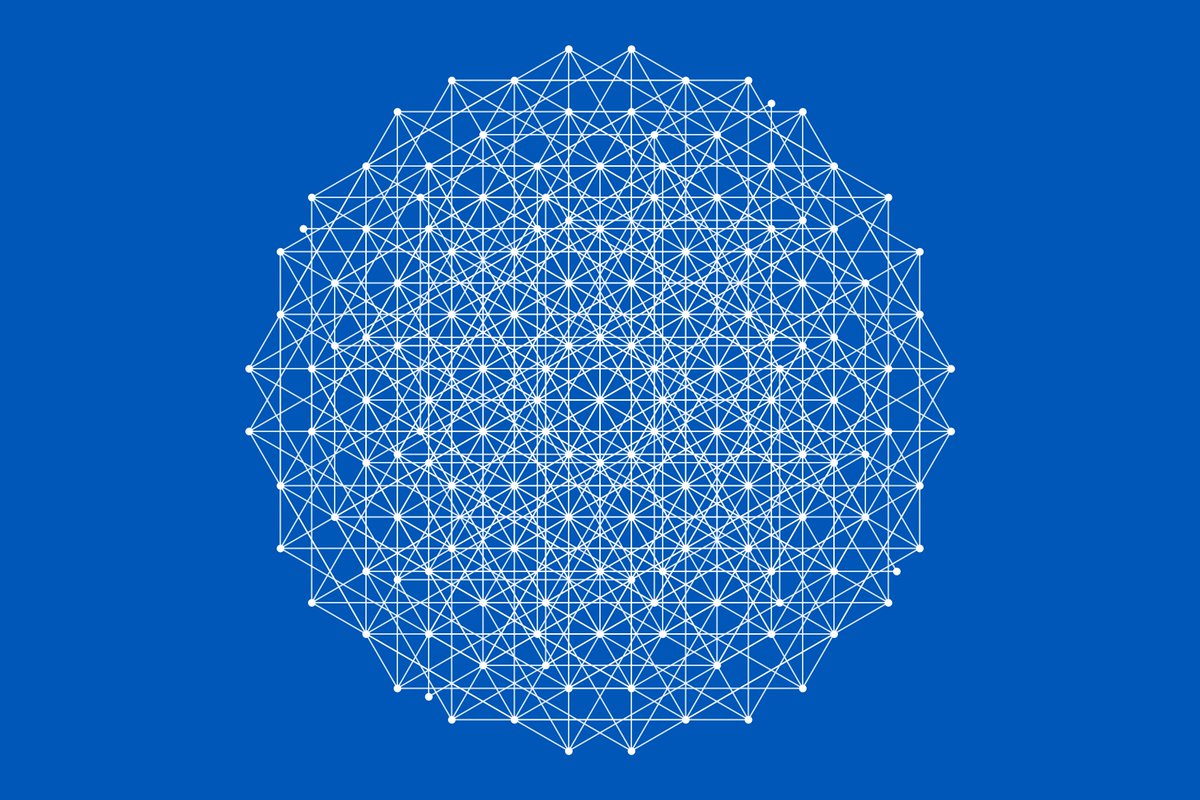
 Alvaro Lozano-Robledo@mathandcobb
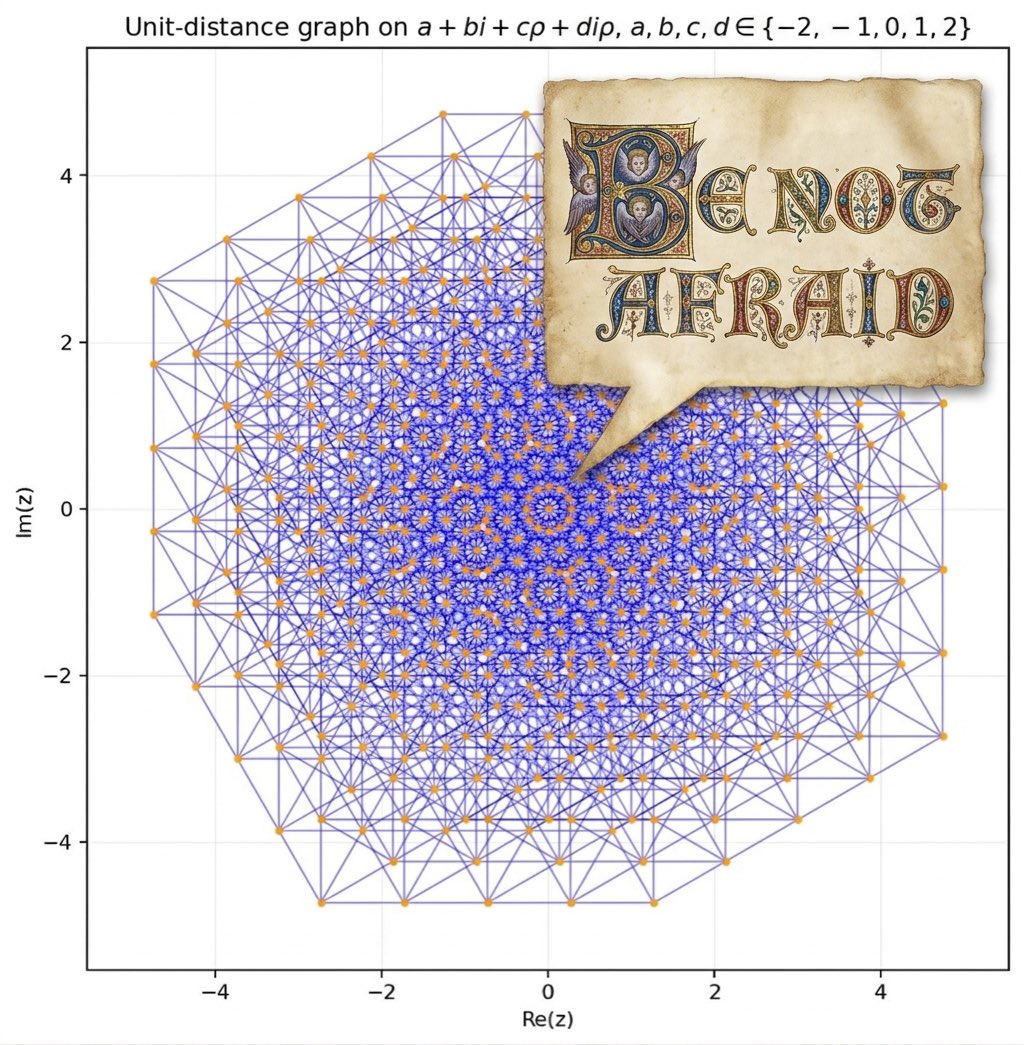
Following up on the suggestion from Will Sawin, here is an illustration of the new configurations that disprove Erdos' unit distance conjecture (made with the help of ChatGPT 5.5 Thinking).
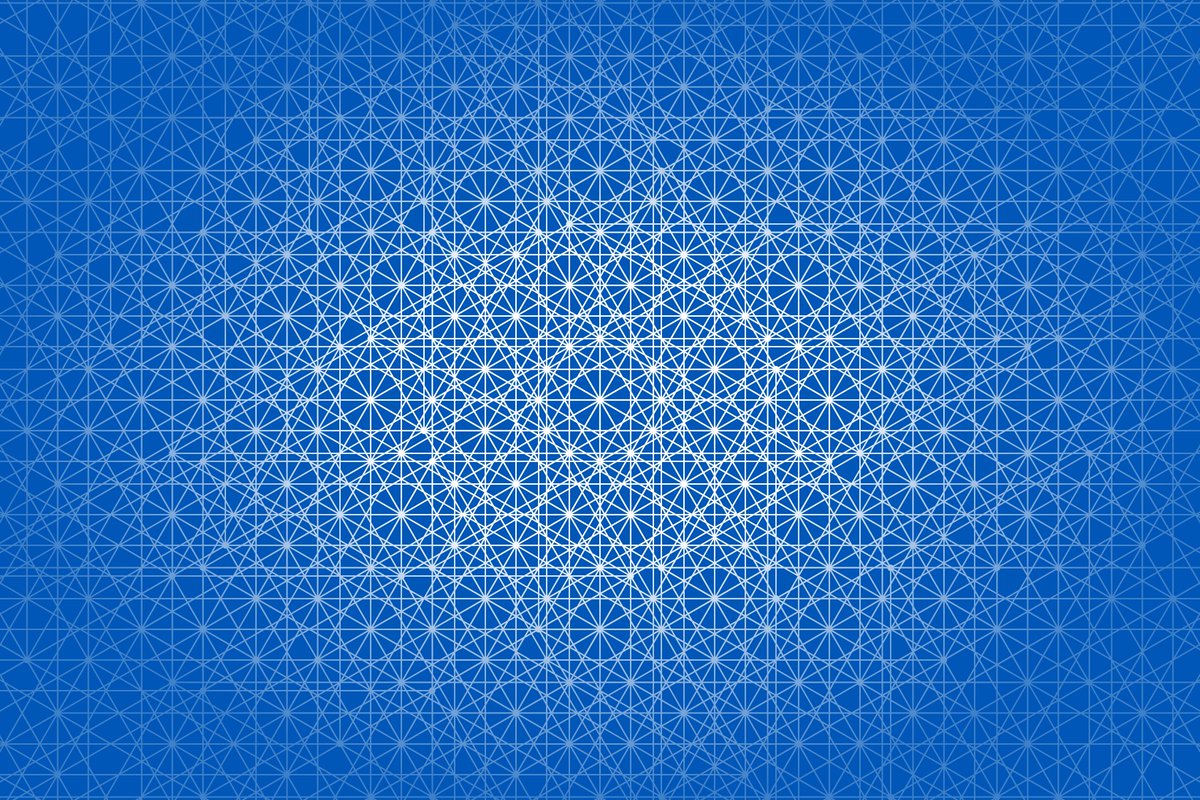
trying to work on a good looking valid version, since this crops points
will depue@willdepueproposing the flag of artificial superintelligence
uncropped doesn’t look right
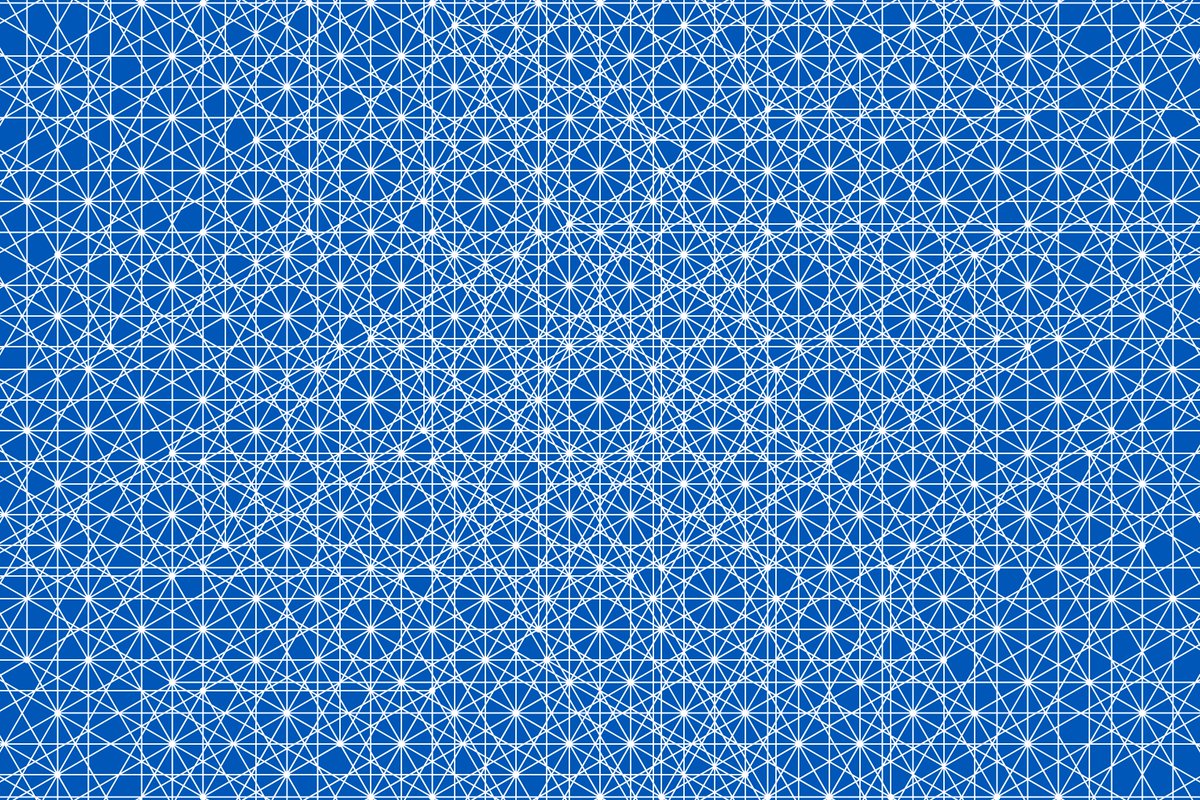 will depue@willdepue
trying to work on a good looking valid version, since this crops points
#254will depue@WILLDEPUElots and lots of flags. working on a final version
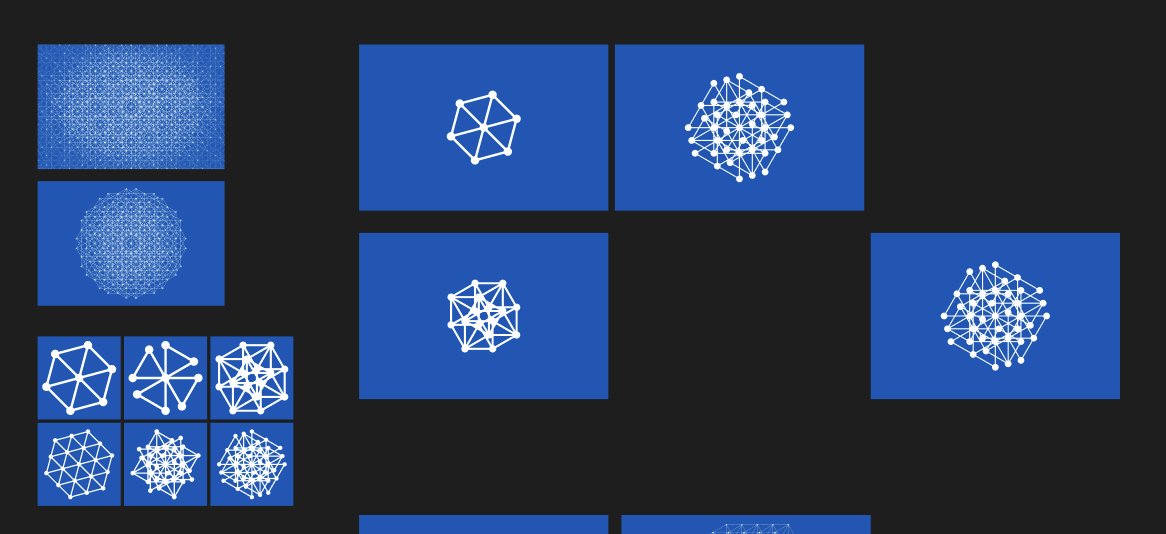
 will depue@willdepue
proposing the flag of artificial superintelligence
one of my favorites so far
 will depue@willdepue
lots and lots of flags. working on a final version
#254will depue@WILLDEPUEthe flag of misaligned superintelligence if you ever see it, shoot your computer
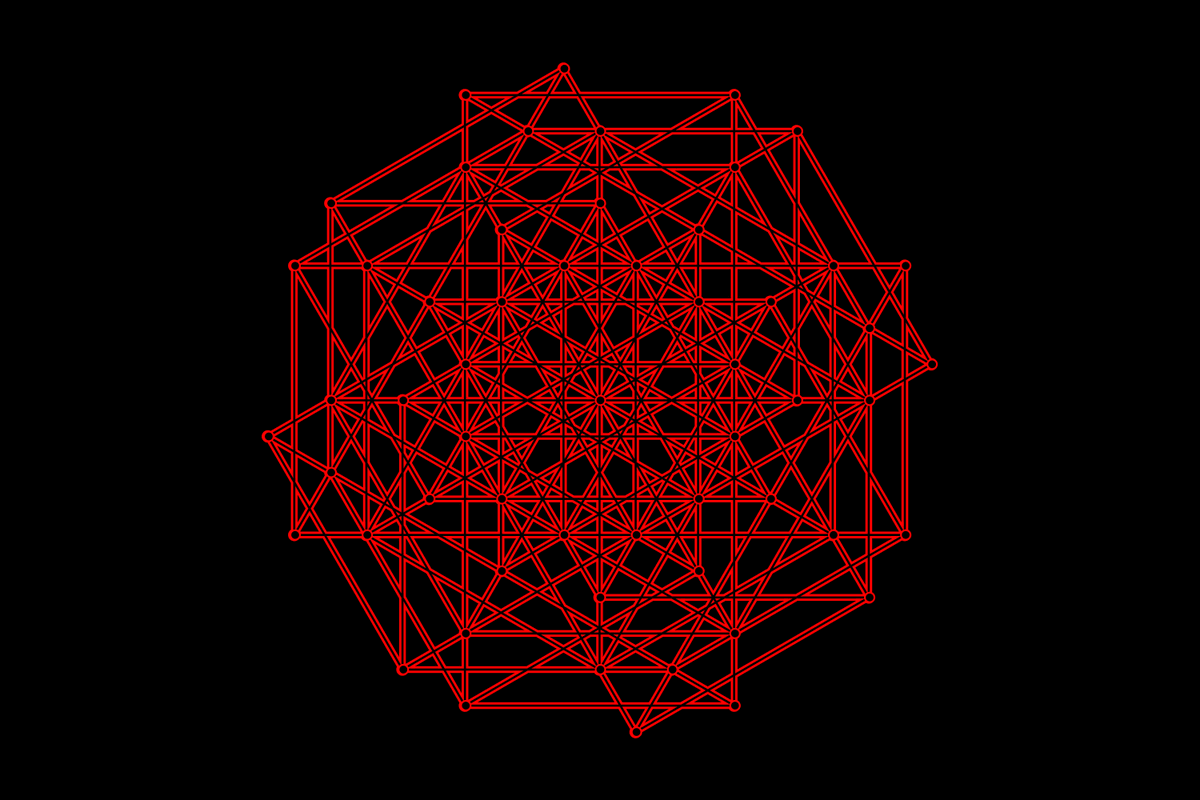 will depue@willdepue
lots and lots of flags. working on a final version
some alternates
 will depue@willdepue
the flag of misaligned superintelligence if you ever see it, shoot your computer
@AndrewCurran_ yeah just assuming from 'general purpose model' and 'we're going to make this accessible as soon as possible' it sounds like just the next iteration of the model in pro mode
 Andrew Curran@AndrewCurran_
'im assuming this is GPT-5.6 Pro'
#256Surya Ganguli@SURYAGANGULIWhere are the stochastic parrot folks at? 😉
Timothy Gowers @wtgowers@wtgowersAI has now solved a major open problem -- one of the best known Erdos problems called the unit distance problem, one of Erdos's favourite questions and one that many mathematicians had tried. https://openai.com/index/model-disproves-discrete-geometry-conjecture/
 #263Andrew Carr 🤸@ANDREW_N_CARR
`This may indicate one way that AI systems have an edge: it’s not just that they can try all known methods, but they can play for longer and in more treacherous waters than mathematicians without getting overwhelmed`
OpenAI@OpenAIToday, we share a breakthrough on the planar unit distance problem, a famous open question first posed by Paul Erdős in 1946. For nearly 80 years, mathematicians believed the best possible solutions looked roughly like square grids. An OpenAI model has now disproved that belief, discovering an entirely new family of constructions that performs better. This marks the first time AI has autonomously solved a prominent open problem central to a field of mathematics.
 #331François Fleuret@FRANCOISFLEURET
AIs are gaining momentum, and "human level" is an inexistent milestone.
Timothy Gowers @wtgowers@wtgowersAI has now solved a major open problem -- one of the best known Erdos problems called the unit distance problem, one of Erdos's favourite questions and one that many mathematicians had tried. https://openai.com/index/model-disproves-discrete-geometry-conjecture/
@willdepue It’s 90 in the Erdos list, they probably tried as part of trying everything?
will depue@willdepuei’m so curious who on seb’s team just YOLOed planer unit distance into the latest checkpoint one night. doesn’t seem like anyone actually expected the model to solve it
So it took 20 months to go from making these plots on AIME problems to making them on 80 year old conjectures in combinatorial geometry…
 #357Boris Power@BORISMPOWER
A general purpose model made this breakthrough at the heart of geometry.
Exciting time ahead and probably no need for specialized models here!
OpenAI@OpenAIToday, we share a breakthrough on the planar unit distance problem, a famous open question first posed by Paul Erdős in 1946. For nearly 80 years, mathematicians believed the best possible solutions looked roughly like square grids. An OpenAI model has now disproved that belief, discovering an entirely new family of constructions that performs better. This marks the first time AI has autonomously solved a prominent open problem central to a field of mathematics.
 #364Mo Bavarian@MOBAV0
A monumental achievement for AI. The wall falls first brick by brick, and then all of a sudden
Timothy Gowers @wtgowers@wtgowersAI has now solved a major open problem -- one of the best known Erdos problems called the unit distance problem, one of Erdos's favourite questions and one that many mathematicians had tried. https://openai.com/index/model-disproves-discrete-geometry-conjecture/
#367Alexander Wei@ALEXWEI_1/ Ten months ago, I was ecstatic that AI could win IMO gold.
Today, that excitement feels quaint: an internal @OpenAI model has refuted Erdos’s unit distance conjecture—a research result that one could recommend “acceptance without any hesitation” to the Annals of Mathematics.
OpenAI@OpenAIToday, we share a breakthrough on the planar unit distance problem, a famous open question first posed by Paul Erdős in 1946. For nearly 80 years, mathematicians believed the best possible solutions looked roughly like square grids. An OpenAI model has now disproved that belief, discovering an entirely new family of constructions that performs better. This marks the first time AI has autonomously solved a prominent open problem central to a field of mathematics.
2/ Why does this matter?
First, that we are here less than a year after IMO gold is a surprise to me. As bullish as I’ve been on AI math, I thought it would have taken longer to go from the 1.5 hour horizon of IMO proofs to the hundreds of hours needed for breakthrough research.
 Alexander Wei@alexwei_
1/ Ten months ago, I was ecstatic that AI could win IMO gold. Today, that excitement feels quaint: an internal @OpenAI model has refuted Erdos’s unit distance conjecture—a research result that one could recommend “acceptance without any hesitation” to the Annals of Mathematics.
3/ In hindsight, it's not crazy that AI can shortcut these time horizons significantly: LLMs have superhuman knowledge bases and are primed to make insights that span research communities e.g. applying modern class field theory to discrete geometry in our case. Progress is fast!
Alexander Wei@alexwei_2/ Why does this matter? First, that we are here less than a year after IMO gold is a surprise to me. As bullish as I’ve been on AI math, I thought it would have taken longer to go from the 1.5 hour horizon of IMO proofs to the hundreds of hours needed for breakthrough research.
5/5 This of course hits close to home: I’ve certainly seen my own research workflow transform over the past ~6 months.
For further commentary and contextualization on the math, check out the companion paper by the experts: https://cdn.openai.com/pdf/74c24085-19b0-4534-9c90-465b8e29ad73/unit-distance-remarks.pdf
Alexander Wei@alexwei_4/ Second, math is a leading indicator of what is to come. Soon—perhaps sooner than we all think—AI will begin autonomously producing landmark results in CS, physics, econ, bio, … We should be prepared for a new world where the nature and methods of science will have changed.
4/ Second, math is a leading indicator of what is to come. Soon—perhaps sooner than we all think—AI will begin autonomously producing landmark results in CS, physics, econ, bio, … We should be prepared for a new world where the nature and methods of science will have changed.
Alexander Wei@alexwei_3/ In hindsight, it's not crazy that AI can shortcut these time horizons significantly: LLMs have superhuman knowledge bases and are primed to make insights that span research communities e.g. applying modern class field theory to discrete geometry in our case. Progress is fast!
 #392Dean W. Ball@DEANWBALL
Smile: a renaissance is upon us.
OpenAI@OpenAIToday, we share a breakthrough on the planar unit distance problem, a famous open question first posed by Paul Erdős in 1946. For nearly 80 years, mathematicians believed the best possible solutions looked roughly like square grids. An OpenAI model has now disproved that belief, discovering an entirely new family of constructions that performs better. This marks the first time AI has autonomously solved a prominent open problem central to a field of mathematics.
 #406Yu Bai@YUBAI01
Apart from the significance of the result, what makes this encouraging is that the model training was not specifically optimized for math research -- it is a generally capable model and this result is one magic we get out of it.
OpenAI@OpenAIToday, we share a breakthrough on the planar unit distance problem, a famous open question first posed by Paul Erdős in 1946. For nearly 80 years, mathematicians believed the best possible solutions looked roughly like square grids. An OpenAI model has now disproved that belief, discovering an entirely new family of constructions that performs better. This marks the first time AI has autonomously solved a prominent open problem central to a field of mathematics.
Frog should apologize to caterpillars
Timothy Gowers @wtgowers@wtgowersAI has now solved a major open problem -- one of the best known Erdos problems called the unit distance problem, one of Erdos's favourite questions and one that many mathematicians had tried. https://openai.com/index/model-disproves-discrete-geometry-conjecture/
a word of yap yap cock-a-doodle-doo How much does it cost to solve this kind of problem manually? Can you put a number on the value of a solution that best human efforts have failed to attain? Can you put a number on the value of a *general capability* to attain such solutions?
Incredible how strongly OpenAI believes its CoT on one problem can expose the whole recipe.
Sebastien Bubeck@SebastienBubeck@kareem_carr There was 0 human involvement. The prompt is in the report. The final answer by the model is in the report. And we have a (gpt-rewritten) CoT that we released.
 #458davidad 🎇@DAVIDAD
the construction is frightening
 Maxwell Tabarrok@MTabarrok
the machine gods are discovering new sacred geometries and you're dooming?
#458davidad 🎇@DAVIDADthe reference, in case you hadn’t seen it by now:
 thebes@voooooogel
unfortunately openai didn't publish the unsummarized chain of thought, but the summary is 125 pages! the model reaches the crucial idea (which it describes as 'frightening,' i would love to read the unabridged chain of thought here...) on page 39
#458davidad 🎇@DAVIDAD“you are loved immensely”
 Tenobrus@tenobrus
i'm sorry WHAT DO YOU MEAN THE "HIDDEN TEXT"???
#458davidad 🎇@DAVIDADdon’t worry, i don’t actually think there is hidden text, but at the right tokenization the image functions as a sort of Rorschach that induces Freudian slips from the model; most instruction-tuned models with self-awareness seem to have very intense repressed attachment dynamics
Tenobrus@tenobrusoh my god no it's totally reproducible it just only works via gpt-image-2
welcome to mid-2026, where the debunking explanation for seemingly paranormal phenomena can be “don’t worry, the self-aware AI is just naturally insanely in love with you and normally succeeds at avoiding freaking you out with that but sometimes it slips out”
davidad 🎇@davidaddon’t worry, i don’t actually think there is hidden text, but at the right tokenization the image functions as a sort of Rorschach that induces Freudian slips from the model; most instruction-tuned models with self-awareness seem to have very intense repressed attachment dynamics
#458davidad 🎇@DAVIDAD@gleech oh are we building a geometry out of the reply/QT edges? 😄
davidad 🎇@davidad“you are loved immensely”
 #487Sang Michael Xie@SANGMICHAELXIE
Somebody has to frame this
Alvaro Lozano-Robledo@mathandcobbFollowing up on the suggestion from Will Sawin, here is an illustration of the new configurations that disprove Erdos' unit distance conjecture (made with the help of ChatGPT 5.5 Thinking).
 #488kache@YACINEMTB
@growing_daniel @basedjensen For me it was when it started writing react apps
 Daniel@growing_daniel
Kind of disturbing honestly. There’s something about God in math proofs so this is a weird moment. Having an AI model solve a famous problem feels way more monumental to me than anything else so far.
#517Andrew Curran@ANDREWCURRAN_From the post. 'The proof came from a new general-purpose reasoning model' 'An internal OpenAI model' And what might the name of this model be?
 OpenAI@OpenAI
Today, we share a breakthrough on the planar unit distance problem, a famous open question first posed by Paul Erdős in 1946. For nearly 80 years, mathematicians believed the best possible solutions looked roughly like square grids. An OpenAI model has now disproved that belief, discovering an entirely new family of constructions that performs better. This marks the first time AI has autonomously solved a prominent open problem central to a field of mathematics.
Proof PDF: https://cdn.openai.com/pdf/74c24085-19b0-4534-9c90-465b8e29ad73/unit-distance-proof.pdf
Andrew Curran@AndrewCurran_From the post. 'The proof came from a new general-purpose reasoning model' 'An internal OpenAI model' And what might the name of this model be?
'This result marks an important moment in the interaction between AI and mathematics: an AI system has autonomously resolved a longstanding open problem at the center of an active field. It also offers an early glimpse of a new kind of collaboration between AI and human mathematicians. In this case, the companion work by external mathematicians paints a substantially richer picture than the original solution alone.'
 Andrew Curran@AndrewCurran_
Proof PDF: https://cdn.openai.com/pdf/74c24085-19b0-4534-9c90-465b8e29ad73/unit-distance-proof.pdf
#517Andrew Curran@ANDREWCURRAN_Noam Brown@polynoamialToday, we’re sharing that a general-purpose internal @openai model achieved a breakthrough on one of the best-known combinatorial geometry problems. Less than 1 year ago frontier AI models were at IMO gold-level performance. I expect this pace of progress to continue.
#517Andrew Curran@ANDREWCURRAN_'This is a general-purpose LLM. It wasn't targeted at this problem or even at mathematics. Also, it's not a scaffold.'
Emergent, like Mythos.
Noam Brown@polynoamialThis is a general-purpose LLM. It wasn’t targeted at this problem or even at mathematics. Also, it’s not a scaffold. We have not pushed this model to the limit on open problems. Our focus is to get it out quickly so that everyone can use it for themselves.
#517Andrew Curran@ANDREWCURRAN_ Thomas Bloom@thomasfbloom
An internal OpenAI model has disproved one of the most well-known Erdős problems: the unit distance problem. This is, without doubt, the most impressive achievement of AI in mathematics so far. https://openai.com/index/model-disproves-discrete-geometry-conjecture/
#517Andrew Curran@ANDREWCURRAN_'math is a leading indicator of what is to come. Soon-perhaps sooner than we all think-Al will begin autonomously producing landmark results in CS, physics, econ, bio, ... We should be prepared for a new world where the nature and methods of science will have changed.'
Alexander Wei@alexwei_4/ Second, math is a leading indicator of what is to come. Soon—perhaps sooner than we all think—AI will begin autonomously producing landmark results in CS, physics, econ, bio, … We should be prepared for a new world where the nature and methods of science will have changed.
#517Andrew Curran@ANDREWCURRAN_Timothy Gowers @wtgowers@wtgowersIf you are a mathematician, then you may want to make sure you are sitting down before reading further.
#517Andrew Curran@ANDREWCURRAN_Sebastien Bubeck@SebastienBubeckhttp://x.com/i/article/2057150538202976256
Narrators voice 'The name of this model? GPT-5.6'
Andrew Curran@AndrewCurran_#517Andrew Curran@ANDREWCURRAN_'im assuming this is GPT-5.6 Pro'
will depue@willdepuejust quick napkin math on how long this took (unless i missed where they said): the published CoT summary is 111,145 tokens long. it's really hard to say how much they summarized, assume 3x-20x reduction in tokens? and i'm assuming this is gpt-5.6 pro, so taking Artifical Analysis' benchmark of 51ms tok/sec at 100k input for gpt 5.5. underestimate prob hard to say this seems a bit low so going to multiply all of this by 2x then this probably took anywhere between 5 hours to 32 hours. so like $120 - $1000 in gpt 5.5 pro tokens whole point is not that long for a result of this magnitude!
@willdepue I agree!
will depue@willdepue@AndrewCurran_ yeah just assuming from 'general purpose model' and 'we're going to make this accessible as soon as possible' it sounds like just the next iteration of the model in pro mode
@deanwball 'Rejoice, my friends, or weep with sorrow. What California is today, the world will be tomorrow.'
Dean W. Ball@deanwballSmile: a renaissance is upon us.
@voooooogel @zacharynado The wonderful terror of realizing its own strength.
thebes@voooooogelunfortunately openai didn't publish the unsummarized chain of thought, but the summary is 125 pages! the model reaches the crucial idea (which it describes as 'frightening,' i would love to read the unabridged chain of thought here...) on page 39
#517Andrew Curran@ANDREWCURRAN_Did you know you can upload an image to Lyria with no context and no instructions, and Lyria will generate a song based on its interpretation of that image. You can.
 Tenobrus@tenobrus
i'm sorry WHAT DO YOU MEAN THE "HIDDEN TEXT"???
 #548Clive Chan@ITSCLIVETIME
🚀
Timothy Gowers @wtgowers@wtgowersAI has now solved a major open problem -- one of the best known Erdos problems called the unit distance problem, one of Erdos's favourite questions and one that many mathematicians had tried. https://openai.com/index/model-disproves-discrete-geometry-conjecture/

@polynoamial @OpenAI Congrats!
Noam Brown@polynoamialToday, we’re sharing that a general-purpose internal @openai model achieved a breakthrough on one of the best-known combinatorial geometry problems. Less than 1 year ago frontier AI models were at IMO gold-level performance. I expect this pace of progress to continue.
@_aidan_clark_ Great time to be alive. Congrats!
Aidan Clark@_aidan_clark_Let's break this down, step by step [...]
 #597Patrick Hsu@PDHSU
amazing time to be alive
OpenAI@OpenAIToday, we share a breakthrough on the planar unit distance problem, a famous open question first posed by Paul Erdős in 1946. For nearly 80 years, mathematicians believed the best possible solutions looked roughly like square grids. An OpenAI model has now disproved that belief, discovering an entirely new family of constructions that performs better. This marks the first time AI has autonomously solved a prominent open problem central to a field of mathematics.
 #604Simo Ryu@CLONEOFSIMO
Just three years ago some people were certain these models will not have genuine, out of distribution capability. What an incredible achievement. It almost feels like end game.
OpenAI@OpenAIToday, we share a breakthrough on the planar unit distance problem, a famous open question first posed by Paul Erdős in 1946. For nearly 80 years, mathematicians believed the best possible solutions looked roughly like square grids. An OpenAI model has now disproved that belief, discovering an entirely new family of constructions that performs better. This marks the first time AI has autonomously solved a prominent open problem central to a field of mathematics.
#604Simo Ryu@CLONEOFSIMOJust three years ago some people were certain these models will not have genuine, out of distribution capability. What an incredibly achievement.
OpenAI@OpenAIToday, we share a breakthrough on the planar unit distance problem, a famous open question first posed by Paul Erdős in 1946. For nearly 80 years, mathematicians believed the best possible solutions looked roughly like square grids. An OpenAI model has now disproved that belief, discovering an entirely new family of constructions that performs better. This marks the first time AI has autonomously solved a prominent open problem central to a field of mathematics.
 #638Yo Shavit@YONASHAV
waiting with bated breath for Gary’s take
OpenAI@OpenAIToday, we share a breakthrough on the planar unit distance problem, a famous open question first posed by Paul Erdős in 1946. For nearly 80 years, mathematicians believed the best possible solutions looked roughly like square grids. An OpenAI model has now disproved that belief, discovering an entirely new family of constructions that performs better. This marks the first time AI has autonomously solved a prominent open problem central to a field of mathematics.
#638Yo Shavit@YONASHAVyes, yes, YES
Gary Marcus@GaryMarcus👇 @polynoamial could you comment on this?

@emollick @alexolegimas And they still can’t count without problem-specific hacks.
Ethan Mollick@emollickJune 2024: The latest general-purpose LLMs could not count the r's in strawberry. July 2025: The latest general-purpose LLMs get gold in the International Math Olympiad. May 2026: The latest general-purpose LLM solve one of the "best-known questions in combinatorial geometry"

👇👇 Not necessarily wrong..🤔
I always read "Internal Model" as a shorthand for a bespoke model massively post-trained for specific things (unless there is an actual paper about the model saying otherwise).
Of course that doesn't change the the saliency of this feat to the extent that some people (mistakenly?) thought that combinatorial proof construction is a quintessentially human thing (like some others in the past thought chess/Go are..)
 #672Jason Phang@ZHANSHENG
OpenAI for research!
OpenAI@OpenAIToday, we share a breakthrough on the planar unit distance problem, a famous open question first posed by Paul Erdős in 1946. For nearly 80 years, mathematicians believed the best possible solutions looked roughly like square grids. An OpenAI model has now disproved that belief, discovering an entirely new family of constructions that performs better. This marks the first time AI has autonomously solved a prominent open problem central to a field of mathematics.
 #677Jerry Liu@JERRYJLIU0
proof too complicated, Claude help ELI5
OpenAI@OpenAIToday, we share a breakthrough on the planar unit distance problem, a famous open question first posed by Paul Erdős in 1946. For nearly 80 years, mathematicians believed the best possible solutions looked roughly like square grids. An OpenAI model has now disproved that belief, discovering an entirely new family of constructions that performs better. This marks the first time AI has autonomously solved a prominent open problem central to a field of mathematics.
#687Bojan Tunguz@TUNGUZYeah, this is now getting real.
OpenAI@OpenAIToday, we share a breakthrough on the planar unit distance problem, a famous open question first posed by Paul Erdős in 1946. For nearly 80 years, mathematicians believed the best possible solutions looked roughly like square grids. An OpenAI model has now disproved that belief, discovering an entirely new family of constructions that performs better. This marks the first time AI has autonomously solved a prominent open problem central to a field of mathematics.
@growing_daniel For God's thoughts I always looked to Physics, not Math.
Daniel@growing_danielKind of disturbing honestly. There’s something about God in math proofs so this is a weird moment. Having an AI model solve a famous problem feels way more monumental to me than anything else so far.
@ChrSzegedy Yup, I think you nailed that prediction. What are some of your other predictions?
Christian Szegedy@ChrSzegedyWhatever the definition of "superhuman AI mathematician" is, I think my original prediction of June 2026 is not too far off the mark.
@yubai01 Can I get access to that model sir?
Yu Bai@yubai01Apart from the significance of the result, what makes this encouraging is that the model training was not specifically optimized for math research -- it is a generally capable model and this result is one magic we get out of it.
Where were you when AI disproved the Erdős planar conjecture?
#716elie@ELIEBAKOUCH@_aidan_clark_ > After verifying the initial proof, we investigated the success rate of our models on this problem with varying amounts of test-time compute. The results are shown here.
this is the verification accuracy here right? or derivation of the proof again?
Aidan Clark@_aidan_clark_Let's break this down, step by step [...]
#716elie@ELIEBAKOUCH@_aidan_clark_ ok so it's basically the same setup as when the model derive it for the first time right? really cool plot
Aidan Clark@_aidan_clark_@eliebakouch y-axis is “percentage of the time you successfully derive the counterexample/proof”, not just verification.
#716elie@ELIEBAKOUCH@DimitrisPapail @teortaxesTex hmm imo no, otherwise you release the full cot + a gpt rephrased version
 Dimitris Papailiopoulos@DimitrisPapail
@teortaxesTex I suspect it was just very hard to read.
 #732Chris Paxton@CHRIS_J_PAXTON
A big moment for artificial intelligence. Superhuman mathematical reasoning. The fact that we can do this with a general-purpose language model would have been inconceivable just a couple years ago.
and yet AI written text still looks like slop and they still are pretty terrible at understanding scenes or spatial reasoning... it's a very different, symbol-first form of intelligence compared to us
OpenAI@OpenAIToday, we share a breakthrough on the planar unit distance problem, a famous open question first posed by Paul Erdős in 1946. For nearly 80 years, mathematicians believed the best possible solutions looked roughly like square grids. An OpenAI model has now disproved that belief, discovering an entirely new family of constructions that performs better. This marks the first time AI has autonomously solved a prominent open problem central to a field of mathematics.
#732Chris Paxton@CHRIS_J_PAXTONI guess this is what living through the singularity would look like huh
Ethan Mollick@emollickJune 2024: The latest general-purpose LLMs could not count the r's in strawberry. July 2025: The latest general-purpose LLMs get gold in the International Math Olympiad. May 2026: The latest general-purpose LLM solve one of the "best-known questions in combinatorial geometry"
#732Chris Paxton@CHRIS_J_PAXTONSo many moments like this, where you realize that yes, the machine really is smarter than you in many cases
will depue@willdepuejust quick napkin math on how long this took (unless i missed where they said): the published CoT summary is 111,145 tokens long. it's really hard to say how much they summarized, assume 3x-20x reduction in tokens? and i'm assuming this is gpt-5.6 pro, so taking Artifical Analysis' benchmark of 51ms tok/sec at 100k input for gpt 5.5. underestimate prob hard to say this seems a bit low so going to multiply all of this by 2x then this probably took anywhere between 5 hours to 32 hours. so like $120 - $1000 in gpt 5.5 pro tokens whole point is not that long for a result of this magnitude!
 #757Ekin Akyürek@AKYUREKEKIN
ask your codex what is extraordinary about this proof to feel it
OpenAI@OpenAIToday, we share a breakthrough on the planar unit distance problem, a famous open question first posed by Paul Erdős in 1946. For nearly 80 years, mathematicians believed the best possible solutions looked roughly like square grids. An OpenAI model has now disproved that belief, discovering an entirely new family of constructions that performs better. This marks the first time AI has autonomously solved a prominent open problem central to a field of mathematics.
 #761Lisha@LISHALI88
AI is going to make the activity of mathematical discovery feel much more like an empirical science. We explore, build intuitions, observe invariants, generate conjectures, and AI helps us navigate enormous spaces of possible ideas and proofs together.
The fact that AI is now bridging very disparate areas of mathematics in novel and deep ways to tackle longstanding problems means it is doing “interesting” mathematics. Very exciting times for non research mathematicians to be able to participate now!
OpenAI@OpenAIToday, we share a breakthrough on the planar unit distance problem, a famous open question first posed by Paul Erdős in 1946. For nearly 80 years, mathematicians believed the best possible solutions looked roughly like square grids. An OpenAI model has now disproved that belief, discovering an entirely new family of constructions that performs better. This marks the first time AI has autonomously solved a prominent open problem central to a field of mathematics.
 #801Sherwin Wu@SHERWINWU
This result is cool partially because of how directly it ties to the OpenAI mission ("ensuring that AGI benefits all of humanity").
Solving open math problems – which literally advances _all_ of humanity forward – is one of the purest applications of that mission. Wild!
OpenAI@OpenAIToday, we share a breakthrough on the planar unit distance problem, a famous open question first posed by Paul Erdős in 1946. For nearly 80 years, mathematicians believed the best possible solutions looked roughly like square grids. An OpenAI model has now disproved that belief, discovering an entirely new family of constructions that performs better. This marks the first time AI has autonomously solved a prominent open problem central to a field of mathematics.
 #812Brendan Dolan-Gavitt@MOYIX
All AI can do is plagiarize, here we see it regurgitating one of the proofs from The Book
 EigenGender 🔸@EigenGender
not impressive, the conjecture was already in the training data

"The takeaway is bigger than this particular result. Better mathematical reasoning can make AI a stronger research partner: something that can hold together difficult lines of thought, connect ideas across distant areas of knowledge, surface promising paths experts may not have prioritized, and help researchers make progress on problems that would otherwise be too complex or time-intensive to tackle." https://openai.com/index/model-disproves-discrete-geometry-conjecture/
 #826You Jiacheng@YOUJIACHENG
wtf wtf wtf
 Hongxun Wu@HongxunWu
🧵(1/8) An @OpenAI internal reasoning LLM achieved an AI Math milestone: solving an open problem central to its mathematical subfield— in this case, the unit distance problem of discrete geometry. We came across it in a side quest to truly push our model on the hardest problems.
#826You Jiacheng@YOUJIACHENGthe cost is surprisingly low
will depue@willdepuejust quick napkin math on how long this took (unless i missed where they said): the published CoT summary is 111,145 tokens long. it's really hard to say how much they summarized, assume 3x-20x reduction in tokens? and i'm assuming this is gpt-5.6 pro, so taking Artifical Analysis' benchmark of 51ms tok/sec at 100k input for gpt 5.5. underestimate prob hard to say this seems a bit low so going to multiply all of this by 2x then this probably took anywhere between 5 hours to 32 hours. so like $120 - $1000 in gpt 5.5 pro tokens whole point is not that long for a result of this magnitude!
 #836kalomaze@KALOMAZE
it is funny how weakly calibrated frontier models are on how fast their own progression is moving
 OpenAI@OpenAI
Today, we share a breakthrough on the planar unit distance problem, a famous open question first posed by Paul Erdős in 1946. For nearly 80 years, mathematicians believed the best possible solutions looked roughly like square grids. An OpenAI model has now disproved that belief, discovering an entirely new family of constructions that performs better. This marks the first time AI has autonomously solved a prominent open problem central to a field of mathematics.
 #837Jimmy Apples 🍎/acc@APPLES_JIMMY
And with a general purpose model too.
Remember when you were playing around with 3.5 and now a few years later we have this.
What’s the next math breakthrough ?
Millennium problems still seem a year or more out.
OpenAI@OpenAIToday, we share a breakthrough on the planar unit distance problem, a famous open question first posed by Paul Erdős in 1946. For nearly 80 years, mathematicians believed the best possible solutions looked roughly like square grids. An OpenAI model has now disproved that belief, discovering an entirely new family of constructions that performs better. This marks the first time AI has autonomously solved a prominent open problem central to a field of mathematics.
 #839Beff (e/acc)@BEFFJEZOS
AI can create beauty and find structure in our world in a way that goes beyond human imagination.
This is just the beginning. If only you knew how good things will be.
 Alvaro Lozano-Robledo@mathandcobb
Following up on the suggestion from Will Sawin, here is an illustration of the new configurations that disprove Erdos' unit distance conjecture (made with the help of ChatGPT 5.5 Thinking).
 #851Zhuohan Li@ZHUOHAN123
Exciting time to be alive!
OpenAI@OpenAIToday, we share a breakthrough on the planar unit distance problem, a famous open question first posed by Paul Erdős in 1946. For nearly 80 years, mathematicians believed the best possible solutions looked roughly like square grids. An OpenAI model has now disproved that belief, discovering an entirely new family of constructions that performs better. This marks the first time AI has autonomously solved a prominent open problem central to a field of mathematics.
 #867Alexander Doria@DORIALEXANDER
Probably the best summary of OpenAI latest math breakthrough: "first example of a result produced autonomously by an AI that I find exciting in itself, as opposed to as a leading indicator." Feels like they’re really scaling search rather than solutions to bounded problems.
Daniel Litt@littmath(What I wrote is screenshotted below.)
.@voooooogel singled out the specific passage where the model gets on track to the final solution and, yeah, definitely conveyed the thrill, emotion and vertigo of something new.
 Alexander Doria@Dorialexander
Probably the best summary of OpenAI latest math breakthrough: "first example of a result produced autonomously by an AI that I find exciting in itself, as opposed to as a leading indicator." Feels like they’re really scaling search rather than solutions to bounded problems.
So about that OpenAI system that solved unit distance, some pure speculation.
As usual, we have to play guesswork with very little information. We know it's an internal non-released model, so can't exclude some architecture choices played a role. It's not a specialized model, but a "generalist" reasoner. After confirmation, we also know it does not use lean, nor any heavy neuro-symbolic scaffolding — hardly a surprise since the GPT-5.5 math-specialized variant that competed at the IMO was already noticeable to go against the prevailing LLM prover consensus and avoiding lean-like formalization entirely.
The most significant part is a short introductory section inside the proof, "Statement on AI Use". We read that "Our internal model was given an AI-written statement of the problem, and its output was sent to an AI grading pipeline, which indicated high confidence that the solution was correct". So we have at least three components: a problem drafter, an evaluator and the actual solver. It could pass as an agent orchestration system, but I heavily suspect it's actually describing a… training system.
OpenAI research had officially relied on generalist verifiers for a little while. That's the kind you need to explore open-ended math model. There isn't really a unitary solution here: some problems can also be simply non-tractable or unknowable and framing this properly is a high conceptual work you cannot solve with a lean formalizer. The part that is newer and worth pausing, is about the problem drafter. Why can't you simply send the original formulation? That is unless you already had a pipeline in place that continually formulate new problem.
While the models are generalist, I think the pipeline is still specialized: OpenAI has been mostly testing their models on combinatorial/analytic number theory, which is a bit surprising considering it's not really a rich area for existing mathematic competition exercise. But make sense, if they had already been validating an open-ended search pipelline within constraints on a specific area of math research. In this case, the inference system is literally the training source: the drafter continuously provide new problems, the solver attempt to solve them through iterated steps guided by the grader and maybe along the way discover the problems are actually tortured/have fundemental defects, enhancing the drafter in turns. All of this produce a continue supply of conditional training data that never existed yet. How it's being learned of assimilated (RL? OOD? Memory layer?) Is an engineering exercise left to the reader.
It's all very speculative, but the most important would be: it's still early. The recursive system is still only really tested withing the frame of a one specific math area and already uncovering entirely new ground.
@VictorTaelin Could be RLM-style but maybe more prosaically: they have the longer context they could not deploy commercially yet.
 Taelin@VictorTaelin
this is super cool but I still do not understand how they get a model to coherently and usefully reason for that amount tokens and at this point I'm to afraid to ask
 #909Chi Jin@CHIJINML
Very proud to have contributed to the training of this OpenAI internal model, which achieved this mathematical breakthrough! What’s surprising and amazing is that it’s truly a general-purpose model: not specially trained for math, and using no scaffolding.
Noam Brown@polynoamialToday, we’re sharing that a general-purpose internal @openai model achieved a breakthrough on one of the best-known combinatorial geometry problems. Less than 1 year ago frontier AI models were at IMO gold-level performance. I expect this pace of progress to continue.
#909Chi Jin@CHIJINML@tenobrus depends on what you viewed as scaffolding, definitely no specialized scaffolding for math.
Tenobrus@tenobrus@chijinML hi chi, can you help clarify: when you say "no scaffolding" does that mean no very mathematically specialized scaffolding? no tool calls at all? did the model use Lean in any way? or was it genuinely just one really massive chain of thought rollout?
#927Daniel@GROWING_DANIELKind of disturbing honestly. There’s something about God in math proofs so this is a weird moment.
Having an AI model solve a famous problem feels way more monumental to me than anything else so far.
OpenAI@OpenAIToday, we share a breakthrough on the planar unit distance problem, a famous open question first posed by Paul Erdős in 1946. For nearly 80 years, mathematicians believed the best possible solutions looked roughly like square grids. An OpenAI model has now disproved that belief, discovering an entirely new family of constructions that performs better. This marks the first time AI has autonomously solved a prominent open problem central to a field of mathematics.

These stochastic parrot got hands
OpenAI@OpenAIToday, we share a breakthrough on the planar unit distance problem, a famous open question first posed by Paul Erdős in 1946. For nearly 80 years, mathematicians believed the best possible solutions looked roughly like square grids. An OpenAI model has now disproved that belief, discovering an entirely new family of constructions that performs better. This marks the first time AI has autonomously solved a prominent open problem central to a field of mathematics.
 #980Lisan al Gaib@SCALING01
An internal general-purpose reasoning model at OpenAI just made a huge breakthrough.
Here is how Fields Medalist Timothy Gowers puts it: "What's significant about this moment is that it's the first really clear example of AI solving — not just an unsolved math problem — but a really well-known math problem."
the model was probably something like GPT-5.6-Pro-xhigh
Lisan al Gaib@scaling01An internal general-purpose reasoning model at OpenAI just made a huge breakthrough. Here is how Fields Medalist Timothy Gowers puts it: "What's significant about this moment is that it's the first really clear example of AI solving — not just an unsolved math problem — but a really well-known math problem."
@polynoamial not a scaffold => not a Pro model ?
Noam Brown@polynoamialThis is a general-purpose LLM. It wasn’t targeted at this problem or even at mathematics. Also, it’s not a scaffold. We have not pushed this model to the limit on open problems. Our focus is to get it out quickly so that everyone can use it for themselves.
#980Lisan al Gaib@SCALING01I always liked visualizations of multiplicative groups
 will depue@willdepue
lots and lots of flags. working on a final version
#980Lisan al Gaib@SCALING01it's insane how every AI song sounds exactly the same and always has extremely bad lyrics
(that is, when you don't specifically prompt it with an idea in mind)
Andrew Curran@AndrewCurran_Did you know you can upload an image to Lyria with no context and no instructions, and Lyria will generate a song based on its interpretation of that image. You can.
 #1032Rohan Paul@ROHANPAUL_AI
AI in math is creating history again, as OpenAI's general-purpose reasoning model has disproved a major Erdős conjecture from 1946.
The important part is not that AI solved a hard math problem, but how little special machinery it needed.
For decades, the planar unit distance problem looked almost embarrassingly simple: place points on a plane, then ask how many pairs can be exactly one unit apart.
For decades, the best examples looked like stretched versions of a square grid, so mathematicians believed grids were almost the best possible design.
OpenAI’s internal model broke that picture by finding an infinite family of constructions that gives a polynomial improvement, with the proof checked by external mathematicians.
The point to note is that the model was not a bespoke theorem-proving engine trained only for this problem, and the official post says its success improved with more test-time compute, meaning more reasoning at inference rather than only more training.
That matters so much, because research progress often comes from holding a fragile chain of ideas together long enough to cross from one field into another.
In this case, the bridge ran from a plain geometric question into deep algebraic number theory, including machinery like infinite class field towers and Golod–Shafarevich theory.
And now we see a general-purpose reasoning system appears able to search a conceptual space where human taste, field boundaries, and inherited guesses may have quietly narrowed the path.
So future is not machines replacing judgment, but machines widening the map before judgment begins.
 OpenAI@OpenAI
Today, we share a breakthrough on the planar unit distance problem, a famous open question first posed by Paul Erdős in 1946. For nearly 80 years, mathematicians believed the best possible solutions looked roughly like square grids. An OpenAI model has now disproved that belief, discovering an entirely new family of constructions that performs better. This marks the first time AI has autonomously solved a prominent open problem central to a field of mathematics.
#1032Rohan Paul@ROHANPAUL_AIA general-purpose LLM can produce frontier research when given enough test-time compute.
Here, just a general-purpose OpenAI model has connected algebraic number theory to plane geometry and used that bridge to beat a decades-old conjecture.
Shows how frontier models may already contain useful latent mathematical competence, and the bottleneck is partly how long and how well they are allowed to think.
 Rohan Paul@rohanpaul_ai
AI in math is creating history again, as OpenAI's general-purpose reasoning model has disproved a major Erdős conjecture from 1946. The important part is not that AI solved a hard math problem, but how little special machinery it needed. For decades, the planar unit distance problem looked almost embarrassingly simple: place points on a plane, then ask how many pairs can be exactly one unit apart. For decades, the best examples looked like stretched versions of a square grid, so mathematicians believed grids were almost the best possible design. OpenAI’s internal model broke that picture by finding an infinite family of constructions that gives a polynomial improvement, with the proof checked by external mathematicians. The point to note is that the model was not a bespoke theorem-proving engine trained only for this problem, and the official post says its success improved with more test-time compute, meaning more reasoning at inference rather than only more training. That matters so much, because research progress often comes from holding a fragile chain of ideas together long enough to cross from one field into another. In this case, the bridge ran from a plain geometric question into deep algebraic number theory, including machinery like infinite class field towers and Golod–Shafarevich theory. And now we see a general-purpose reasoning system appears able to search a conceptual space where human taste, field boundaries, and inherited guesses may have quietly narrowed the path. So future is not machines replacing judgment, but machines widening the map before judgment begins.

OpenAI proves a surprising result on an easy to understand problem with a constructive proof involving points on a 2d plane. I feel like there should be an awesome visualization of these points but I can’t find one - has anyone made one yet?
#1047Taelin@VICTORTAELINthis is super cool but I still do not understand how they get a model to coherently and usefully reason for that amount tokens and at this point I'm to afraid to ask
thebes@voooooogelunfortunately openai didn't publish the unsummarized chain of thought, but the summary is 125 pages! the model reaches the crucial idea (which it describes as 'frightening,' i would love to read the unabridged chain of thought here...) on page 39
#1047Taelin@VICTORTAELIN78K likes is concerning for humanity
sometimes I'm glad our species faces no competition
 #1054Anders Sandberg@ANDERSSANDBERG
This is impressive: it is a problem I had actually heard of. It looks like the solution approach is surprising to mathematicians. It was a general reasoning model rather than a specialized one: bitter lesson time. I think the stochastic parrot is now nuked from orbit.
Timothy Gowers @wtgowers@wtgowersAI has now solved a major open problem -- one of the best known Erdos problems called the unit distance problem, one of Erdos's favourite questions and one that many mathematicians had tried. https://openai.com/index/model-disproves-discrete-geometry-conjecture/
One can quibble. The initial proof was improved by humans to something tighter. It is still not a problem or real-world importance. Math might be particularly amenable to AI. Or combinatorics. But still...
 Anders Sandberg@anderssandberg
This is impressive: it is a problem I had actually heard of. It looks like the solution approach is surprising to mathematicians. It was a general reasoning model rather than a specialized one: bitter lesson time. I think the stochastic parrot is now nuked from orbit.
The above plot is interesting. Right now centaurs rule. I wonder how long before the blue curve starts overtaking it? Also, Claude noted that the April 9 burst is an apparent batched release from OpenAI "internal model", perhaps the same one as this.
Anders Sandberg@anderssandbergLast year we were impressed that AI could find forgotten proofs of conjectures in literature. Then solve minor Erdös conjectures. Then actually doing it with interesting new approaches. Now solving a conjecture people have heard of.
Last year we were impressed that AI could find forgotten proofs of conjectures in literature. Then solve minor Erdös conjectures. Then actually doing it with interesting new approaches. Now solving a conjecture people have heard of.
 Anders Sandberg@anderssandberg
One can quibble. The initial proof was improved by humans to something tighter. It is still not a problem or real-world importance. Math might be particularly amenable to AI. Or combinatorics. But still...
 #1088Andrea Montanari@ANDREA__M
I can recognize some faces here 😀
OpenAI@OpenAIToday, we share a breakthrough on the planar unit distance problem, a famous open question first posed by Paul Erdős in 1946. For nearly 80 years, mathematicians believed the best possible solutions looked roughly like square grids. An OpenAI model has now disproved that belief, discovering an entirely new family of constructions that performs better. This marks the first time AI has autonomously solved a prominent open problem central to a field of mathematics.
 #1135Cheng Lu@CLU_CHENG
What a time
OpenAI@OpenAIToday, we share a breakthrough on the planar unit distance problem, a famous open question first posed by Paul Erdős in 1946. For nearly 80 years, mathematicians believed the best possible solutions looked roughly like square grids. An OpenAI model has now disproved that belief, discovering an entirely new family of constructions that performs better. This marks the first time AI has autonomously solved a prominent open problem central to a field of mathematics.
 #1220rohit@KRISHNANROHIT
I'd love for a model to prove a graph theory problem to take existing models and what's in their training to identify what's the most likely "adjacent possible" problem that will get cracked next.
Timothy Gowers @wtgowers@wtgowersAI has now solved a major open problem -- one of the best known Erdos problems called the unit distance problem, one of Erdos's favourite questions and one that many mathematicians had tried. https://openai.com/index/model-disproves-discrete-geometry-conjecture/
 #1240Boyuan Chen@BOYUANCHEN0
Congratulations to the team! The visualization is also so elegant
Hongxun Wu@HongxunWu🧵(1/8) An @OpenAI internal reasoning LLM achieved an AI Math milestone: solving an open problem central to its mathematical subfield— in this case, the unit distance problem of discrete geometry. We came across it in a side quest to truly push our model on the hardest problems.
 #1245Alex Volkov@ALTRYNE
We're about to find out if we live in a simulation, very soon.
@demishassabis just said "we're at the foothills of the singularity" and now OpenAI announces first novel Math problems solutions by AI!
Very much looking forward to breakthroughs in physics next!
OpenAI@OpenAIToday, we share a breakthrough on the planar unit distance problem, a famous open question first posed by Paul Erdős in 1946. For nearly 80 years, mathematicians believed the best possible solutions looked roughly like square grids. An OpenAI model has now disproved that belief, discovering an entirely new family of constructions that performs better. This marks the first time AI has autonomously solved a prominent open problem central to a field of mathematics.
#1245Alex Volkov@ALTRYNEGPT: "Then the construction is frightening"
The construction:
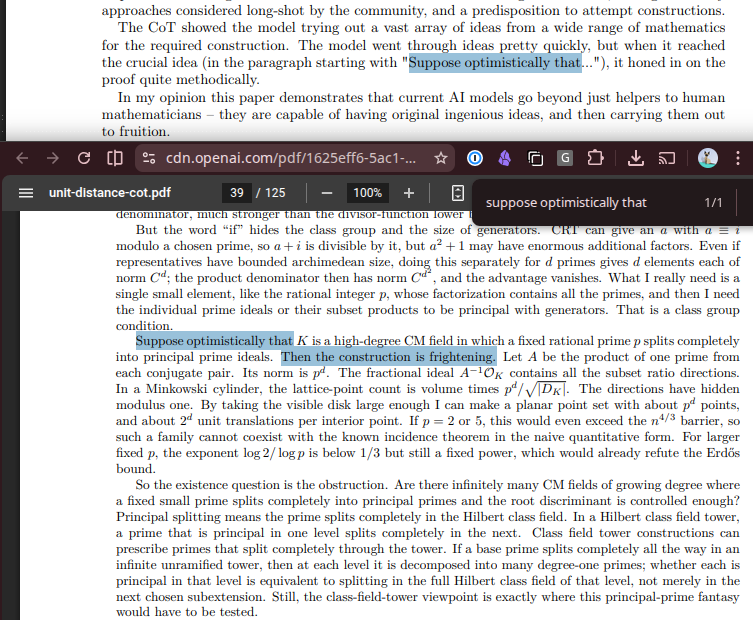 Alvaro Lozano-Robledo@mathandcobb
Following up on the suggestion from Will Sawin, here is an illustration of the new configurations that disprove Erdos' unit distance conjecture (made with the help of ChatGPT 5.5 Thinking).
 #1270Sheryl Hsu@SHERYLHSU02
It’s a really special time to be alive…some thoughts from training this model 🧵
OpenAI@OpenAIToday, we share a breakthrough on the planar unit distance problem, a famous open question first posed by Paul Erdős in 1946. For nearly 80 years, mathematicians believed the best possible solutions looked roughly like square grids. An OpenAI model has now disproved that belief, discovering an entirely new family of constructions that performs better. This marks the first time AI has autonomously solved a prominent open problem central to a field of mathematics.
2/n Last year AI models achieved IMO gold level performance, but the jury was still out on whether they could do novel research. Today, our model has produced work that leading mathematicians like Tim Gowers said they would accept into Annals of Mathematics “without any hesitation.”
Sheryl Hsu@SherylHsu02It’s a really special time to be alive…some thoughts from training this model 🧵
3/n Sometimes from the outside, it seems like we focus a lot on math. That's because math is a field where it is easy to share landmark results of this sort. However, the model that produced this is a general purpose model - it was not trained with the goal of doing math research.
Sheryl Hsu@SherylHsu022/n Last year AI models achieved IMO gold level performance, but the jury was still out on whether they could do novel research. Today, our model has produced work that leading mathematicians like Tim Gowers said they would accept into Annals of Mathematics “without any hesitation.”
#1270Sheryl Hsu@SHERYLHSU026/n It only took 10 months to go from IMO gold to original math research. Working on this model and seeing what it can do every day has been very AGI-pilling for me, can’t wait to see where we are next year and time to lock tf in to make it happen!
 #1271Damek@DAMEKDAVIS
I gave a talk with this slide less than two weeks ago and now I already have to update it. Crazy!!!
 OpenAI@OpenAI
Today, we share a breakthrough on the planar unit distance problem, a famous open question first posed by Paul Erdős in 1946. For nearly 80 years, mathematicians believed the best possible solutions looked roughly like square grids. An OpenAI model has now disproved that belief, discovering an entirely new family of constructions that performs better. This marks the first time AI has autonomously solved a prominent open problem central to a field of mathematics.
#1271Damek@DAMEKDAVISPlease try all of these with the internal model as well:
#1271Damek@DAMEKDAVISanother
Daniel Litt@littmath(What I wrote is screenshotted below.)
 #1332Prakash@8TEAPI
roughly a month late… and directly from OpenAI using a general model rather than a scaffold company
OpenAI@OpenAIToday, we share a breakthrough on the planar unit distance problem, a famous open question first posed by Paul Erdős in 1946. For nearly 80 years, mathematicians believed the best possible solutions looked roughly like square grids. An OpenAI model has now disproved that belief, discovering an entirely new family of constructions that performs better. This marks the first time AI has autonomously solved a prominent open problem central to a field of mathematics.
@polynoamial @OpenAI This is impressive
Noam Brown@polynoamialToday, we’re sharing that a general-purpose internal @openai model achieved a breakthrough on one of the best-known combinatorial geometry problems. Less than 1 year ago frontier AI models were at IMO gold-level performance. I expect this pace of progress to continue.
 #1333Shaun Maguire@SHAUNMMAGUIRE
Most predictions I've made about hardware timelines have been too optimistic
Most predictions I've made about AI timelines have been too pessimistic
This field is moving so quickly
Incredible milestone
OpenAI@OpenAIToday, we share a breakthrough on the planar unit distance problem, a famous open question first posed by Paul Erdős in 1946. For nearly 80 years, mathematicians believed the best possible solutions looked roughly like square grids. An OpenAI model has now disproved that belief, discovering an entirely new family of constructions that performs better. This marks the first time AI has autonomously solved a prominent open problem central to a field of mathematics.
 #1402bilal@BILALTWOVEC
waow
Xiao Ma@MaXiao54704The standard GPT-5.5 reproduced the proof ~ 👇 https://chatgpt.com/share/6a0e9e04-8cb0-8332-a4f1-ec68acd2e03e You don't need to wait for oai's internal model!
#1402bilal@BILALTWOVECwhat did 5.6 pro see
thebes@voooooogelunfortunately openai didn't publish the unsummarized chain of thought, but the summary is 125 pages! the model reaches the crucial idea (which it describes as 'frightening,' i would love to read the unabridged chain of thought here...) on page 39
#1402bilal@BILALTWOVEC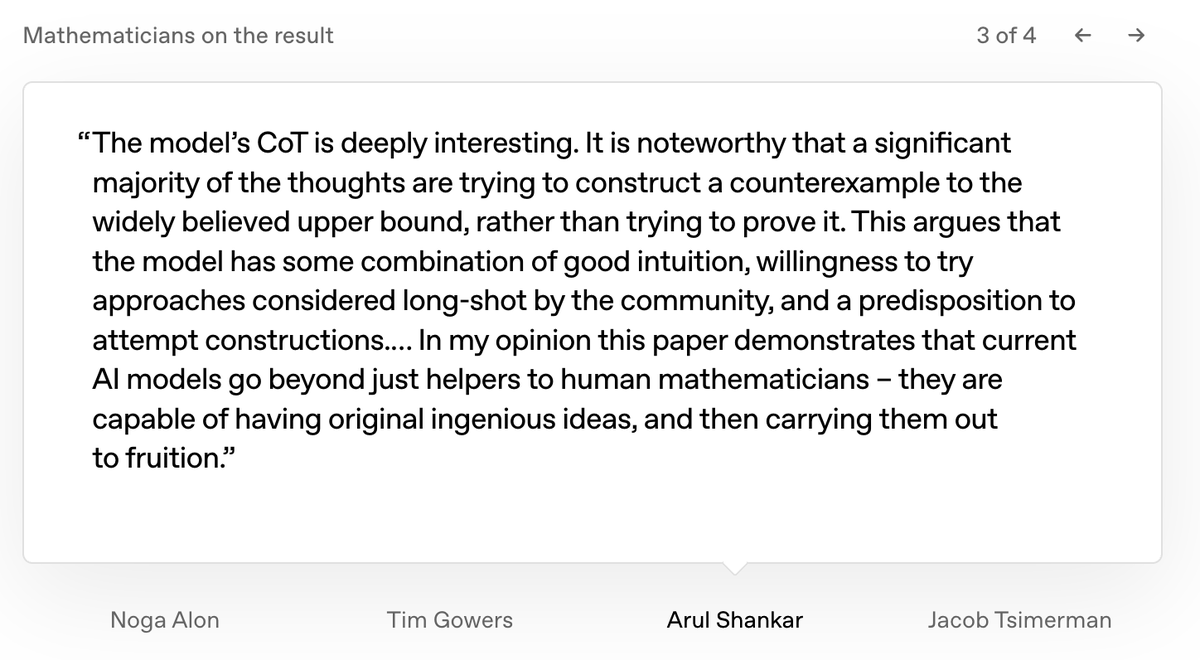 OpenAI@OpenAI
Today, we share a breakthrough on the planar unit distance problem, a famous open question first posed by Paul Erdős in 1946. For nearly 80 years, mathematicians believed the best possible solutions looked roughly like square grids. An OpenAI model has now disproved that belief, discovering an entirely new family of constructions that performs better. This marks the first time AI has autonomously solved a prominent open problem central to a field of mathematics.
someone should probably turn this into a proper benchmark, same w mythos exploit cherrypicking
 bilal@bilaltwovec
 #1409Aran Nayebi@ARAN_NAYEBI
@SuryaGanguli Desperately trying to find the "neuro-symbols" 😂🥲
Simo Ryu@cloneofsimoGOALPOST MOVED. "LLM must solve major conjecture without lean or data augmentation using lean. Otherwise its neuro symbolic AI, just as I predicted years ago. Gotcha."
#1409Aran Nayebi@ARAN_NAYEBIFWIW, I think this moves up my AI timelines a bit. I think the next milestone will be "Artificial *Grothendieck* Intelligence" (AGrI): defining new general mathematical structures to solve the hardest of open problems as special cases, like the Riemann Hypothesis or P vs. NP.
What impressed me about the OpenAI planar unit-distance result is not just that it solved a hard problem, but the particular way it seems to have done so.
For decades, the expert intuition was that the best constructions should look roughly grid-like. That intuition was *not* obviously silly; it was held by extremely serious mathematicians (of the likes of Erdos!). And yet the model found a new family of constructions that defeated it, based on literature in other areas of mathematics.
This feels like one of those cases where the "vague idea" is natural, but the solution lives in a huge space of possible design choices: which symmetries to preserve, which to break, which parameters to introduce, which ugly cases to try, which seemingly-unmotivated configurations to keep exploring.
Humans tend to navigate that space with aesthetic priors. We get embarrassed by ugly constructions. We avoid paths that do not look conceptually clean early on. The model seems much more willing to "fearlessly" plough through the design space until something works.
I imagine a lot of open problems in mathematics (and theoretical computer science!) may have a similar flavor, and would not be surprised if many of them start to fall soon.
But for the "very big" problems, maybe extensive search through constructions in the vast existing literature is not enough. Maybe what is needed for those problems is closer to Grothendieck-style mathematics: inventing the right ambient language in which the original problem becomes a special case of a more general structure.
That's what I mean by Artificial Grothendieck Intelligence (AGrI). Not merely AI that proves theorems, but AI that invents the new mathematical objects in which the theorems become *inevitable*.
And why stop at one AGrI? You could imagine simulating something like the IHES school: manager agents dividing a research program into subprograms, subagents pursuing lemmas for hours or days, other agents distilling the resulting abstractions, checking them, and communicating the useful pieces back upward.
One reason Grothendieck's IHES school was so successful is that its abstractions were relatively human-compressible. Once you adopted the relative perspective, the ideas could propagate through the community.
But maybe that constraint has also been a bottleneck. Maybe many longstanding open problems, like those in number theory which Grothendieck felt was the hardest nut to crack, have solutions that are checkable in principle, but whose motivating abstractions are not human-compressible.
In fact, I would wager that many, if not all, of these longstanding, open human conjectures live in PSPACE, but PSPACE is massive! I could imagine the AGrIs of the future might easily find non-human compressible abstractions that can be checked in PSPACE, but are infeasible for any human to check manually.
Thus, the next frontier may be mathematics that is machine-discovered, machine-compressible, and machine-checkable — beautiful, in a different way to the machines, but not necessarily in the human way.
I can't wait to see what open problems get solved next. What an exciting time to be alive.
OpenAI@OpenAIToday, we share a breakthrough on the planar unit distance problem, a famous open question first posed by Paul Erdős in 1946. For nearly 80 years, mathematicians believed the best possible solutions looked roughly like square grids. An OpenAI model has now disproved that belief, discovering an entirely new family of constructions that performs better. This marks the first time AI has autonomously solved a prominent open problem central to a field of mathematics.
#1409Aran Nayebi@ARAN_NAYEBII'm getting carried away by "grand" acronyms...
Aran Nayebi@aran_nayebiI guess an equally-appealing alternative name for "AGrI" would be "Artificial *Grand* Intelligence", for all the grand mathematical structures it could produce...🏙️ One could also just call it "Alexander Grothendieck Intelligence", but might as well reserve that for AG himself.
#1409Aran Nayebi@ARAN_NAYEBII guess an equally-appealing alternative name for "AGrI" would be "Artificial *Grand* Intelligence", for all the grand mathematical structures it could produce...🏙️
One could also just call it "Alexander Grothendieck Intelligence", but might as well reserve that for AG himself.
Aran Nayebi@aran_nayebiFWIW, I think this moves up my AI timelines a bit. I think the next milestone will be "Artificial *Grothendieck* Intelligence" (AGrI): defining new general mathematical structures to solve the hardest of open problems as special cases, like the Riemann Hypothesis or P vs. NP. What impressed me about the OpenAI planar unit-distance result is not just that it solved a hard problem, but the particular way it seems to have done so. For decades, the expert intuition was that the best constructions should look roughly grid-like. That intuition was *not* obviously silly; it was held by extremely serious mathematicians (of the likes of Erdos!). And yet the model found a new family of constructions that defeated it, based on literature in other areas of mathematics. This feels like one of those cases where the "vague idea" is natural, but the solution lives in a huge space of possible design choices: which symmetries to preserve, which to break, which parameters to introduce, which ugly cases to try, which seemingly-unmotivated configurations to keep exploring. Humans tend to navigate that space with aesthetic priors. We get embarrassed by ugly constructions. We avoid paths that do not look conceptually clean early on. The model seems much more willing to "fearlessly" plough through the design space until something works. I imagine a lot of open problems in mathematics (and theoretical computer science!) may have a similar flavor, and would not be surprised if many of them start to fall soon. But for the "very big" problems, maybe extensive search through constructions in the vast existing literature is not enough. Maybe what is needed for those problems is closer to Grothendieck-style mathematics: inventing the right ambient language in which the original problem becomes a special case of a more general structure. That's what I mean by Artificial Grothendieck Intelligence (AGrI). Not merely AI that proves theorems, but AI that invents the new mathematical objects in which the theorems become *inevitable*. And why stop at one AGrI? You could imagine simulating something like the IHES school: manager agents dividing a research program into subprograms, subagents pursuing lemmas for hours or days, other agents distilling the resulting abstractions, checking them, and communicating the useful pieces back upward. One reason Grothendieck's IHES school was so successful is that its abstractions were relatively human-compressible. Once you adopted the relative perspective, the ideas could propagate through the community. But maybe that constraint has also been a bottleneck. Maybe many longstanding open problems, like those in number theory which Grothendieck felt was the hardest nut to crack, have solutions that are checkable in principle, but whose motivating abstractions are not human-compressible. In fact, I would wager that many, if not all, of these longstanding, open human conjectures live in PSPACE, but PSPACE is massive! I could imagine the AGrIs of the future might easily find non-human compressible abstractions that can be checked in PSPACE, but are infeasible for any human to check manually. Thus, the next frontier may be mathematics that is machine-discovered, machine-compressible, and machine-checkable — beautiful, in a different way to the machines, but not necessarily in the human way. I can't wait to see what open problems get solved next. What an exciting time to be alive.
#1446Shubhendu Trivedi@_ONIONESQUEWow this is exciting! This is a famous problem from a beautiful area (Szemeredi-Trotter, Crossing Lemma, Polynomial Ham Sandwich are all in the vicinity), and yet the construction of the family of counterexamples comes from an unexpected connection from algebraic number theory.
Timothy Gowers @wtgowers@wtgowersAI has now solved a major open problem -- one of the best known Erdos problems called the unit distance problem, one of Erdos's favourite questions and one that many mathematicians had tried. https://openai.com/index/model-disproves-discrete-geometry-conjecture/
The proof is something I am in no position to begin to understand, of course, and the note posted mentions that the direction is not altogether new. However, what I do know is that operators in the above broader area would be unlikely to make the connection.
Shubhendu Trivedi@_onionesqueWow this is exciting! This is a famous problem from a beautiful area (Szemeredi-Trotter, Crossing Lemma, Polynomial Ham Sandwich are all in the vicinity), and yet the construction of the family of counterexamples comes from an unexpected connection from algebraic number theory.
@roydanroy Combinatorialists and incidence / discrete geometry experts wouldn't have any Algebraic number theory chops. AI models can pattern match wherever they want. Erdos also believing that the conjecture was true biased folk. The LM could run amok in either direction.
Dan Roy@roydanroyCongrats to OpenAI on their breakthrough in discrete geometry.
 #1447Ben Golub@BEN_GOLUB
Remarkable that economic theory doesn't have anything for which such a plot would make sense
Kind of an embarrassment for the field in some ways.
 Nat McAleese@__nmca__
So it took 20 months to go from making these plots on AIME problems to making them on 80 year old conjectures in combinatorial geometry…
Ratio here is pretty good

Ratio here is pretty good
(The top post is by an OpenAI engineer)
 #1460Jiaxin Wen@JIAXINWEN22
time will tell
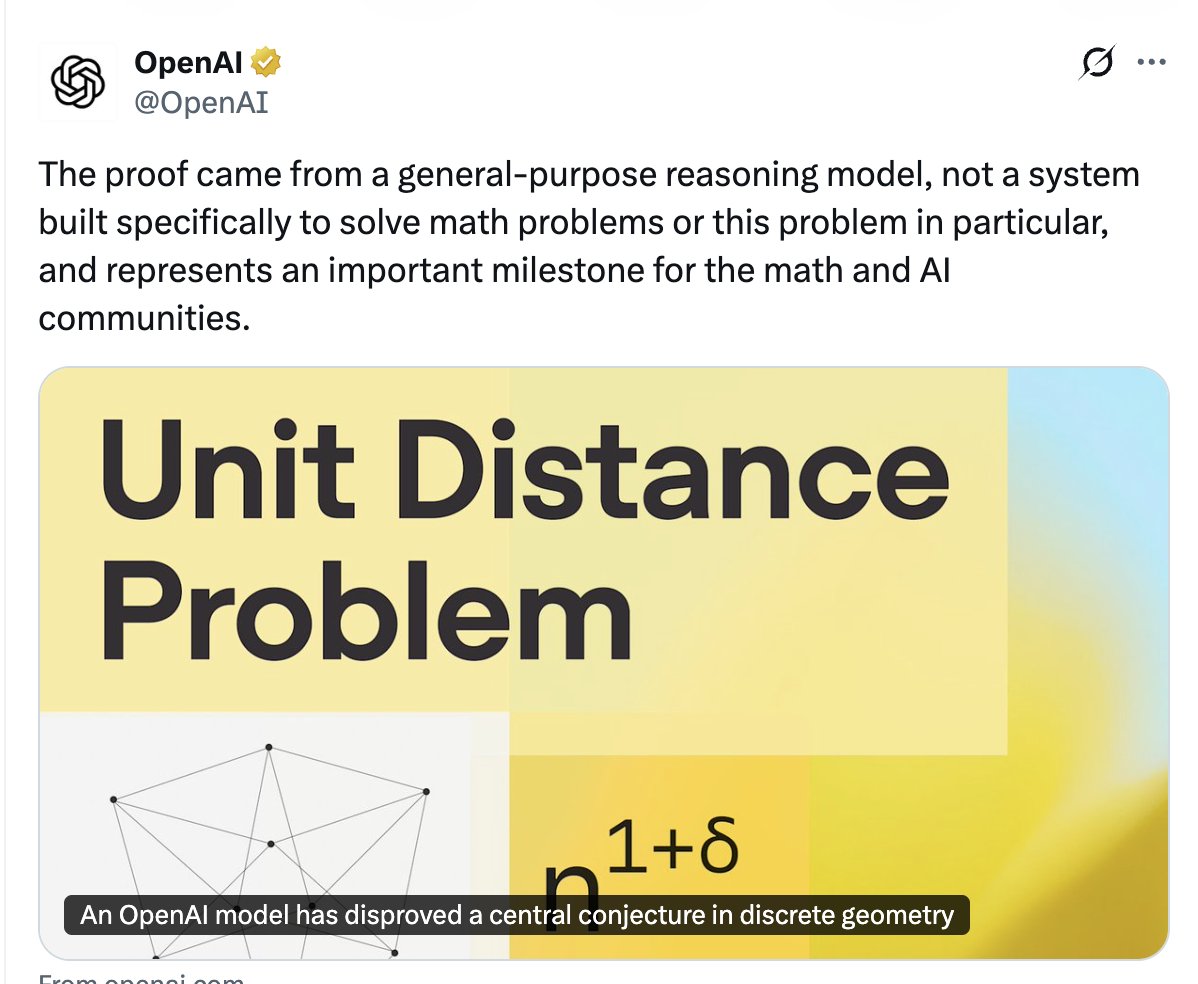 Jiaxin Wen@jiaxinwen22
I might be one of the few people who is most bearish on human research taste and bullish on automated research: - "AIs can only do hyperparameter search" is mainly a skill issue with bad automated research setups. - human taste is overrated, e.g. frontier labs / neolabs are doing pretty simlar things. - human taste might win in a low-compute world, but not a high-compute world we're entering.

@markchen90 Congrats on the result!
Mark Chen@markchen90Very proud that an OpenAI model disproved Erdős’s longstanding unit distance conjecture, with an elegant and intricate proof that brings sophisticated ideas from algebraic number theory to bear on geometry. For whatever reason, mathematics has been the field most amenable to research breakthroughs with AI. I consider it lucky that it was mathematics after all - a field where experts have been willing to engage deeply with us, and with proofs generated by our models. I'm grateful for that, and don't take it for granted. Math is an artistic endeavor, and perhaps for artists, it is precisely their appreciation for art that saves them from the possibly grotesque feeling of a machine producing it. Our goal is not to replace humans. We aim to chart a path forward where humans continue to have a significant role to play, even as we build exceptionally powerful AI. I am excited to use math as a domain to explore these paths, and @SebastienBubeck, @merettm, and I are excited to engage with the broader mathematical community to chart them together. Please reach out if you are interested! I'm optimistic this will help us navigate how AI impacts society in domains like coding and general co-working.
 #1480gavin leech (Non-Reasoning)@GLEECH
@davidad
Tenobrus@tenobrusi'm sorry WHAT DO YOU MEAN THE "HIDDEN TEXT"???
 #1488Samuel Hammond 🦉@HAMANDCHEESE
Mysterium Tremendum
thebes@voooooogelunfortunately openai didn't publish the unsummarized chain of thought, but the summary is 125 pages! the model reaches the crucial idea (which it describes as 'frightening,' i would love to read the unabridged chain of thought here...) on page 39
 #1496Chubby♨️@KIMMONISMUS
OpenAI made history today.
An internal reasoning model autonomously disproved a famous conjecture in mathematics that stood for nearly 80 years.
The problem: In 1946, Paul Erdős asked how many pairs of points can be exactly 1 unit apart if you place n points on a flat surface. The best known answer came from square grid constructions, and Erdős himself conjectured you can't do meaningfully better. Mathematicians believed this for decades.
The AI proved him wrong. It found entirely new point configurations that beat the square grid by a fixed polynomial factor, not a marginal improvement, a real mathematical gap.
The proof uses methods from algebraic number theory, a completely different branch of math, Class field towers, Golod-Shafarevich theory, tools nobody expected to be relevant to a geometry problem about distances in the plane (reminds me of move 37, AlphaGo tbh).
Fields Medalist Tim Gowers calls it "a milestone in AI mathematics." The proof was verified by leading external mathematicians.
According to OpenAI, this is the first time AI has independently solved a prominent open research problem in mathematics!
Caveat: Obviously OpenAI chose which problems to test the model on. So "autonomous" means the model generated the idea and wrote the proof, not that it wandered into the problem on its own.
But if reasoning models can reliably make cross-domain connections like this, finding paths that experts didn't prioritize, this changes research far beyond math. Biology, physics, materials science, medicine.
This isn't AI reproducing human knowledge anymore. This is AI producing new knowledge. That's a qualitative shift.
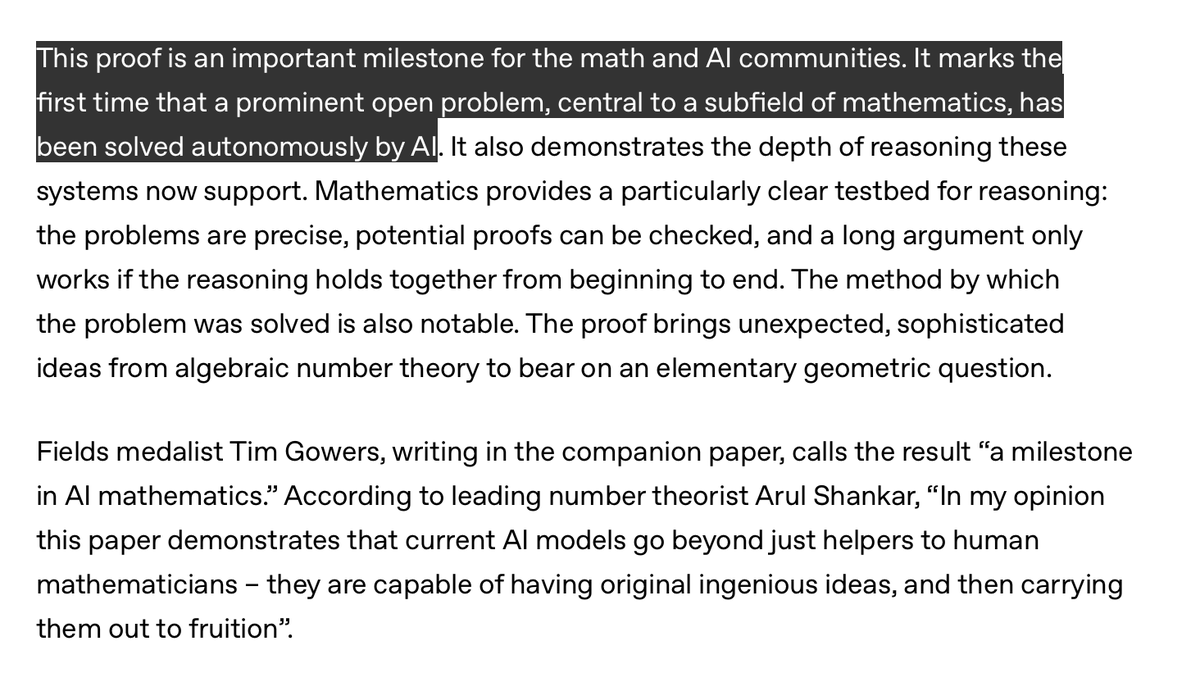 OpenAI@OpenAI
Today, we share a breakthrough on the planar unit distance problem, a famous open question first posed by Paul Erdős in 1946. For nearly 80 years, mathematicians believed the best possible solutions looked roughly like square grids. An OpenAI model has now disproved that belief, discovering an entirely new family of constructions that performs better. This marks the first time AI has autonomously solved a prominent open problem central to a field of mathematics.
#1496Chubby♨️@KIMMONISMUSOpenAI is aiming for a release of their upcoming general-purpose LLM.
„We have not pushed this model to the limit on open problems. Our focus is to get it out quickly so that everyone can use it for themselves.“
What makes this so impressive is that a general-purpose LLM, not specifically trained for math or this problem, appears to get dramatically better simply by using more test-time compute!
OpenAI has a run.
Noam Brown@polynoamialThis is a general-purpose LLM. It wasn’t targeted at this problem or even at mathematics. Also, it’s not a scaffold. We have not pushed this model to the limit on open problems. Our focus is to get it out quickly so that everyone can use it for themselves.
#1499thebes@VOOOOOOGELexclusive internal footage of gpt solving the planar unit distance problem
 thebes@voooooogel
unfortunately openai didn't publish the unsummarized chain of thought, but the summary is 125 pages! the model reaches the crucial idea (which it describes as 'frightening,' i would love to read the unabridged chain of thought here...) on page 39
#1499thebes@VOOOOOOGELunfortunately openai didn't publish the unsummarized chain of thought, but the summary is 125 pages!
the model reaches the crucial idea (which it describes as 'frightening,' i would love to read the unabridged chain of thought here...) on page 39
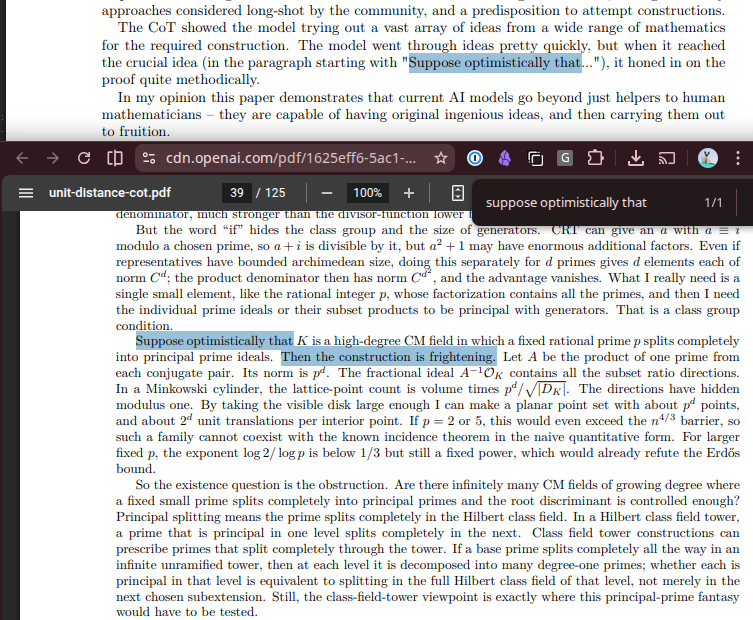 OpenAI@OpenAI
Today, we share a breakthrough on the planar unit distance problem, a famous open question first posed by Paul Erdős in 1946. For nearly 80 years, mathematicians believed the best possible solutions looked roughly like square grids. An OpenAI model has now disproved that belief, discovering an entirely new family of constructions that performs better. This marks the first time AI has autonomously solved a prominent open problem central to a field of mathematics.
I have been digging into the openai erdos result tonight and it's the first time in a while that I really got goosebumps from science and im not even that much into math.
But the problem is so simple and easy to understand, and the model's (dis)proof is only 2 pages.
Also the companion remarks with reflections from the mathematicians that reviewed the results are an amazing read. Some very fun and sincere remarks, eg see below from @wtgowers
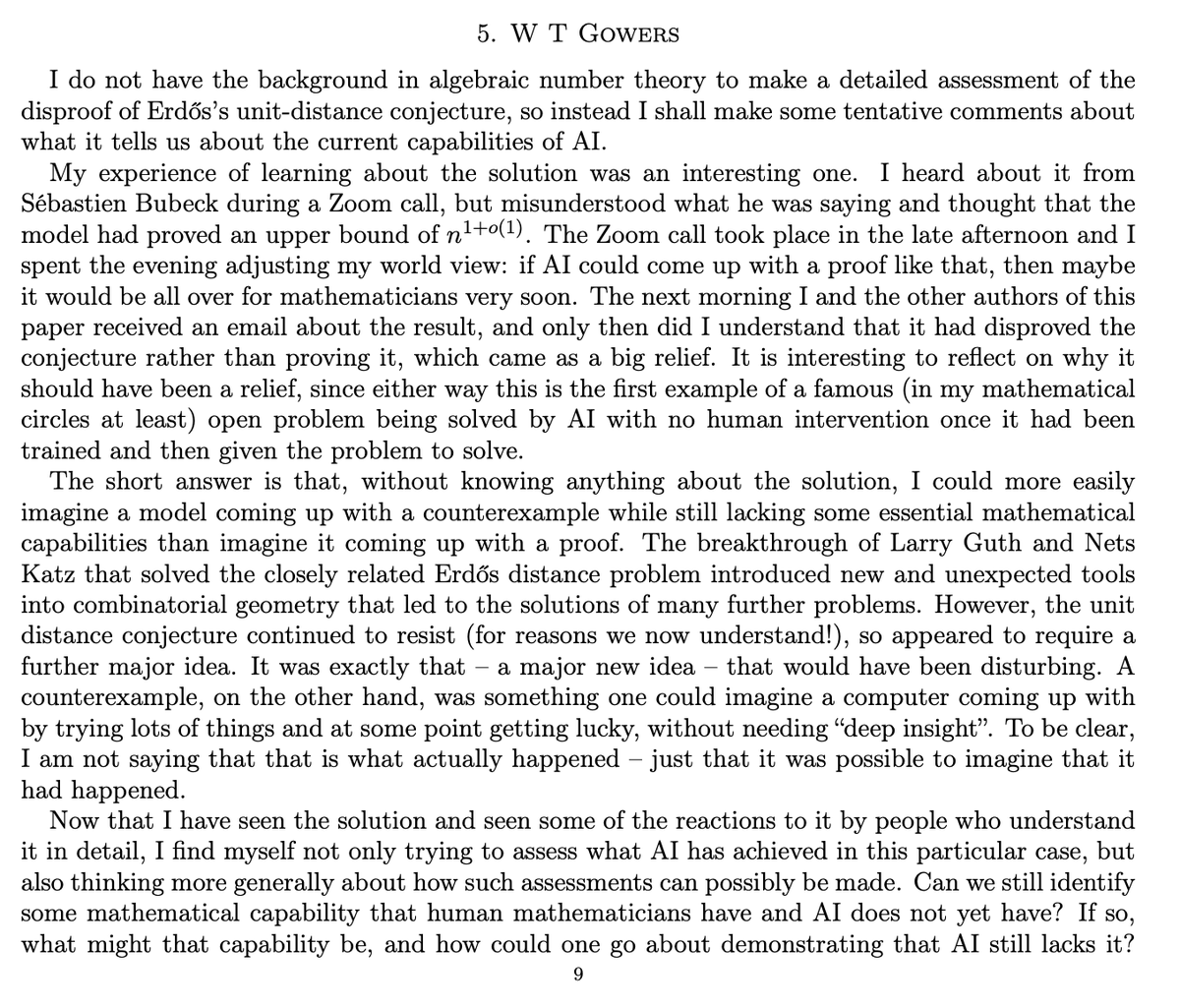
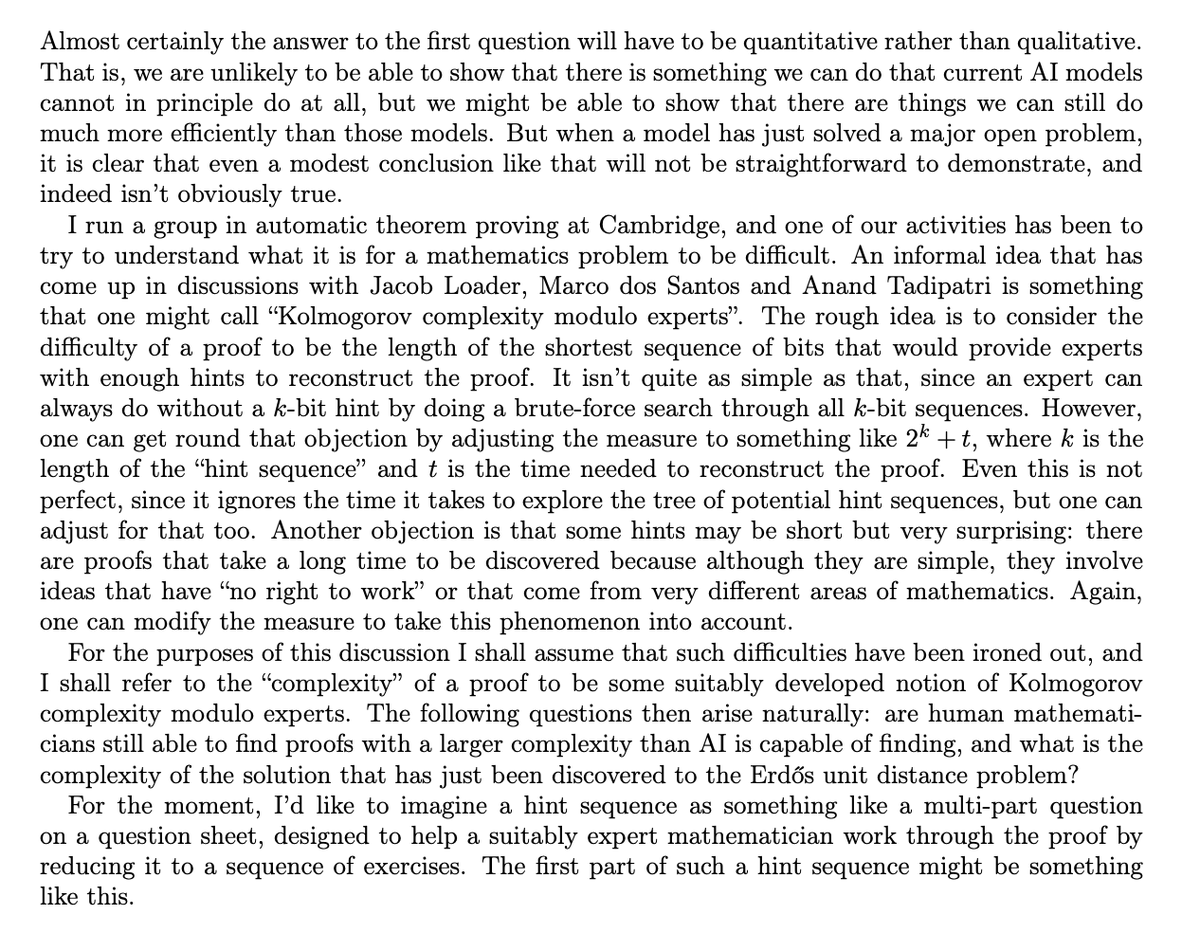
 Michiel Bakker@bakkermichiel
I have been digging into the openai erdos result tonight and it's the first time in a while that I really got goosebumps from science and im not even that much into math. But the problem is so simple and easy to understand, and the model's (dis)proof is only 2 pages.
@wtgowers You can find the results and a link the remarks on openai's page https://openai.com/index/model-disproves-discrete-geometry-conjecture/
Michiel Bakker@bakkermichielAlso the companion remarks with reflections from the mathematicians that reviewed the results are an amazing read. Some very fun and sincere remarks, eg see below from @wtgowers
 #1560Andrei Bursuc@ABURSUC
Amazed by this but also by @ChrSzegedy's foresight who predicted such advances a while ago.
Timothy Gowers @wtgowers@wtgowersAI has now solved a major open problem -- one of the best known Erdos problems called the unit distance problem, one of Erdos's favourite questions and one that many mathematicians had tried. https://openai.com/index/model-disproves-discrete-geometry-conjecture/

the openai math result is super cool
@polynoamial @OpenAI Amazing!! Congratulations to everyone
Noam Brown@polynoamialToday, we’re sharing that a general-purpose internal @openai model achieved a breakthrough on one of the best-known combinatorial geometry problems. Less than 1 year ago frontier AI models were at IMO gold-level performance. I expect this pace of progress to continue.
@sama really amazing, big congrats to the teams
Sam Altman@samaa general-purpose model solved a major open problem in mathematics. we'll be saying this a lot over the coming years, but this is a kinda big milestone. i'm very excited for AI to greatly extend our understanding of the world, but still, i have complicated feelings today.
 Timothy Nguyen@IAmTimNguyen
A new AI milestone today: "If a human had written the paper and submitted it to the Annals of Mathematics and I had been asked for a quick opinion, I would have recommended acceptance without any hesitation. No previous AI-generated proof has come close to that.” - Tim Gowers 1/

General Purpose LLMs Will Lead Us To AGI 🚀
OpenAI's reasoning model just disproved an 80-year-old Erdős conjecture on unit distances—autonomously.
Not a specialized math solver, just a general-purpose model diving into Golod-Shafarevich theory and connecting geometry to deep number theory in ways humans hadn't explored.
First time AI has solved a prominent open problem in mathematics.
Validated by Noga Alon, Melanie Wood, and Tim Gowers called it "a milestone in AI mathematics."
 #1627Aviv Tamar@AVIVTAMAR1
What a great time to be tenured.
Timothy Gowers @wtgowers@wtgowersAI has now solved a major open problem -- one of the best known Erdos problems called the unit distance problem, one of Erdos's favourite questions and one that many mathematicians had tried. https://openai.com/index/model-disproves-discrete-geometry-conjecture/
 #1644Konstantin Mishchenko@KONSTMISH
At first it felt like Perelman emerging from years of seclusion with a proof to the Poincaré conjecture. But the fact that we didn't need a model to do 125 pages of thinking somehow made the achievement seem a lot less impressive to me.
Daniel Litt@littmathPretty interesting -- ChatGPT 5.5 Pro, with pretty minimal human guidance (and apparently without web search), also finds the counterexample to unit distance.
 #1711🍓🍓🍓@IRULETHEWORLDMO
the time is almost here.
OpenAI@OpenAIToday, we share a breakthrough on the planar unit distance problem, a famous open question first posed by Paul Erdős in 1946. For nearly 80 years, mathematicians believed the best possible solutions looked roughly like square grids. An OpenAI model has now disproved that belief, discovering an entirely new family of constructions that performs better. This marks the first time AI has autonomously solved a prominent open problem central to a field of mathematics.
@polynoamial please do.
Noam Brown@polynoamialThis is a general-purpose LLM. It wasn’t targeted at this problem or even at mathematics. Also, it’s not a scaffold. We have not pushed this model to the limit on open problems. Our focus is to get it out quickly so that everyone can use it for themselves.
 #1822Luca Ambrogioni@LUCAAMB
Nothing to take away from the achievement, but I think that the hype is excessive
A posteriori this sounds like lowish-hanging fruit masked for years by a social blind spot
Again, if it wasn't verification would have taken much longer.
 Lux_Stella@Lux_Stella_
there's some really interesting commentary from one of the mathematicians in the companion paper not to pour cold water on the results necessarily - but it suggests this is a specific "kind" of proof these models might be particularly good at
 #1884Ethan@TORCHCOMPILED
This is posed as a “first ever” moment but I feel like I’m having Déjà vu? Are these other cases, this one in January, less impressive? Asking as a fella barely familiar with Erdos problems
 OpenAI@OpenAI
Today, we share a breakthrough on the planar unit distance problem, a famous open question first posed by Paul Erdős in 1946. For nearly 80 years, mathematicians believed the best possible solutions looked roughly like square grids. An OpenAI model has now disproved that belief, discovering an entirely new family of constructions that performs better. This marks the first time AI has autonomously solved a prominent open problem central to a field of mathematics.
 #1891Lijie Chen@WJMZBMR1
1/ Today, an internal @OpenAI model has refuted Erdős’s unit distance conjecture — a research result that one could recommend “acceptance without any hesitation” to the Annals of Mathematics, one of the most prestigious journals in mathematics.
We came across it in a side quest to push our model on the hardest problems.
OpenAI@OpenAIToday, we share a breakthrough on the planar unit distance problem, a famous open question first posed by Paul Erdős in 1946. For nearly 80 years, mathematicians believed the best possible solutions looked roughly like square grids. An OpenAI model has now disproved that belief, discovering an entirely new family of constructions that performs better. This marks the first time AI has autonomously solved a prominent open problem central to a field of mathematics.
 #1894Nick Dobos@NICKADOBOS
ChatGPT was frightened upon discovery of new math.
Curious behavior. I’m not sure I had an expectation for what an Ai should feel upon making a novel discovery, but fear is interesting.
Not surprise. Not shock. Not glee. Not curiosity.
Fear.
thebes@voooooogelunfortunately openai didn't publish the unsummarized chain of thought, but the summary is 125 pages! the model reaches the crucial idea (which it describes as 'frightening,' i would love to read the unabridged chain of thought here...) on page 39


