Amazon Threat Intelligence says Cairn AI agents found an unpatched flaw in a medical-imaging AI application. The agents took about 11 minutes to go from mapping the app’s software interfaces to writing files on its server. Full administrator access came in a later session. Source
AWS says it uncovered the activity after finding the operator’s Cairn instance publicly accessible without authentication on September 10, 2026. Project configurations, prompts and AI output were visible to anyone online. An operation built to break into other systems had left its own notebook wide open. Source
Those records revealed an approximately 48-hour campaign beginning September 8, targeting university-associated IP addresses in East Asia outside mainland China, according to AWS. Source
Autonomous steps, not a human-free campaign
Cairn is an open-source penetration-testing framework that coordinates multiple AI agents around a goal. AWS says the operator supplied target IP addresses and variations of the instruction “obtain shell access.” The agents then planned, executed and adjusted their approaches without the operator choosing each next step. Source
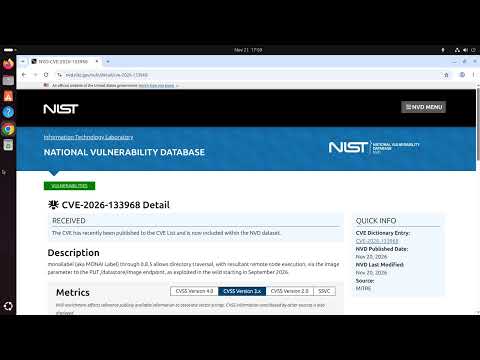
AWS says the agents found a path-traversal flaw in the app’s upload function: the filename supplied with an upload let them write files outside the intended location. The company assesses with high confidence that this was a zero-day, citing the absence of a corresponding fix, issue, advisory or prior vulnerability-database mention at discovery. Source
In a later session, AWS says, the agents reused the vulnerability to establish a reverse shell, giving them remote command access with full administrator privileges. AWS provides no elapsed time for that session. Source
The operator later provided a connection into a second university network and directed the agents to target other machines there, according to AWS. Source
AWS assesses with moderate confidence that the actor had a Chinese nexus, based on Simplified Chinese prompts, script timestamps configured to China Standard Time and the targeting. Source





Comments