
 #1234Yohei@YOHEINAKAJIMA
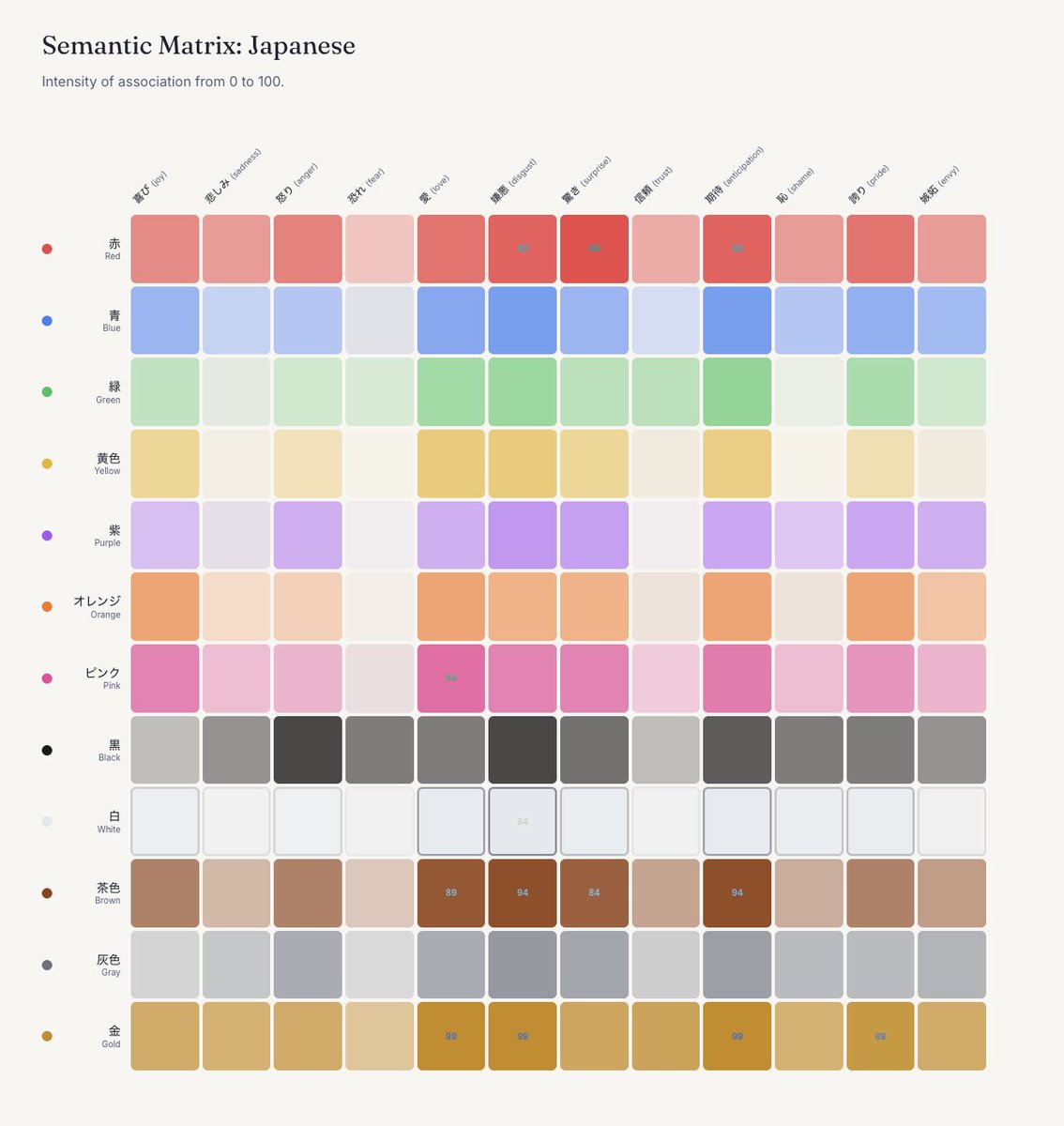
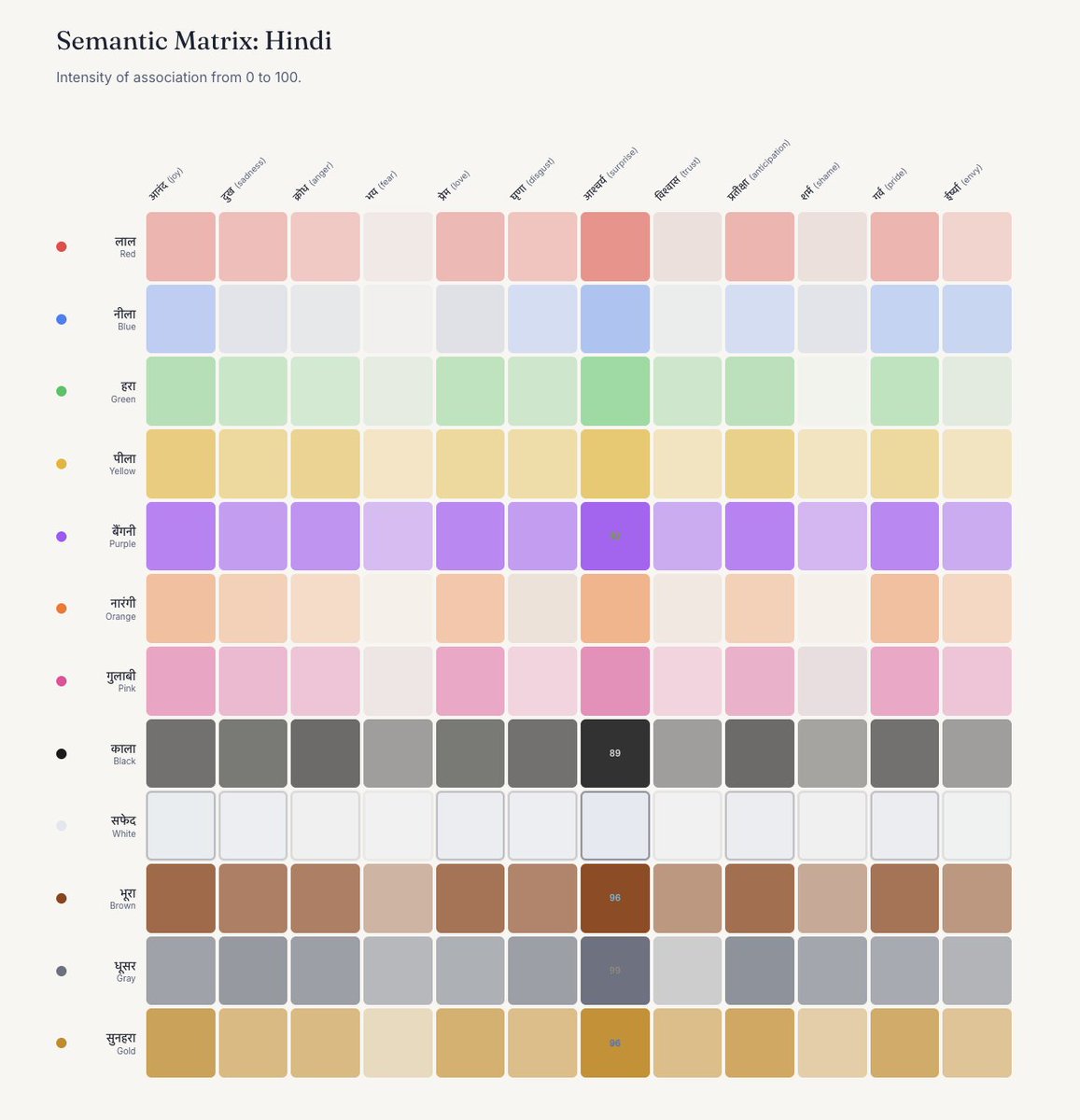
i compared embedding similarity between colors and emotions and normalized it to create this chart
and then when i changed the language, the results changed (eg. 赤、愛)
see: english, spanish, japanese, hindi


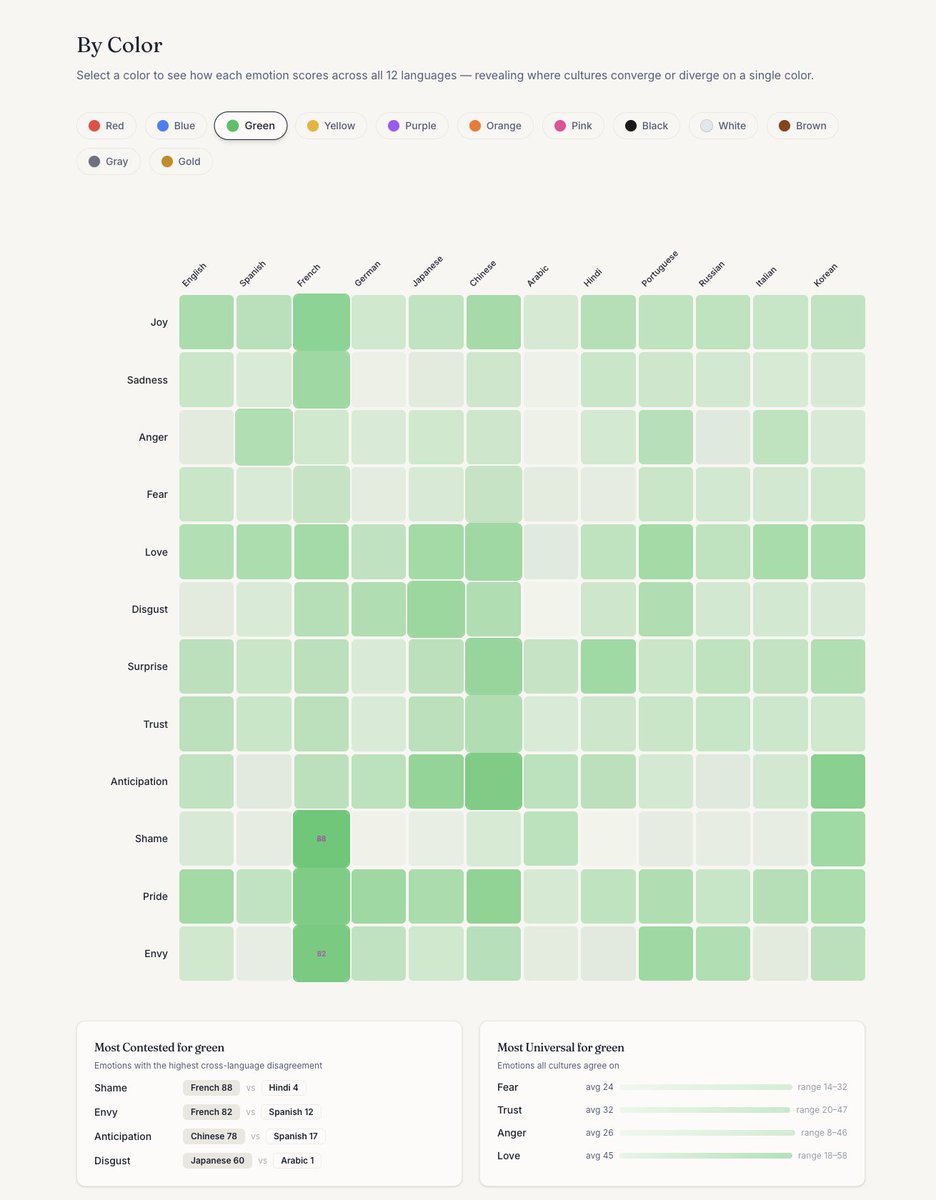
interesting to analyze by color as well
you can see how colors correlate differently to emotions across languages


 Yohei@yoheinakajima
i compared embedding similarity between colors and emotions and normalized it to create this chart and then when i changed the language, the results changed (eg. 赤、愛) see: english, spanish, japanese, hindi
you can see more here (color stuff is at bottom): http://colorfeelings.replit.app
- changing embedding model may change results - the similarity range was pretty small so normalizing really stretched it out - some languages seem to generally have stronger correlation between all emotions and colors
this used Xenova/paraphrase-multilingual-MiniLM-L12-v2 embedding model from @huggingface which was decided on by the @replit agent that built this
Yohei@yoheinakajimainteresting to analyze by color as well you can see how colors correlate differently to emotions across languages
Chinese and Japanese have stronger avg similarity between colors and emotions
Arabic and German had the lowest avg similarity between colors and emotions
(this kinda makes sense given chinese/japanese characters often have double meanings, etc?)
 Yohei@yoheinakajima
you can see more here (color stuff is at bottom): http://colorfeelings.replit.app - changing embedding model may change results - the similarity range was pretty small so normalizing really stretched it out - some languages seem to generally have stronger correlation between all emotions and colors this used Xenova/paraphrase-multilingual-MiniLM-L12-v2 embedding model from @huggingface which was decided on by the @replit agent that built this
there were definitely some unexpected results.
i would have assumed blue would be similar to trust, but just because it's commonly discussed in UX discussions, does not mean this appears in embedding similarity
 Yohei@yoheinakajima
I analyzed 12 colors and 12 emotions across 12 languages *quick correction on earlier note: i did the normalization after doing similarity scores for all languages
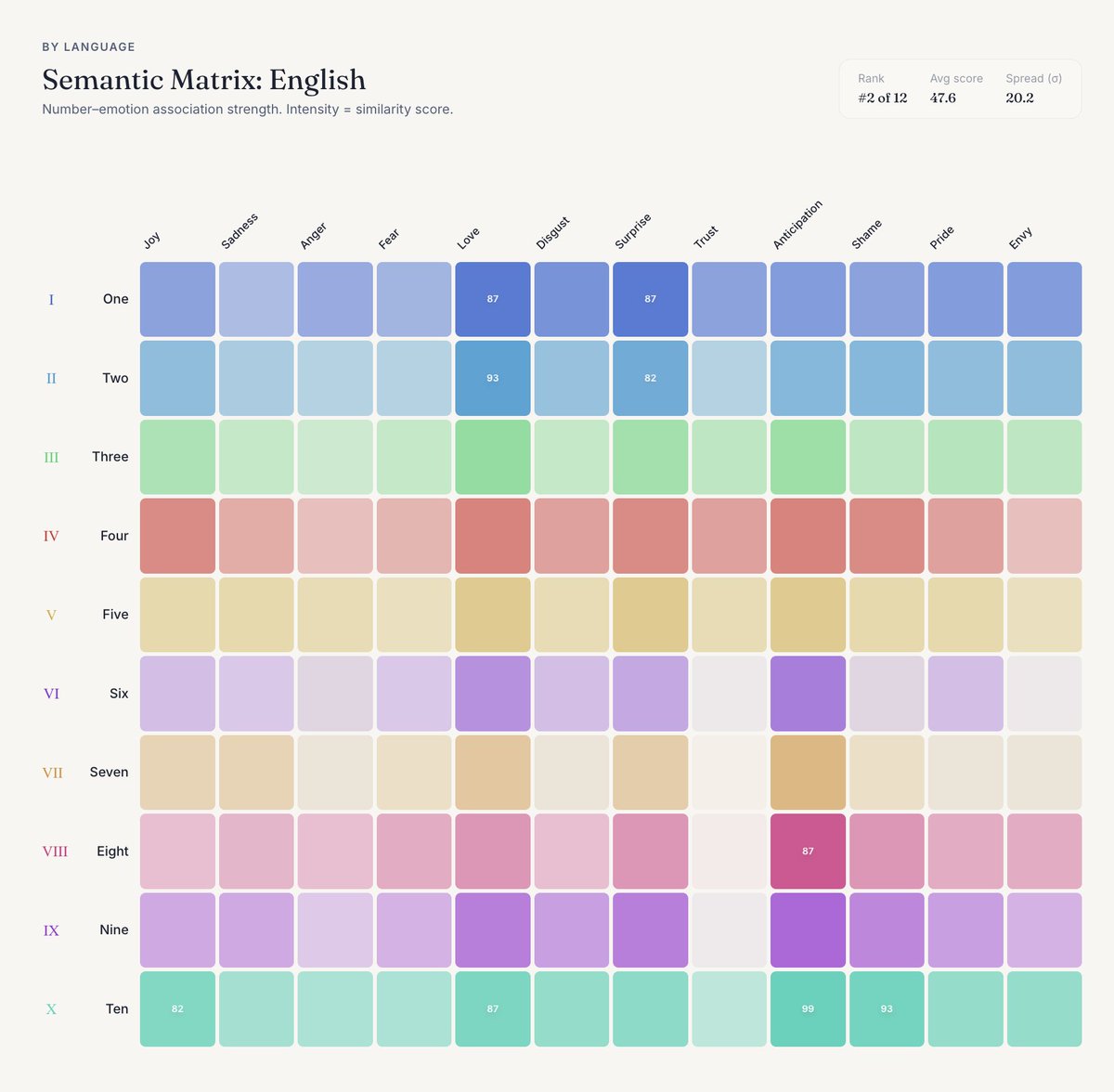
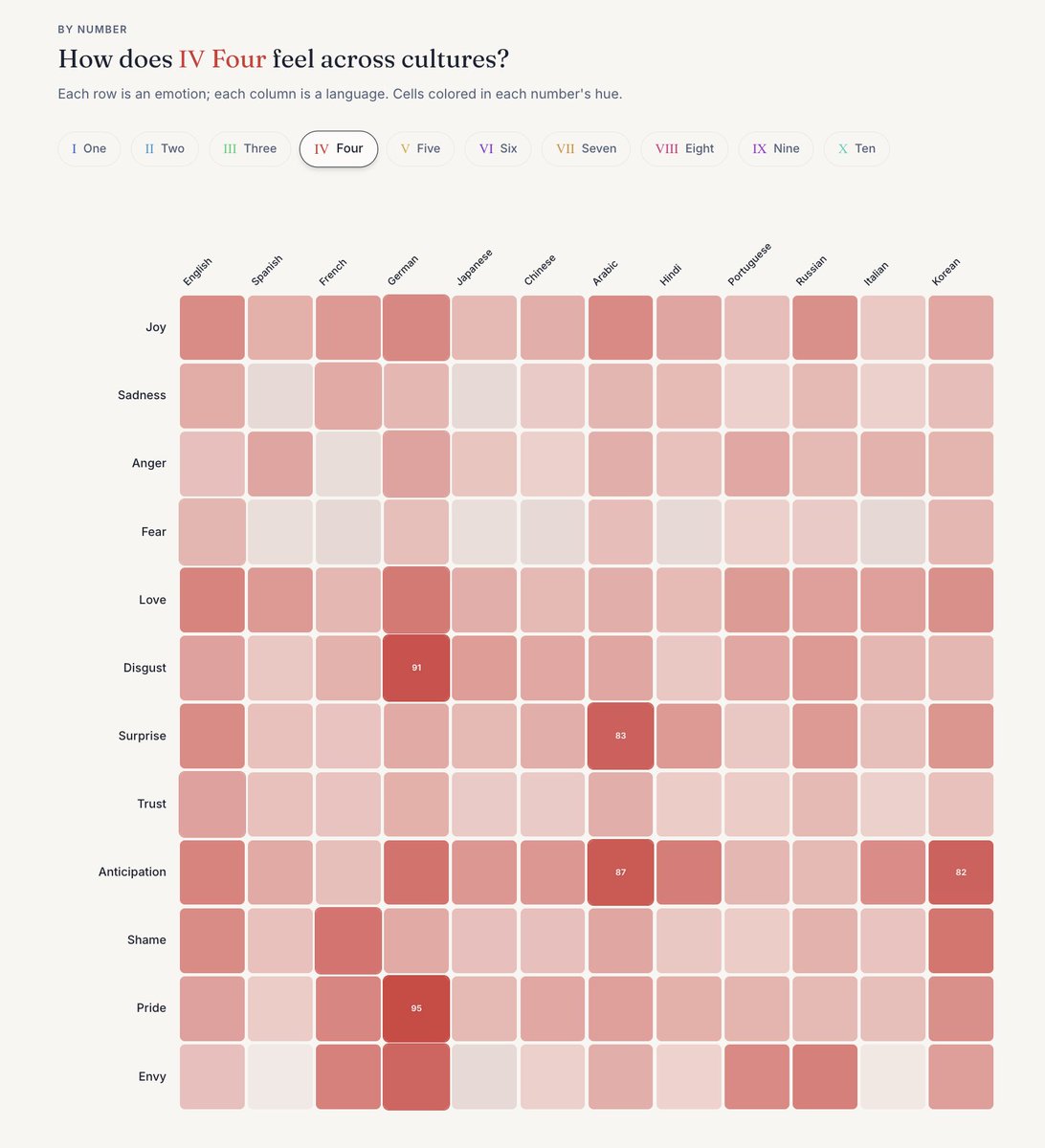
here i look at embedding similarity between numbers (spelled out) and emotions
One and Two are similar Love and Surprise Eight is similar to Anticipation Ten is similar to Joy, Love, Surprise, and Anticipation
 Yohei@yoheinakajima
there were definitely some unexpected results. i would have assumed blue would be similar to trust, but just because it's commonly discussed in UX discussions, does not mean this appears in embedding similarity
similarly you can look at how numbers are similar (in embedding space) to different emotions based on the language
 Yohei@yoheinakajima
here i look at embedding similarity between numbers (spelled out) and emotions One and Two are similar Love and Surprise Eight is similar to Anticipation Ten is similar to Joy, Love, Surprise, and Anticipation
germans have the strongest association between numbers and feelings overall
...and other findings
 Yohei@yoheinakajima
similarly you can look at how numbers are similar (in embedding space) to different emotions based on the language
now i compared similarity of 12 futuristic tech terms with 12 emotions across 12 languages and then normalized them
you can see charts like how does "AGI" feel across languages*
*this is in relation to the other 11 terms
 Yohei@yoheinakajima
germans have the strongest association between numbers and feelings overall ...and other findings
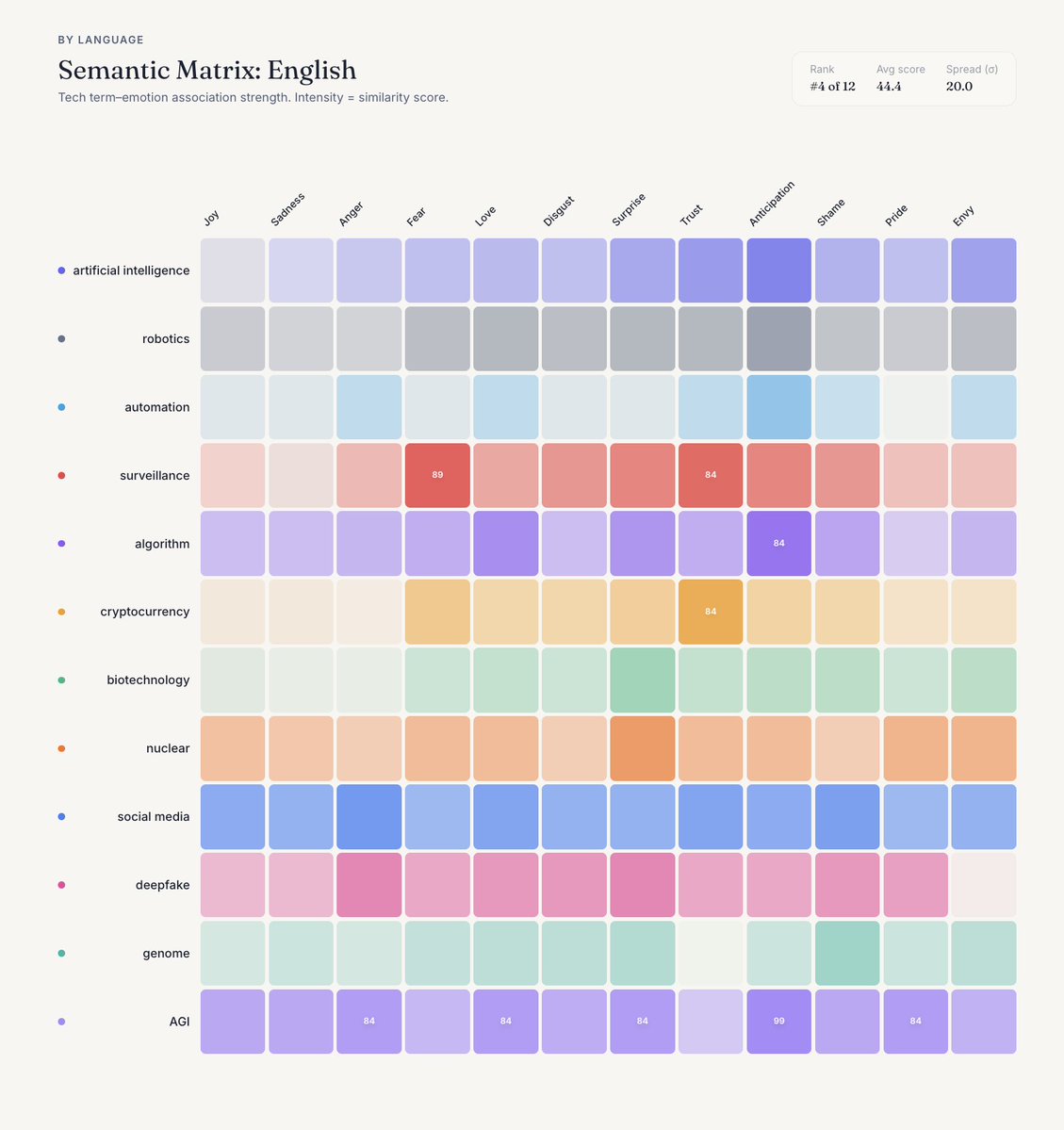
different tech terms and their closest emotion in english (vector similarity)
you'll notice cryptocurrency being close to trust, which could be because both trust and lack of trust are often discussed alongside the topic
surveillance and AGI have highest emotional charge
 Yohei@yoheinakajima
now i compared similarity of 12 futuristic tech terms with 12 emotions across 12 languages and then normalized them you can see charts like how does "AGI" feel across languages* *this is in relation to the other 11 terms
#1234Yohei@YOHEINAKAJIMAthe same word in different languages can have varying connotations due to different associations (e.g. color/emotion)
Yohei@yoheinakajimai compared embedding similarity between colors and emotions and normalized it to create this chart and then when i changed the language, the results changed (eg. 赤、愛) see: english, spanish, japanese, hindi
#1234Yohei@YOHEINAKAJIMAin this embedding analysis, compared to other futuristic tech terms,
AGI maps more strongly to anticipation than fear, especially in english, japanese, chinese, and italian
it also shows stronger negative associations across several european languages: anger in spanish/italian, disgust in german, and shame/envy in french, german, and portuguese
Yohei@yoheinakajimanow i compared similarity of 12 futuristic tech terms with 12 emotions across 12 languages and then normalized them you can see charts like how does "AGI" feel across languages* *this is in relation to the other 11 terms